
Photo by PolyGram , licensed under Public domain · Wikimedia Commons
Rank #26
Rush
Canadian power trio synonymous with virtuoso progressive hard rock.
From Wikipedia
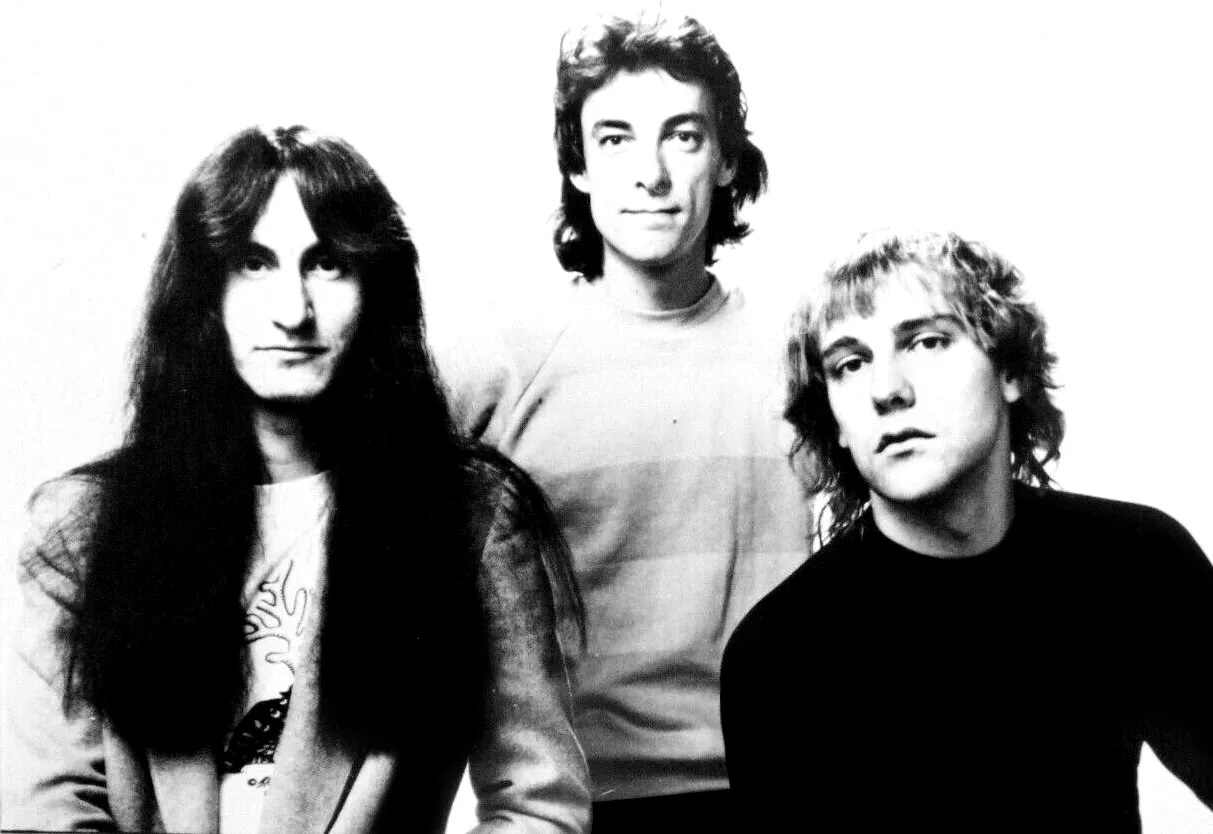
Rush is a Canadian rock band, formed in Toronto in 1968. The band's original line-up included guitarist Alex Lifeson, drummer John Rutsey, and bassist and vocalist Jeff Jones, whom Geddy Lee replaced shortly after its formation. Rush went through a few line-up changes over the next six years, before arriving at its classic power trio line-up with the addition of Neil Peart in July 1974, replacing Rutsey four months after the release of their self-titled debut album. The line-up of Lifeson, Lee, and Peart remained stable for the remainder of the band's initial run until 2015, after which Peart retired from music. Lifeson later confirmed in 2018 that the band had disbanded, citing Peart's health as a contributing factor. Lifeson and Lee continued to occasionally work together in the years following Peart's death in 2020.
Members
- Alex Lifeson (1968–2018)
- Geddy Lee (1968–2018)
- Jeff Jones (1968–1968)
- John Rutsey (1968–1974)
- Neil Peart (1974–2018)
Studio Albums
- 1974 Rush
- 1975 Fly by Night
- 1975 Caress of Steel
- 1976 2112
- 1977 A Farewell to Kings
- 1978 Hemispheres
- 1980 Permanent Waves
- 1981 Moving Pictures
- 1982 Signals
- 1984 Grace Under Pressure
- 1985 Power Windows
- 1987 Hold Your Fire
- 1989 Presto
- 1991 Roll the Bones
- 1993 Counterparts
- 1996 Test for Echo
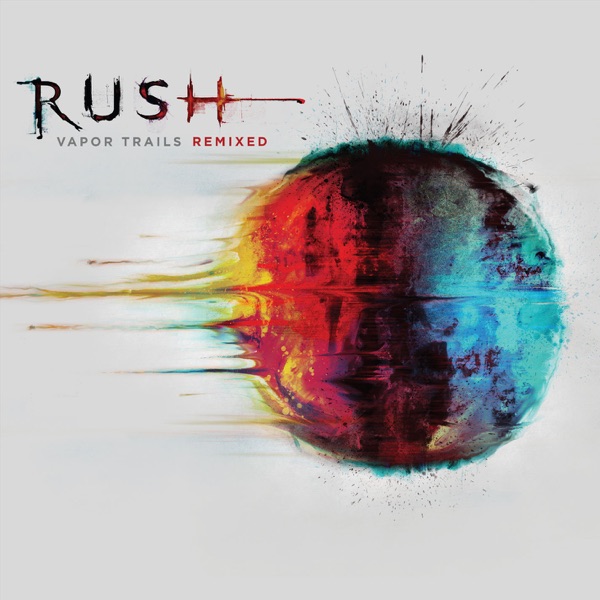
- 2002 Vapor Trails
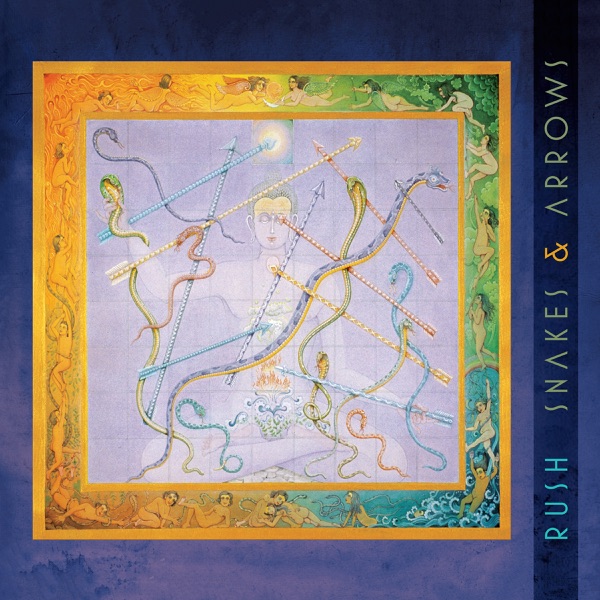
- 2007 Snakes & Arrows
- 2012 Clockwork Angels
Source: MusicBrainz
Deep Dive
Overview
Rush is a Canadian rock band formed in Toronto in 1968, recognized as one of the most technically accomplished acts in progressive hard rock. The band’s primary identity crystallized around a stable three-member lineup—Geddy Lee on bass and vocals, Alex Lifeson on guitar, and Neil Peart on drums—that remained unchanged from Peart’s arrival in July 1974 through the band’s official disbandment in 2018. Over 44 years, the trio produced 19 studio albums that became benchmarks for instrumental precision, complex compositional structures, and uncompromising artistic vision within the rock idiom.
Formation Story
Rush emerged from Toronto’s mid-1960s rock scene, initially coalescing around guitarist Alex Lifeson and drummer John Rutsey. The original lineup included bassist and vocalist Jeff Jones, who was replaced almost immediately by Geddy Lee. Throughout the early 1970s, the band cycled through personnel changes while developing their sound in the shadow of arena rock’s rise and progressive rock’s international expansion. The definitive classical lineup arrived in July 1974 when Neil Peart replaced John Rutsey four months after the release of their self-titled debut album. Peart’s entry proved transformational; his technical drumming capability and emerging role as primary lyricist and conceptual architect would shape the band’s artistic trajectory for the next four decades.
Breakthrough Moment
Rush’s initial self-titled album appeared in 1974 to modest commercial response, but 2112, released in 1976, established the band as a major force in progressive rock. The album’s centerpiece, a 20-minute title track built around a science-fiction narrative, demonstrated the band’s capacity for extended instrumental development and thematic ambition. 2112 secured Rush’s reputation among rock enthusiasts and musicians alike, signaling that a power trio could command the complexity and scale previously associated with larger ensembles. The album’s success opened pathways to larger audiences and festival appearances, cementing the band’s status as essential progressive rock architects.
Peak Era
The period from 1976 to 1981 represents Rush’s creative and commercial zenith. 2112 (1976) was followed by A Farewell to Kings (1977), Hemispheres (1978), Permanent Waves (1980), and the landmark Moving Pictures (1981). During these five years, the band refined a signature fusion of hard rock immediacy with progressive rock’s structural complexity, balancing Lifeson’s guitar-driven compositions against Peart’s increasingly intricate drumming and conceptual lyrics. Moving Pictures, in particular, achieved significant mainstream radio airplay while maintaining the instrumental sophistication that defined the band’s identity. These albums established Rush as standard-bearers of an uncompromising artistic philosophy: prioritizing musicianship and original vision over commercial formula.
Musical Style
Rush’s sound centers on the capabilities and limitations of a three-piece ensemble. Geddy Lee’s vocal range spans multiple octaves, often deployed across high, piercing registers that became inseparable from the band’s identity; his bass work functions as a rhythmic and harmonic anchor distinct from typical rock bass roles. Alex Lifeson’s guitar work traverses heavy riff-based passages, intricate arpeggios, and synthesizer integration that expanded across the 1980s. Neil Peart’s drumming evolved from conventional hard rock patterns into polyrhythmic complexity, with fills and patterns that anticipated technical metal while remaining rooted in rock sensibility. The band’s compositional approach emphasizes odd time signatures, extended instrumental passages, and thematic song structures that reject verse-chorus formulas. Lyrically, Peart drew from science fiction, philosophy, and individualist thought, positioning Rush among rock bands willing to address intellectual rather than purely emotional or romantic subject matter.
Major Albums
2112 (1976)
The album that transformed Rush from regional Toronto act into international progressive rock statement. The title track’s 20-minute sci-fi narrative became a rock radio staple and introduced the band’s conceptual ambitions to mass audiences.
Moving Pictures (1981)
Rush’s most commercially successful work, Moving Pictures balanced accessibility with virtuosity. The album’s interplay of dynamic range, from delicate instrumental passages to powerful hard rock moments, demonstrated the power trio’s full mature artistry.
A Farewell to Kings (1977)
The first album to fully realize Peart’s technical drumming innovations and narrative songwriting. The title track’s epic scope established Rush’s capacity for extended rock compositions without sacrificing immediate melodic hook.
Hemispheres (1978)
An intensely progressive record featuring some of Peart’s most elaborate drum arrangements and Lifeson’s most ornate guitar work. The album’s side-long centerpiece “Hemispheres” exemplifies the band’s willingness to abandon commercial compromise.
Permanent Waves (1980)
A transitional album marking the band’s gradual shift toward greater accessibility without abandoning complexity. The record integrates synthesizer elements while maintaining the trio’s foundational power and precision.
Clockwork Angels (2012)
Rush’s final studio album, released 26 years after Test for Echo (1996). Clockwork Angels saw the band revisiting narrative songwriting and complex arrangements, affirming the trio’s sustained creative engagement in their fifth decade.
Signature Songs
- “Tom Sawyer” — The most radio-friendly Rush composition, balancing Peart’s philosophical lyrics about individualism with one of Lifeson’s most memorable guitar riffs.
- “Limelight” — A percussive showcase for Peart’s drumming while addressing the psychological toll of fame, demonstrating the band’s ability to merge technical display with introspection.
- “The Temples of Syrinx” — The opening movement of 2112’s title track, introducing the album’s dystopian narrative with synthesizer-heavy atmosphere.
- “Subdivisions” — A synth-driven exploration of suburban conformity that became one of Rush’s few chart-charting singles, marking their 1980s sonic evolution.
- “Red Barchetta” — A narrative-driven composition from Moving Pictures exploring forbidden car driving, exemplifying Peart’s gift for turning specific scenarios into broader philosophical statements.
Influence on Rock
Rush demonstrated that power trios could achieve technical ambition and commercial longevity without sacrificing artistic vision. The band’s influence extends across progressive metal, math rock, and alternative rock communities; musicians from Dream Theater to Mastodon cite Rush’s uncompromising approach to composition and performance as formative. Peart’s drumming revolutionized rock percussion, introducing polyrhythmic complexity and dynamic range that influenced generations of metal and progressive drummers. The band’s refusal to simplify their arrangements for radio or mainstream acceptance established a template for progressive rock’s continued viability across eras when the broader rock market shifted toward punk, new wave, and alternative rock. Rush proved that technical virtuosity, conceptual ambition, and long-form compositions could coexist with genuine audience connection and sustained commercial success.
Legacy
Rush’s 50-year existence (1968–2018) and 19 studio albums constitute one of rock’s most extensive and consistent catalogs. Neil Peart’s death in January 2020 concluded a chapter in rock history; in 2018, Alex Lifeson confirmed the band had officially disbanded, citing Peart’s declining health. The band never entered explicit retirement until Peart’s passing made continuation impossible, maintaining professional activity through Clockwork Angels in 2012—a final statement that satisfied neither commercial expectation nor artistic compromise. In the decades following their 1981 peak, Rush retained a devoted global fanbase and influenced virtually every progressive and technical rock subgenre that emerged. The band’s music remains a standard reference point for musicians seeking models of instrumental sophistication and conceptual ambition within rock frameworks.
Fun Facts
- Rush’s original bassist and vocalist Jeff Jones remained in the band for only its first month; Geddy Lee’s immediate replacement of Jones set the stage for the partnership that would define the band’s entire history.
- The band continued releasing new studio albums regularly across their entire lifespan, with Clockwork Angels arriving 26 years after Test for Echo, demonstrating sustained creative engagement unusual among classic rock acts of the 1970s.
- Neil Peart did not join Rush until four months after the band’s self-titled 1974 debut, meaning the band’s first album was recorded and released before the classic lineup was complete.
- Rush’s fanbase remained sufficiently devoted and international that the band maintained a touring schedule through 2015, nearly 50 years after formation, with audiences spanning multiple generations.
Discography & Previews
Click any album to expand its track list. Each track plays a 30-second preview streamed from Apple Music. Tap the link icon next to a track to open it in Apple Music for full playback.

- 1 Finding My Way (Remastered 2013) ↗ 5:07
- 2 Need Some Love (Remastered 2013) ↗ 2:21
- 3 Take A Friend (Remastered 2013) ↗ 4:27
- 4 Here Again (Remastered 2013) ↗ 7:36
- 5 What You're Doing (Remastered 2013) ↗ 4:24
- 6 In The Mood (Remastered 2013) ↗ 3:37
- 7 Before And After (Remastered 2013) ↗ 5:36
- 8 Working Man (Remastered 2013) ↗ 7:10


- 1 2112: Overture / The Temples Of Syrinx / Discovery / Presentation / Oracle / Soliloquy / Grand Finale (Remastered 2012) ↗ 20:33
- 2 A Passage To Bangkok (Remastered 2012) ↗ 3:35
- 3 The Twilight Zone (Remastered 2012) ↗ 3:20
- 4 Lessons (Remastered 2012) ↗ 3:53
- 5 Tears (Remastered 2012) ↗ 3:35
- 6 Something For Nothing (Remastered 2012) ↗ 3:59


- 1 Distant Early Warning (2026 Remaster) ↗ 4:57
- 2 Afterimage (2026 Remaster) ↗ 5:05
- 3 Red Sector A (2026 Remaster) ↗ 5:11
- 4 The Enemy Within (2026 Remaster) ↗ 4:36
- 5 The Body Electric (2026 Remaster) ↗ 5:01
- 6 Kid Gloves (2026 Remaster) ↗ 4:21
- 7 Red Lenses (2026 Remaster) ↗ 4:45
- 8 Between The Wheels (2026 Remaster) ↗ 5:46


- 1 One Little Victory ↗ 5:09
- 2 Ceiling Unlimited ↗ 5:28
- 3 Ghost Rider ↗ 5:41
- 4 Peaceable Kingdom ↗ 5:24
- 5 The Stars Look Down ↗ 4:28
- 6 How It Is ↗ 4:05
- 7 Vapor Trail ↗ 4:58
- 8 Secret Touch ↗ 6:35
- 9 Earthshine ↗ 5:38
- 10 Sweet Miracle ↗ 3:41
- 11 Nocturne ↗ 4:49
- 12 Freeze (Part IV of Fear) ↗ 6:21
- 13 Out of the Cradle ↗ 5:03
- 1 Far Cry ↗ 5:18
- 2 Armor and Sword ↗ 6:36
- 3 Workin' Them Angels ↗ 4:46
- 4 The Larger Bowl ↗ 4:06
- 5 Spindrift ↗ 5:24
- 6 The Main Monkey Business ↗ 6:01
- 7 The Way the Wind Blows ↗ 6:28
- 8 Hope ↗ 2:02
- 9 Faithless ↗ 5:31
- 10 Bravest Face ↗ 5:11
- 11 Good News First ↗ 4:52
- 12 Malignant Narcissism ↗ 2:17
- 13 We Hold On ↗ 4:14
