

Photo by BrianTheMute , licensed under CC BY-SA 3.0 · Wikimedia Commons
Rank #410
No Doubt
Anaheim band whose Gwen Stefani-led ska-punk crossover defined late-90s mainstream rock.
From Wikipedia
No Doubt is an American rock band formed in Anaheim, California in 1986. For most of its career, the band has consisted of vocalist and founding member Gwen Stefani, guitarist Tom Dumont, bassist Tony Kanal and drummer Adrian Young. Keyboardist Eric Stefani, Gwen's brother, was also a member when the band started to release albums in 1992. Since the mid-1990s, trombonist Gabrial McNair and trumpeter Stephen Bradley have performed with the band as session and touring musicians.
Members
- Adrian Young (1986–present)
- Eric Stefani (1986–1995)
- Gwen Stefani (1986–present)
- Tom Dumont (1986–present)
- Tony Kanal (1986–present)
Studio Albums
- 1992 No Doubt
- 1995 Tragic Kingdom
- 1995 The Beacon Street Collection
- 2000 Return of Saturn
- 2001 Rock Steady
- 2012 Push and Shove
Source: MusicBrainz
Deep Dive
Overview
No Doubt is an American rock band formed in Anaheim, California in 1986 that became one of the defining acts of 1990s mainstream rock. Led by vocalist Gwen Stefani, the band emerged from the Southern California ska and punk underground and transformed a niche genre into stadium-scale commercial success. Their fusion of ska-punk energy with infectious pop sensibilities and reggae-informed grooves created a sound that neither punk traditionalists nor pop radio programmers expected to dominate the airwaves—yet it did.
Formation Story
No Doubt coalesced in Anaheim in 1986 with a founding lineup that would remain remarkably stable across three decades. The core quartet of Gwen Stefani (vocals), her brother Eric Stefani (keyboards), Tom Dumont (guitar), Tony Kanal (bass), and Adrian Young (drums) came together during an era when Southern California punk and ska scenes operated in relative obscurity, overshadowed by the hair metal and grunge movements dominating mainstream rock. The band’s early years involved building a local following in Orange County before attempting to break into wider recognition.
Breakthrough Moment
No Doubt’s self-titled debut album arrived in 1992 on Trauma Records, introducing their ska-inflected sound to a limited audience. However, the band’s genuine breakthrough came with Tragic Kingdom in 1995, an album that repositioned them not as underground cult figures but as a pop-rock force with crossover potential. The same year saw the release of The Beacon Street Collection, further establishing their presence during a period of creative momentum. Tragic Kingdom in particular became the vehicle for their ascent; its blend of upbeat ska rhythms, Stefani’s distinctive vocal phrasing, and hooks that lodged themselves in popular culture proved irresistible to both alternative rock and pop radio. By the mid-1990s, No Doubt had become fixtures on MTV and modern rock radio playlists.
Peak Era
The late 1990s represented No Doubt’s period of maximum cultural impact and commercial dominance. Following the success of Tragic Kingdom, the band became unavoidable presences at music festivals, on radio, and in music television rotation. Their momentum continued into the 2000s with Return of Saturn in 2000 and Rock Steady in 2001, albums that demonstrated their willingness to evolve beyond their ska-punk origins while maintaining the melodic sophistication and genre-blending approach that had made them distinctive. During this era, No Doubt transitioned from cult status to mainstream ubiquity, a rare achievement for a band rooted in punk and ska aesthetics.
Musical Style
No Doubt’s sound synthesized multiple genres into a coherent identity. At its foundation lay ska-punk—the bouncing upstroke guitar rhythms, brassy horn accompaniment (contributed by session and touring musicians Gabriel McNair on trombone and Stephen Bradley on trumpet), and punk energy that defined the genre. Yet the band consistently incorporated reggae and reggae rock elements, evident in their rhythmic approach and Kanal’s bass work, which often carried the swagger and syncopation of roots reggae. Gwen Stefani’s vocals provided the bridge between punk desperation and pop accessibility; her delivery shifted between conversational spoken-word moments and soaring melodic lines, avoiding the purely aggressive aesthetic of harder punk while rejecting the slickness of mainstream pop singers. Tom Dumont’s guitar work balanced choppy, syncopated rhythmic playing with melodic leads, while the rhythm section of Kanal and Young provided the propulsive engine driving the band’s sound. Production choices leaned toward clarity and sheen, allowing the instrumental interplay to remain audible even at commercial scale.
Major Albums
No Doubt (1992)
The band’s self-titled debut established their core ska-punk identity and introduced their sound to initial audiences, though it achieved limited commercial penetration before Tragic Kingdom redefined their trajectory.
Tragic Kingdom (1995)
This album became the definitive No Doubt statement, combining catchy hooks, genre-blending arrangements, and Stefani’s vocal personality into a package that conquered both alternative rock and pop radio simultaneously.
Return of Saturn (2000)
The band’s third major release demonstrated their evolution beyond ska-punk formulas, incorporating new production approaches and exploring more introspective songwriting while maintaining their signature melodic strengths.
Rock Steady (2001)
Following Return of Saturn, Rock Steady continued the band’s artistic development, showcasing their willingness to absorb and integrate varied influences while sustaining commercial relevance.
Signature Songs
- “Just a Girl” — The quintessential No Doubt track, balancing punk attitude with pop hooks and establishing Gwen Stefani as a distinctive mainstream voice.
- “Don’t Speak” — A power ballad-adjacent moment showcasing the band’s melodic sophistication and emotional range beyond upbeat ska energy.
- “Tragic Kingdom” — The title track epitomizing the album’s genre-blending approach and the band’s ability to layer multiple musical idioms into cohesive arrangements.
Influence on Rock
No Doubt’s success demonstrated that ska-punk and its variants could achieve mainstream commercial dominance without sacrificing musical identity or credibility. Their crossover into pop radio opened doors for other alternative and punk-adjacent acts, proving that genre hybridity could be a strength rather than a liability in the streaming and radio era. The band’s prominence helped legitimize ska as a vehicle for pop success rather than purely subcultural expression. Gwen Stefani’s emergence as a distinctive rock vocalist—neither the whispered alternative-rock standard nor the belted pop convention—influenced how subsequent female-fronted rock and pop acts conceived vocal performance. The band’s integration of reggae and ska elements into mainstream rock also contributed to broader conversations about genre fusion in late-1990s popular music.
Legacy
No Doubt remains an active ensemble, having released Push and Shove in 2012 and maintaining a presence in popular culture across multiple decades. Their trajectory from Anaheim punk-ska underdogs to global mainstream rock figures represents one of the more complete crossover narratives in 1990s rock history. The band’s catalog continues to stream consistently, and their influence appears in subsequent acts attempting to bridge punk authenticity with pop accessibility. Gwen Stefani’s subsequent solo career, launched in the 2000s, built directly upon the platform No Doubt established, though the band’s core identity remains rooted in their ensemble sound. The band’s longevity—remaining together with the same core membership across nearly four decades—stands in contrast to many of their 1990s contemporaries, offering testament to the strength of their foundational lineup chemistry.
Fun Facts
- Eric Stefani, Gwen’s brother and original keyboardist, departed the band in 1995, transitioning into a role as a behind-the-scenes contributor while the core quartet of Gwen, Tom, Tony, and Adrian continued as the primary touring and recording unit.
- The band’s use of touring brass musicians (Gabriel McNair and Stephen Bradley) formalized a ska aesthetic without requiring permanent membership expansion, allowing flexibility in their arrangements while maintaining sonic continuity.
- No Doubt maintained active status across the 2000s and 2010s despite the band’s individual members pursuing solo and side projects, demonstrating unusual commitment to their original ensemble identity during an era of frequent band breakups and reunions.
Discography & Previews
Click any album to expand its track list. Each track plays a 30-second preview streamed from Apple Music. Tap the link icon next to a track to open it in Apple Music for full playback.

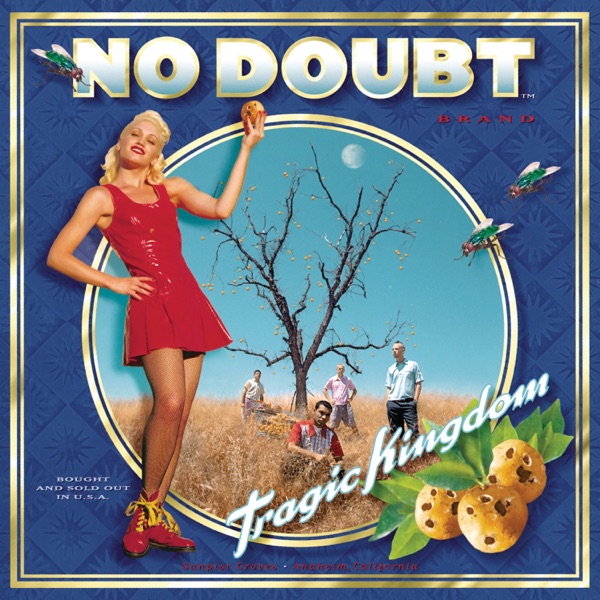
- 1 Spiderwebs ↗ 4:29
- 2 Excuse Me Mr. ↗ 3:06
- 3 Just a Girl ↗ 3:29
- 4 Happy Now? ↗ 3:44
- 5 Different People ↗ 4:35
- 6 Hey You ↗ 3:35
- 7 The Climb ↗ 6:39
- 8 Sixteen ↗ 3:23
- 9 Sunday Morning ↗ 4:32
- 10 Don't Speak ↗ 4:24
- 11 You Can Do It ↗ 4:15
- 12 World Go 'Round ↗ 4:09
- 13 End It on This ↗ 3:46
- 14 Tragic Kingdom ↗ 5:32
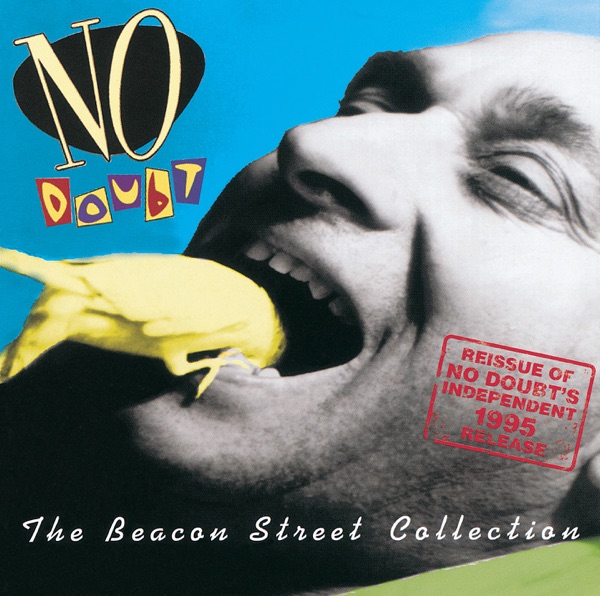

- 1 Ex-Girlfriend ↗ 3:32
- 2 Simple Kind of Life ↗ 4:17
- 3 Bathwater ↗ 4:03
- 4 Six Feet Under ↗ 2:28
- 5 Magic's In the Makeup ↗ 4:22
- 6 Artificial Sweetener ↗ 3:55
- 7 Marry Me ↗ 4:37
- 8 New ↗ 4:27
- 9 Too Late ↗ 4:14
- 10 Comforting Lie ↗ 2:53
- 11 Suspension Without Suspense ↗ 4:11
- 12 Staring Problem ↗ 2:44
- 13 Home Now ↗ 4:35
- 14 Dark Blue ↗ 4:35
- 15 Too Late (Instrumental) ↗ 4:55

- 1 Intro (No Doubt / Rock Steady) ↗ 0:28
- 2 Hella Good ↗ 4:03
- 3 Hey Baby (feat. Bounty Killer) ↗ 3:27
- 4 Making Out ↗ 4:15
- 5 Underneath It All (feat. Lady Saw) ↗ 5:03
- 6 Detective ↗ 2:53
- 7 Don't Let Me Down ↗ 4:09
- 8 Start the Fire ↗ 4:11
- 9 Running ↗ 4:02
- 10 In My Head ↗ 3:26
- 11 Platinum Blonde Life ↗ 3:27
- 12 Waiting Room ↗ 4:28
- 13 Rock Steady ↗ 5:22
- 14 Underneath It All (Radio 1 Live Acoustic Version / Bonus Track) ↗ 3:45
- 15 Just a Girl (Radio 1 Live Acoustic Version / Bonus Track) ↗ 3:35
