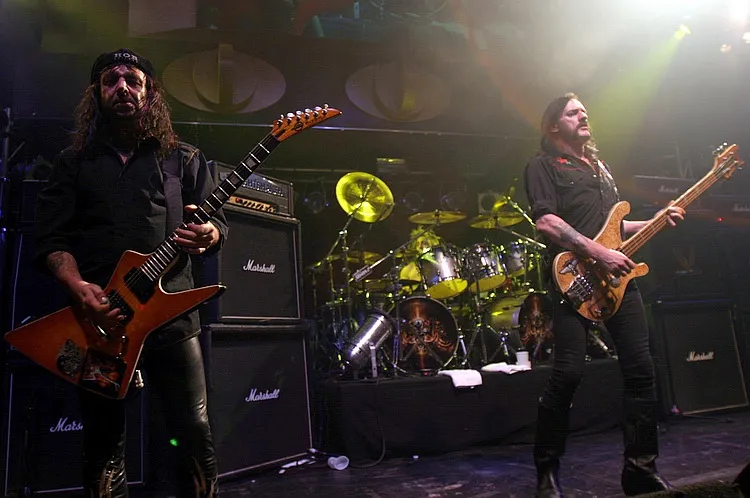
Photo by Mark Marek Mark Marek Copyright Mark Marek Photography ©2007 URL: Motorhead Gallery on Alberta Stars , licensed under CC BY-SA 3.0 · Wikimedia Commons
Rank #64
Motörhead
Lemmy's furious power trio fusing punk speed with metal volume.
From Wikipedia
Motörhead were an English rock band formed in London in 1975 by bassist and lead vocalist Lemmy Kilmister, guitarist Larry Wallis and drummer Lucas Fox. Kilmister was the primary songwriter and only constant member. The band are often considered a precursor to the new wave of British heavy metal, which re-energised heavy metal in the late 1970s and early 1980s. Though several guitarists and drummers played in Motörhead, most of their best-selling albums and singles featured drummer Phil "Philthy Animal" Taylor and guitarist "Fast" Eddie Clarke. From 1992 until the band's break-up in 2015, the group consisted of Kilmister, guitarist Phil Campbell and drummer Mikkey Dee.
Members
- Larry Wallis (1975–1976)
- Lemmy (1975–1997)
- Eddie Clarke (1976–1982)
- Phil Taylor (1976–1984)
- Brian Robertson (1982–1983)
- Phil Campbell (1983–1997)
- Würzel (1983–1995)
- Pete Gill (1984–1987)
- Mikkey Dee (1992–1997)
- Lucas Fox
Studio Albums
- 1977 Motörhead
- 1979 Bomber
- 1979 Overkill
- 1979 On Parole
- 1980 Ace of Spades
- 1982 Iron Fist
- 1983 Another Perfect Day
- 1986 Orgasmatron
- 1987 Rock ’n’ Roll
- 1991 1916
- 1992 March ör Die
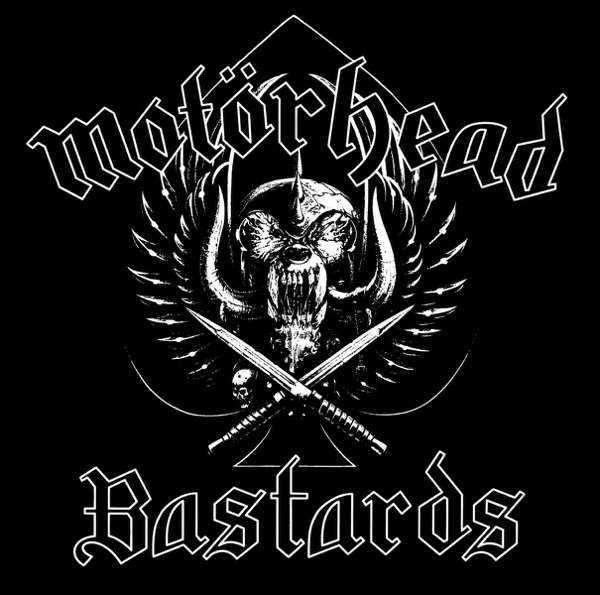
- 1993 Bastards
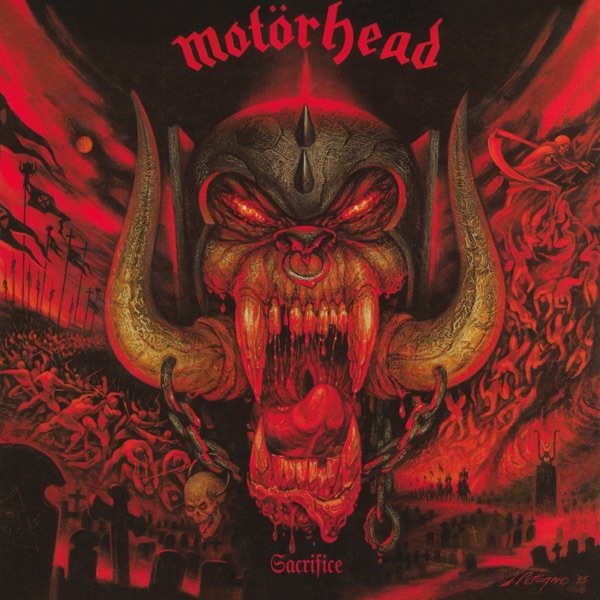
- 1995 Sacrifice
- 1996 Overnight Sensation
- 1998 Snake Bite Love
- 2000 We Are Motörhead
- 2002 Hammered
- 2004 Inferno
- 2006 Kiss of Death
- 2008 Motörizer
- 2010 The Wörld Is Yours
- 2013 Aftershock
- 2015 Bad Magic
Source: MusicBrainz
Deep Dive
Overview
Motörhead were an English rock band formed in London in 1975 that fused punk speed with heavy metal volume to create a raw, uncompromising sound that dominated the global metal landscape for four decades. Led by bassist and vocalist Lemmy Kilmister—the band’s primary songwriter and only constant member from their inception through 2015—Motörhead functioned as a power trio that prioritized relentless forward momentum over technical display. The band are often considered a precursor to the new wave of British heavy metal, the late-1970s and early-1980s movement that re-energised the genre when it risked calcification.
Formation Story
Motörhead emerged from London in 1975 when Lemmy Kilmister, guitarist Larry Wallis, and drummer Lucas Fox convened to create what would become one of heavy metal’s most enduring and influential outfits. Kilmister had previously worked in established acts but broke away to form this trio, immediately establishing himself as the creative and philosophical driving force. The band’s early lineup proved transitional; Wallis and Fox made way for drummer Phil Taylor and guitarist Eddie Clarke, whose partnership would define Motörhead’s most celebrated era. The London scene provided both the audience and the infrastructure for the band to develop their signature approach, which drew equally from hard rock, heavy metal, and the DIY ethos of punk.
Breakthrough Moment
Motörhead’s breakthrough crystallized with the release of Ace of Spades in 1980, an album that captured the band at peak creative force and commercial ambition. The title track became their signature song and a staple of rock radio and MTV, delivering a perfect distillation of their philosophy: aggressive, propulsive, and impossible to ignore. The album’s success established Motörhead as more than a cult curiosity—they were now a major commercial and artistic force in heavy metal. The success of Ace of Spades proved that their aggressive, unpretentious formula resonated across continents and demographics, from dedicated metalheads to mainstream rock listeners seeking something raw and unpolished.
Peak Era
Motörhead’s peak era spanned the late 1970s and early 1980s, when the Taylor–Clarke lineup delivered a run of albums that defined their legacy. Working with labels including Bronze and later Epic Records, the band released Motörhead (1977), Bomber (1979), Overkill (1979), and On Parole (1979) before achieving their commercial apex with Ace of Spades (1980). The follow-up Iron Fist (1982) extended their dominance, proving they could sustain momentum without diminishing their raw appeal. During this period, Motörhead became a stadium-headlining act, selling out arenas globally and influencing the shape of heavy metal’s mainstream visibility. The band’s willingness to tour relentlessly and record consistently kept them in the public consciousness through the 1980s and beyond.
Musical Style
Motörhead’s sonic identity rested on the power trio format: Lemmy’s bass-driven, distortion-heavy low end formed the rhythmic and harmonic backbone, supported by Eddie Clarke’s and later Phil Campbell’s lean but devastating guitar work, and anchored by Phil Taylor’s and later Mikkey Dee’s thunderous, straightforward drumming. Vocals were never polished; Lemmy’s ragged, commanding tone delivered lyrics with a conversational bluntness that made even their heaviest riffs feel immediate and personal rather than operatic. The band favored uptempo songs built on straightforward riffs, eschewing the progressive structures or technical flourishes that defined some metal contemporaries. This accessibility—combined with the sheer volume and aggression at which they delivered their material—meant Motörhead attracted audiences from punk, hard rock, and traditional heavy metal backgrounds. Over their four decades, the band’s approach remained remarkably consistent, a testament to the durability of their core formula and Lemmy’s unwillingness to chase trends.
Major Albums
Ace of Spades (1980)
The commercial and artistic peak, anchored by the immortal title track; an album that proved heavy metal could be simultaneously uncompromising and commercially successful.
Bomber (1979)
A relentless assault of speed and aggression that captured the band’s raw early-1980s energy and demonstrated their ability to write memorable songs without sacrificing intensity.
Iron Fist (1982)
Following Ace of Spades, this album maintained the band’s commercial momentum while showcasing their mastery of the mid-tempo, sludge-heavy riff that became a staple of their mature style.
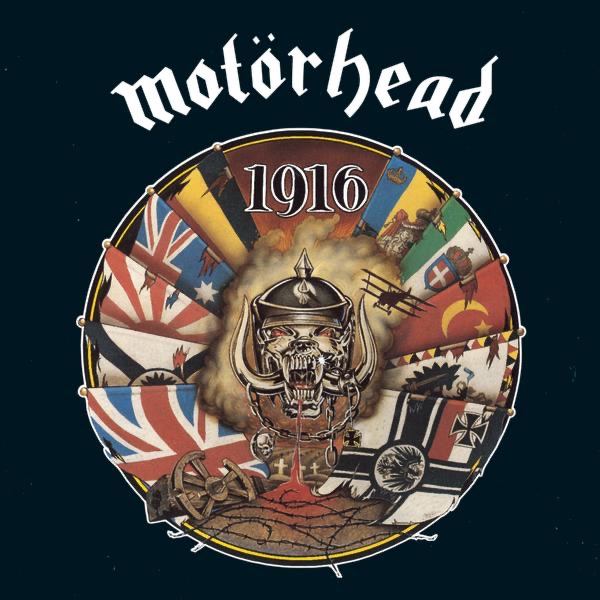
1916 (1991)
A late-career album that saw the band maintaining creative relevance after a period of inconsistency, proving they could still deliver solid material in their second decade.
Aftershock (2013)
Recorded when Lemmy was in his late sixties, this penultimate studio album demonstrated that the band had lost none of their aggressive bite despite advancing age.
Signature Songs
- Ace of Spades — The definitive Motörhead track, with a riff that became synonymous with the band’s identity and one of metal’s most recognizable openings.
- Killed by Death — A faster-paced stomp that showcased Lemmy’s ability to deliver visceral lyrics with darkly humorous detachment.
- Iron Fist — The title track exemplified their ability to construct a heavy, mid-tempo groove that felt both accessible and menacing.
- Bomber — The opening salvo of their 1979 album, establishing the band’s full-throttle assault from the first note.
- Motorhead — The self-titled track that announced the band’s intentions with maximum clarity and introduced the world to Lemmy’s command of the stage and microphone.
- Overkill — Named after their second album, a high-speed charge that captured the band’s punk-metal fusion in miniature form.
Influence on Rock
Motörhead’s impact on heavy metal and rock cannot be overstated. They influenced thrash metal pioneers including Metallica and Slayer, who adopted their unpretentious, speed-driven approach to songwriting and delivery. The band also inspired countless hard rock and punk acts who appreciated their refusal to soften their edges for commercial appeal. Lemmy Kilmister became a cultural figure beyond music—a symbol of rock’s outsider ethos and commitment to artistic independence. The band’s longevity and consistency made them a touchstone for what it meant to remain true to one’s core sound over decades of changing trends. Their aesthetic of leather, studs, and motorcycle culture became inseparable from heavy metal’s visual and cultural identity worldwide.
Legacy
Motörhead’s dissolution in 2015 marked the end of a four-decade legacy that left indelible marks across metal, hard rock, and rock culture at large. Lemmy Kilmister’s death that same year underscored the band’s centrality to his life and identity—he was Motörhead, and Motörhead was him. The band’s catalog has remained a constant presence on streaming platforms and in critical reassessments of 1980s metal, with albums like Ace of Spades receiving regular recognition in greatest-albums-of-all-time discussions. Their studio albums, released across numerous labels including Bronze, Epic Records, and Sanctuary Records, remain in continuous circulation. The band’s influence on subsequent generations of metal musicians—from death metal to stoner rock to contemporary hard rock—testifies to the timelessness of their approach. Motörhead stand as one of rock’s great constants: a band that knew exactly what they were, never apologized for it, and executed their vision with unwavering commitment from 1975 until their final show.
Fun Facts
- Lemmy Kilmister remained the primary songwriter and only unbroken member throughout the band’s entire 40-year history, a remarkable feat of stability in a band context where membership rotations were common.
- The band’s final lineup, consisting of Kilmister, guitarist Phil Campbell, and drummer Mikkey Dee, remained intact for over two decades from 1992 onward, providing a period of exceptional consistency and familiarity.
- Motörhead’s name and aesthetic drew from slang terminology and embraced outlaw motorcycle culture imagery, positioning them as working-class warriors in an era when metal was increasingly associated with fantasy and spectacle.
- The band released studio albums consistently across five decades, from 1977’s self-titled debut through Bad Magic in 2015, demonstrating a prolific work ethic unusual among bands that maintained critical respect.
Discography & Previews
Click any album to expand its track list. Each track plays a 30-second preview streamed from Apple Music. Tap the link icon next to a track to open it in Apple Music for full playback.


- 1 Motörhead ↗ 2:50
- 2 On Parole ↗ 5:38
- 3 Vibrator ↗ 2:52
- 4 Iron Horse / Born to Lose ↗ 5:15
- 5 City Kids ↗ 3:43
- 6 The Watcher ↗ 4:47
- 7 Leaving Here ↗ 2:54
- 8 Lost Johnny ↗ 3:30
- 9 Fools ↗ 5:35
- 10 On Parole (Alternate Take) ↗ 6:58
- 11 City Kids (Alternate Take) ↗ 3:48
- 12 Motörhead (Alternate Take) ↗ 2:48
- 13 Leaving Here (Alternate Take) ↗ 3:01


- 1 Sucker ↗ 2:59
- 2 One Night Stand ↗ 3:05
- 3 Devil I Know ↗ 3:01
- 4 Trigger ↗ 3:53
- 5 Under the Gun ↗ 4:45
- 6 God Was Never on Your Side ↗ 4:21
- 7 Living in the Past ↗ 3:45
- 8 Christine ↗ 3:42
- 9 Sword of Glory ↗ 3:58
- 10 Be My Baby ↗ 3:41
- 11 Kingdom of the Worm ↗ 4:09
- 12 Going Down ↗ 3:35
- 13 R.A.M.O.N.E.S. (2006 Version) ↗ 1:22


- 1 Heartbreaker ↗ 3:05
- 2 Coup de Grace ↗ 3:45
- 3 Lost Woman Blues ↗ 4:09
- 4 End of Time ↗ 3:17
- 5 Do You Believe ↗ 3:00
- 6 Death Machine ↗ 2:38
- 7 Dust and Glass ↗ 2:51
- 8 Going to Mexico ↗ 2:52
- 9 Silence When You Speak to Me ↗ 4:30
- 10 Crying Shame ↗ 4:28
- 11 Queen of the Damned ↗ 2:41
- 12 Knife ↗ 2:57
- 13 Keep Your Powder Dry ↗ 3:54
- 14 Paralyzed ↗ 2:50

- 1 Victory or Die ↗ 3:08
- 2 Thunder & Lightning ↗ 3:06
- 3 Fire Storm Hotel ↗ 3:35
- 4 Shoot Out All of Your Lights ↗ 3:15
- 5 The Devil ↗ 2:54
- 6 Electricity ↗ 2:17
- 7 Evil Eye ↗ 2:20
- 8 Teach Them How to Bleed ↗ 3:13
- 9 Till the End ↗ 4:05
- 10 Tell Me Who to Kill ↗ 2:57
- 11 Choking on Your Screams ↗ 3:33
- 12 When the Sky Comes Looking for You ↗ 2:58
- 13 Sympathy for the Devil ↗ 5:27