Photo by Jean-Luc , licensed under CC BY-SA 2.0 · Wikimedia Commons
Rank #98
Emerson, Lake & Palmer
Keyboard-led prog supergroup of arena-scale ambition.
From Wikipedia
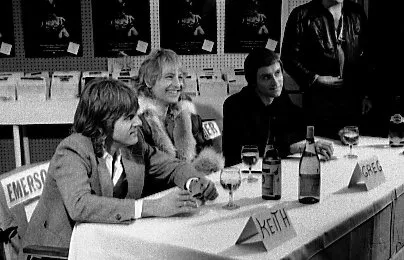
Emerson, Lake & Palmer were an English progressive rock supergroup formed in London in 1970. The band consisted of Keith Emerson (keyboards) of the Nice, Greg Lake of King Crimson, and Carl Palmer of Atomic Rooster. With nine RIAA-certified gold record albums in the US, and an estimated 48 million records sold worldwide, they were one of the most popular and commercially successful progressive rock groups of the 1970s, with a musical sound including adaptations of classical music with jazz and symphonic rock elements, dominated by Emerson's flamboyant use of the Hammond organ, Moog synthesizer, and piano.
Members
- Carl Palmer · timbales
- Greg Lake · acoustic bass guitar
- Keith Emerson · celesta
Studio Albums
- 1970 Emerson, Lake & Palmer
- 1971 Tarkus
- 1972 Trilogy
- 1973 Brain Salad Surgery
- 1977 Works, Volume 1
- 1977 Works, Volume 2
- 1978 Love Beach
- 1992 Black Moon
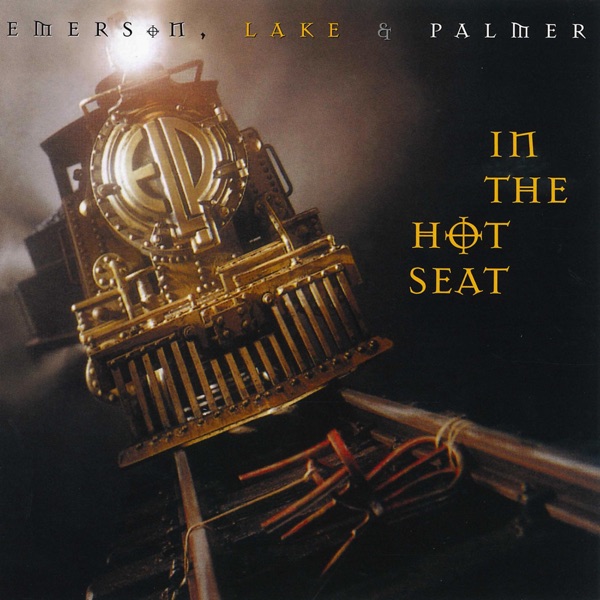
- 1994 In the Hot Seat
Source: MusicBrainz
Deep Dive
Overview
Emerson, Lake & Palmer were an English progressive rock supergroup formed in London in 1970. The trio—Keith Emerson from the Nice, Greg Lake from King Crimson, and Carl Palmer from Atomic Rooster—represented a convergence of three distinct instrumental traditions: classical virtuosity, avant-garde experimentation, and rhythmic precision. With an estimated 48 million records sold worldwide and nine RIAA-certified gold albums in the United States, they became one of the most commercially successful progressive rock acts of the 1970s. Their music married classical motifs with synthesizer technology and jazz-rock complexity, creating a template for arena-scale progressive rock that would influence the genre for decades.
Formation Story
Emerson, Lake & Palmer came together in London in 1970 during a period when progressive rock was rapidly coalescing into a dominant force in popular music. Keith Emerson, having built a reputation as an innovative keyboardist with the Nice, provided the foundation for the group’s formation. Greg Lake arrived with credentials from King Crimson, one of prog rock’s most intellectually adventurous bands, bringing both bass guitar and vocals to the ensemble. Carl Palmer, a trained percussionist and drummer from Atomic Rooster, completed the trio with a dynamic, jazz-inflected approach to timekeeping and melodic percussion. The alignment of these three musicians was neither accidental nor casual; each brought world-class technical ability and ambition to exploit the emerging possibilities of synthesizer technology and large-scale rock composition.
Breakthrough Moment
The band’s self-titled debut, Emerson, Lake & Palmer (1970), announced their arrival with a confident, fully formed artistic vision. Released in the same year as their formation, it demonstrated their willingness to tackle ambitious arrangements and showcase Emerson’s facility on the Hammond organ and early Moog synthesizer. The album established a template that would sustain their popularity: classical themes recomposed for rock instrumentation, extended instrumental passages, and a virtuosic approach to songcraft. By their second release, Tarkus (1971), they had solidified their position as a major force in progressive rock, commanding large concert halls and festival slots alongside groups like Yes and Jethro Tull.
Peak Era
The period from 1971 to 1973 marked Emerson, Lake & Palmer’s artistic and commercial zenith. Tarkus (1971) and Trilogy (1972) established them as the most technically ambitious synthesizer-based rock band of the era, capable of selling out arenas and winning critical praise for their compositional complexity. Brain Salad Surgery (1973) extended their reach further, cementing their status as stadium-level attractions with a global audience. During these years, their live performances became theatrical events, featuring Emerson’s flamboyant keyboard technique and the band’s collective precision. The mid-1970s saw their influence peak as they became standard repertoire for FM radio and concert promoters seeking marquee acts.
Musical Style
Emerson, Lake & Palmer’s sound was dominated by Emerson’s flamboyant command of the Hammond organ, Moog synthesizer, and piano—instruments he employed with equal technical mastery and showmanship. The band’s core approach involved adapting classical music, particularly the works of composers such as Mussorgsky, for rock instrumentation, layering synthesizer textures over Lake’s bass guitar lines and Palmer’s polyrhythmic percussion. Their arrangements often featured rapid dynamic shifts between delicate acoustic passages and explosive symphonic climaxes, drawing from both the symphonic rock tradition established by groups like Yes and the experimental electronic sensibility of avant-garde classical music. Jazz elements—particularly in Palmer’s drumming and the band’s harmonic sophistication—provided a looseness that contrasted with the precision of their classical adaptations. Over time, the band’s sound evolved from the keyboard-heavy and synthesizer-dominated approach of their early albums toward a more eclectic palette, though keyboard virtuosity remained their constant trademark.
Major Albums
Emerson, Lake & Palmer (1970)
The band’s self-titled debut announced a fully realized artistic vision from the outset, showcasing Emerson’s Hammond organ and early synthesizer work alongside Lake’s bass guitar and Palmer’s precise percussion.
Tarkus (1971)
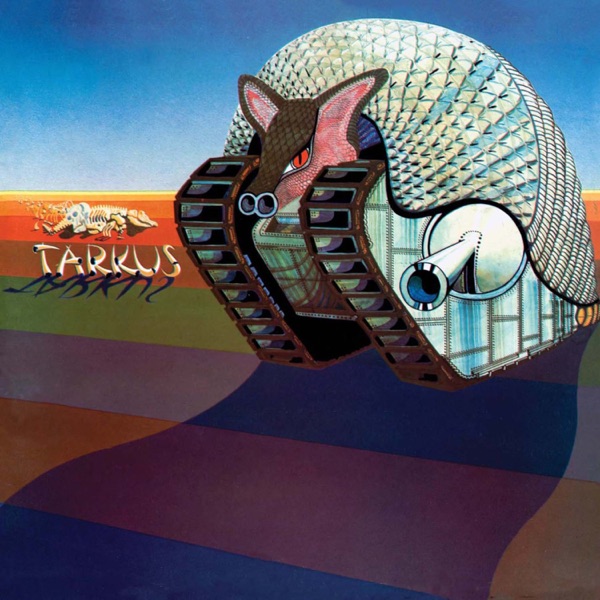
Named after its ambitious 20-minute title track, Tarkus deepened their classical-rock fusion and established their reputation for extended compositional forms and technical precision.
Trilogy (1972)
This triple-album set demonstrated their confidence in longer song structures and more elaborate orchestral arrangements, further expanding their audience and influence.
Brain Salad Surgery (1973)
The band’s commercial and critical peak, this album featured some of their most enduring compositions and solidified their position as progressive rock’s premier keyboard-led group.
Works, Volume 1 (1977)
Released alongside its companion volume, this album marked a shift toward more diverse material and saw the band experimenting with orchestral accompaniment and broader thematic scope.
Signature Songs
- “Lucky Man” — A showcase for Lake’s melodic sensibility and Emerson’s synthesizer innovation, becoming one of their most recognizable compositions.
- “Tarkus” — The title track from their 1971 album, an extended instrumental demonstrating the band’s command of classical structure and dynamic contrast.
- “From the Beginning” — A keyboard-driven piece highlighting the interplay between Emerson’s piano and synthesizer work and the band’s harmonic sophistication.
- “Karn Evil 9” — An elaborate multi-part composition spanning nearly 30 minutes across the Brain Salad Surgery album, exemplifying their symphonic ambitions.
- “Fanfare for the Common Man” — An arrangement of Aaron Copland’s composition that allowed the band to prove their ability to recompose classical material for contemporary rock audiences.
Influence on Rock
Emerson, Lake & Palmer stood at the apex of 1970s progressive rock and shaped the form’s trajectory for decades. They demonstrated that synthesizers could serve as primary melodic instruments rather than mere novelties, legitimizing keyboard-led rock composition and inspiring a generation of progressive and symphonic rock bands. Their approach to classical adaptation—treating existing compositions as raw material for radical reimagining—became a template that influenced countless prog-rock descendants. The band’s commercial success validated the market for complex, album-length compositions and technical virtuosity at a stadium scale, creating space for the broader progressive rock movement to flourish. Their influence extended beyond rock into the broader development of synthesizer culture and electronic music, as Emerson’s pioneering work with the Moog synthesizer demonstrated its potential for expressive, lead-voice instrumental playing.
Legacy
Emerson, Lake & Palmer dissolved in 1998 but reunited for performances and recordings through 2010, allowing subsequent generations to experience their music in concert settings. The band’s catalog has endured on streaming platforms and through ongoing physical reissues, maintaining their visibility among both longtime admirers and listeners newly discovering progressive rock. Their commercial success—manifested in nine RIAA-certified gold albums and worldwide sales exceeding 48 million records—secured their place among the commercially dominant bands of the 1970s. While critical reassessments of progressive rock have sometimes questioned their artistic ambitions, their technical mastery and commercial acumen remain undisputed. The complexity and grandeur of their compositions continue to influence progressive and symphonic metal, art rock, and contemporary electronic music.
Fun Facts
- Emerson’s Hammond organ was frequently featured in dramatic live performances where he would manipulate the instrument’s controls with characteristic theatrical flair, making his keyboard work a visual centerpiece of the band’s shows.
- The band’s willingness to adapt existing classical compositions—particularly works by Mussorgsky and Copland—reflected a philosophical commitment to demonstrating rock music’s capacity to engage with the full history of Western musical traditions.
- Carl Palmer’s background in formal percussion training gave Emerson, Lake & Palmer a rhythmic sophistication that distinguished them from other progressive rock bands reliant on conventionally trained rock drummers.
- The band maintained an active recording and touring presence across four decades, from their 1970 formation through 2010, adapting their sound and approach across multiple eras of rock music.
Discography & Previews
Click any album to expand its track list. Each track plays a 30-second preview streamed from Apple Music. Tap the link icon next to a track to open it in Apple Music for full playback.

- 1 Tarkus (i. Eruption, ii. Stones of Years, iii. Iconoclast, iv. Mass, v. Manticore, vi. Battlefield, vii. Aquatarkus) [2012 Remaster] ↗ 20:38
- 2 Jeremy Bender (2012 Remaster) ↗ 1:47
- 3 Bitches Crystal (2012 Remaster) ↗ 3:58
- 4 The Only Way (Hymn) [2012 Remaster] ↗ 3:47
- 5 Infinite Space (Conclusion) [2012 Remaster] ↗ 3:22
- 6 A Time and a Place (2012 Remaster) ↗ 2:59
- 7 Are You Ready Eddy? (2012 Remaster) ↗ 2:10

- 1 The Endless Enigma, Pt. 1 (2015 Remaster) ↗ 6:41
- 2 Fugue (2015 Remaster) ↗ 1:56
- 3 The Endless Enigma, Pt. 2 (2015 Remaster) ↗ 2:03
- 4 From the Beginning (2015 Remaster) ↗ 4:13
- 5 The Sheriff (2015 Remaster) ↗ 3:23
- 6 Hoedown (2015 Remaster) ↗ 3:46
- 7 Trilogy (2015 Remaster) ↗ 8:52
- 8 Living Sin (2015 Remaster) ↗ 3:11
- 9 Abaddon's Bolero (2015 Remaster) ↗ 8:06

- 1 Jerusalem (2014 Remaster) ↗ 2:45
- 2 Toccata (2014 Remaster) ↗ 7:20
- 3 Still...You Turn Me On (2014 Remaster) ↗ 2:52
- 4 Benny the Bouncer (2014 Remaster) ↗ 2:21
- 5 Karn Evil 9 1st Impression, Pt. 1 (2014 Remaster) ↗ 8:36
- 6 Karn Evil 9 1st Impression, Pt. 2 (2014 Remaster) ↗ 4:46
- 7 Karn Evil 9 2nd Impression (2014 Remaster) ↗ 7:06
- 8 Karn Evil 9 3rd Impression (2014 Remaster) ↗ 9:02