
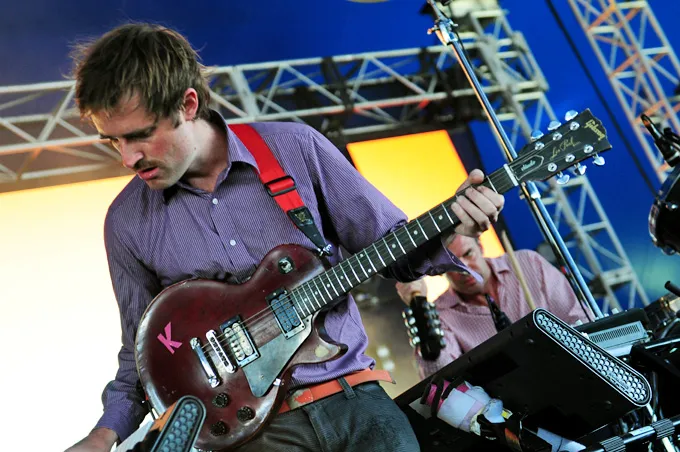
Photo by Stuart Sevastos , licensed under CC BY 2.0 · Wikimedia Commons
Rank #441
Battles
NYC math-rock band of looped riffs and dance-leaning experimentation.
From Wikipedia
Battles is an American experimental rock duo formed in 2002 in New York City by Ian Williams. The current line-up is composed of guitarist/keyboardist Williams and drummer John Stanier. Former members include composer/vocalist Tyondai Braxton and guitarist/bassist Dave Konopka. The band has released four studio albums to date, with the most recent Juice B Crypts being released in 2019.
Members
- Ian Williams
- John Stanier
Studio Albums
- 2007 Mirrored
- 2011 Gloss Drop
- 2012 FACT Mix 325: Battles
- 2015 La Di Da Di
- 2019 Juice B Crypts
Source: MusicBrainz
Deep Dive
Overview
Battles is an American experimental rock band formed in New York City in the early 2000s, operating at the intersection of math rock precision and post-rock atmospherics. Built on intricate polyrhythmic guitar work, looped instrumental textures, and rhythmic complexity, the band emerged during a period when rock music was fragmenting into ever more specialized sub-genres. Their work—whether as a fuller ensemble or the duo configuration that has defined their recent output—stands apart for its refusal of conventional song structure and vocal-centric songwriting, instead treating the instrumental arrangements themselves as the primary compositional focus.
Formation Story
Battles coalesced in New York City around 2002–2003, founded by guitarist and keyboardist Ian Williams. The band’s initial lineup expanded to include drummer John Stanier, composer and vocalist Tyondai Braxton, and guitarist and bassist Dave Konopka. The four-piece configuration drew from the city’s long experimental music tradition and the emerging math-rock scene that had taken root in venues and record labels across the Northeast. This particular lineup—Williams, Stanier, Braxton, and Konopka—would define Battles’ most formative and celebrated period, establishing a template for what the band would pursue across their early recordings.
Breakthrough Moment
Battles achieved significant recognition with the release of Mirrored in 2007, their debut studio album. The record showcased the band’s signature approach: intricate, layered guitar parts built through overdubbing and looping, precise drum programming and live drumming intertwined, and Braxton’s distinctive vocal contributions that treated the human voice more as another textural instrument than as a traditional lead. Mirrored introduced listeners to songs like “Tonto,” which became the band’s most enduring statement of purpose—a four-minute-plus composition that spiraled through multiple drum breaks, pitch-shifted vocal loops, and interlocking melodic lines. The album established Battles within experimental rock circles and on college radio, earning the band a growing international following despite their deliberate avoidance of radio-friendly structures.
Peak Era
The band reached their commercial and critical zenith with Gloss Drop in 2011, released four years after their debut. This second full-length deepened and refined the Battles sound: the polyrhythmic structures became more expansive, the production more refined, and the instrumental interplay more intuitive. Gloss Drop featured guest vocalists and collaborators on several tracks, expanding the sonic palette while remaining faithful to the band’s core identity as an instrumental ensemble. The period from 2007 through 2011 represented Battles at their most prolific and visible, touring extensively and building a devoted audience among musicians and serious listeners who valued technical precision and compositional ambition over accessibility. This era solidified their position within the post-rock and math-rock movements, influencing a generation of bands that would follow in their wake.
Musical Style
Battles’ sound is built on layers of electric guitar and keyboards, processed through various effects and arranged in intricate, interlocking patterns. The drumming—whether programmed or played live by Stanier—operates with mathematical exactitude, often running in time signatures or polyrhythmic divisions that resist conventional pop or rock meter. Harmony and melody emerge not from traditional chord progressions but from the cumulative effect of individual instrumental lines weaving around one another, creating a dense, almost orchestral texture despite the band’s relatively small instrumental complement. When vocals are employed, they are often looped, pitch-shifted, or otherwise processed, integrated as components of the overall arrangement rather than as a dominant melodic force. This approach situates Battles within the broader experimental and post-rock traditions, though their emphasis on rhythmic complexity and technical execution aligns them more closely with math rock’s intellectual rigor. The band’s use of digital production tools and studio technology is integral to their sound—loops, layering, and electronic manipulation are not effects applied after the fact but foundational to the compositional process itself.
Major Albums
Mirrored (2007)
The debut introduced Battles’ core methodology: multi-tracked guitars, syncopated drums, and Braxton’s processed vocals creating a densely layered, rhythmically sophisticated sound that challenged conventional rock songwriting while maintaining raw energy and rhythmic drive.
Gloss Drop (2011)
The second album refined the formula with increased production clarity, expanded collaborations with guest vocalists, and more spacious arrangements that allowed individual instrumental lines to breathe while maintaining the band’s signature polyrhythmic complexity.
La Di Da Di (2015)
Released four years later, this album continued the band’s evolution, moving toward a slightly more accessible aesthetic without sacrificing the intricate compositional structures that defined their work.
Juice B Crypts (2019)
The most recent studio album saw Battles operating as a duo of Williams and Stanier, reflecting the long-term departure of Braxton and Konopka while continuing to explore looped, dance-influenced rhythmic experimentation.
Signature Songs
- “Tonto” — A four-minute spiral of looped guitars, snaking drum breaks, and pitch-shifted vocals that became the band’s anthem and clearest statement of their compositional intent.
- “Race: In” — A track showcasing the band’s ability to layer multiple time signatures into a hypnotic, propulsive instrumental statement.
- “Iyouandeveryone” — Demonstrates the band’s integration of guest vocalists and processing techniques within their signature rhythmic framework.
- “A Loop.So” — Exemplifies the band’s use of looping and digital manipulation as primary compositional tools rather than surface-level effects.
Influence on Rock
Battles’ influence flows through the math-rock and post-rock movements of the 2010s, establishing that experimental rock did not require conventional song structures or traditional lyrical content to achieve both intellectual rigor and visceral impact. Their emphasis on polyrhythmic precision and instrumental interplay provided a template for countless bands exploring the intersection of electronic music production and live rock instrumentation. The band’s use of looping and layering as compositional rather than decorative techniques has become standard practice in experimental rock, influencing how subsequent generations approach the relationship between digital production and instrumental performance. While not as culturally dominant as some of their contemporaries, Battles’ technical sophistication and refusal of accessibility have made them a touchstone for musicians prioritizing compositional complexity and instrumental craft over commercial appeal.
Legacy
Battles maintains an active presence in experimental music circles despite the departure of two founding members. The band continues to tour and record as a duo, with 2019’s Juice B Crypts confirming their ongoing creative engagement. The core recordings from their four-member era, particularly Mirrored and Gloss Drop, remain influential touchstones in math rock and experimental rock discourse, studied by musicians and referenced in conversations about how rock music adapted to digital production and compositional innovation in the 21st century. Their recorded catalog is maintained in the Warp Records catalogue, ensuring their work remains available to new listeners and students of experimental rock. Battles’ longevity as an active ensemble—now more than two decades into their existence—speaks to a committed creative partnership and an audience that values sustained artistic exploration over one-time innovation.
Fun Facts
- The band’s official website, bttls.com, uses a stylized all-lowercase abbreviation that mirrors their approach to presentation and brand identity.
- Ian Williams’ work with Battles existed alongside his involvement in other experimental music projects, reflecting the collaborative and interconnected nature of the New York experimental music community.
- FACT Mix 325 in 2012 represented the band’s participation in Fact Magazine’s long-running mix compilation series, typically used by artists to showcase curated selections rather than original recordings.
- The band’s evolution from a four-piece to a two-piece lineup reflects both shifting membership and a creative direction toward the core partnership of Williams and Stanier.
Discography & Previews
Click any album to expand its track list. Each track plays a 30-second preview streamed from Apple Music. Tap the link icon next to a track to open it in Apple Music for full playback.

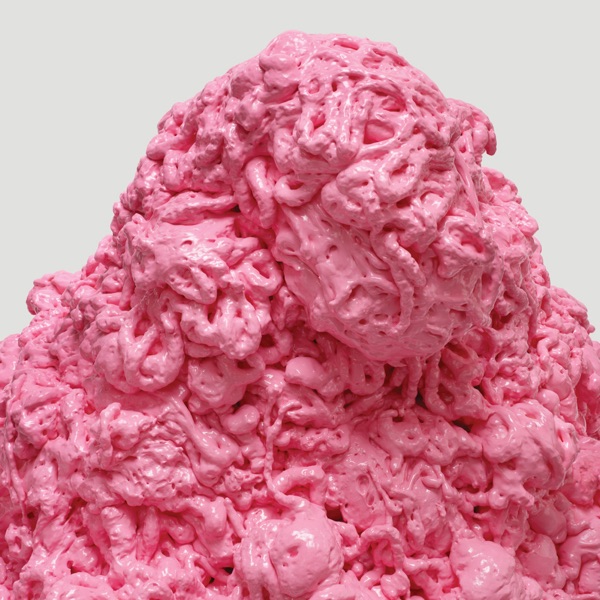
- 1 Africastle ↗ 5:48
- 2 Ice Cream (feat. Matias Aguayo) ↗ 4:37
- 3 Futura ↗ 6:17
- 4 Inchworm ↗ 4:52
- 5 Wall Street ↗ 5:25
- 6 My Machines (feat. Gary Numan) ↗ 3:55
- 7 Dominican Fade ↗ 1:49
- 8 Sweetie & Shag (feat. Kazu Makino) ↗ 3:50
- 9 Toddler ↗ 1:11
- 10 Rolls Bayce ↗ 2:06
- 11 White Electric ↗ 6:14
- 12 Sundome (feat. Yamantaka Eye) ↗ 7:48
- 13 Afrislow (MWM Edit) [Bonus Track] ↗ 5:13


- 1 Ambulance ↗ 4:21
- 2 A Loop So Nice... ↗ 2:14
- 3 They Played It Twice (feat. Xenia Rubinos) ↗ 3:09
- 4 Sugar Foot (feat. Jon Anderson & 落差草原 WWWW) ↗ 5:19
- 5 Fort Greene Park ↗ 5:45
- 6 Titanium 2 Step (feat. Sal Principato) ↗ 3:26
- 7 Hiro 3 ↗ 1:09
- 8 Izm (feat. Shabazz Palaces) ↗ 3:37
- 9 Juice B Crypts ↗ 3:57
- 10 Last Supper On Shasta, Pt. 1 (feat. Tune-Yards) ↗ 3:53
- 11 Last Supper On Shasta, Pt. 2 (feat. Tune-Yards) ↗ 3:55