
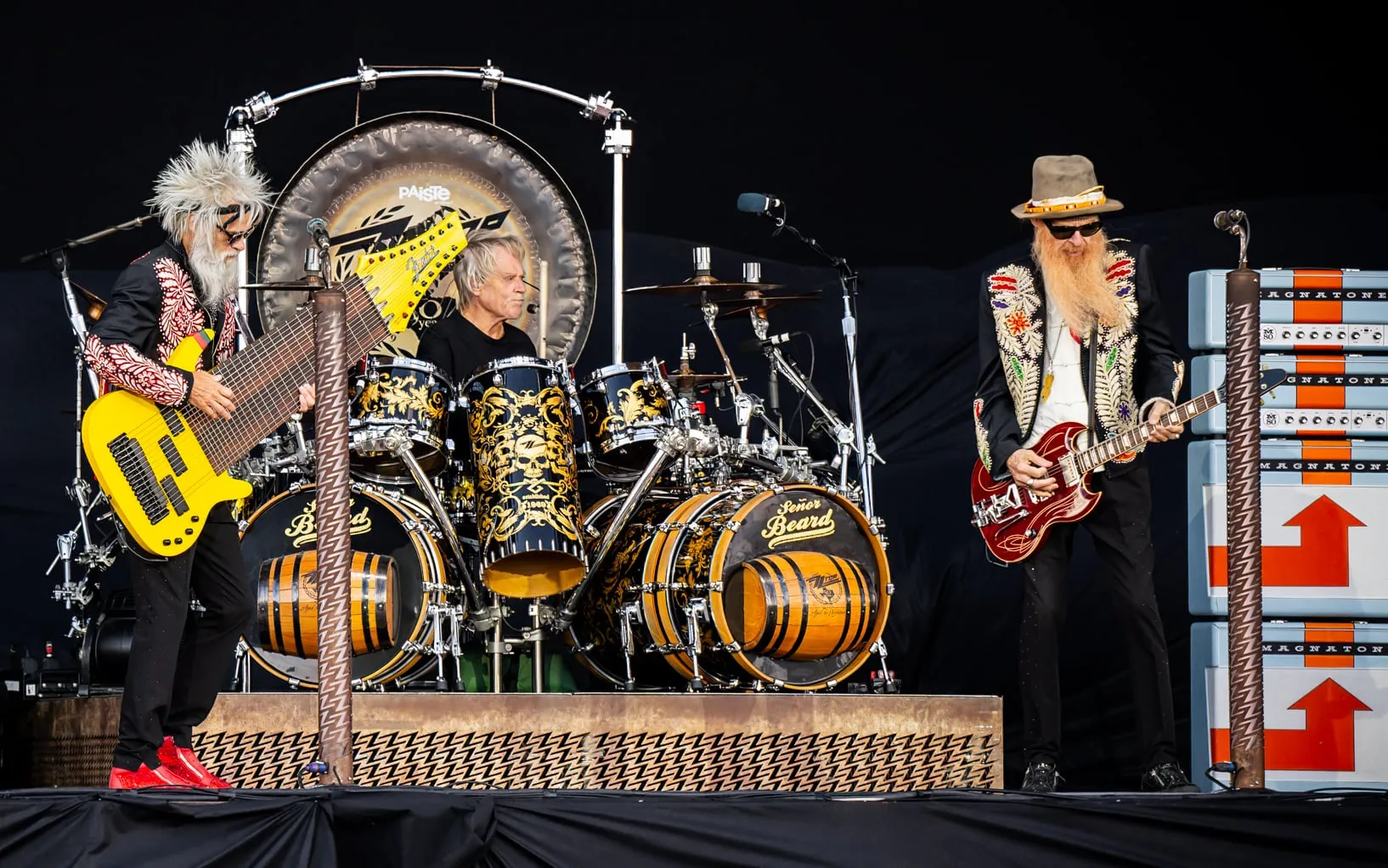
Photo by Birgit Fostervold from Arendal, Norge , licensed under CC BY-SA 2.0 · Wikimedia Commons
Rank #67
ZZ Top
Texas blues-rock trio whose long beards and tight grooves became iconic.
From Wikipedia
ZZ Top is an American rock band formed in Houston, Texas, in 1969.The band has maintained a constant lineup for over five decades - consisting of vocalist-guitarist Billy Gibbons, drummer Frank Beard, and bassist-vocalist Dusty Hill until Hill's departure, and eventual death, in 2021. ZZ Top developed a signature sound based on Gibbons' blues style and Hill and Beard's rhythm section. They are known for their live performances, sly and humorous lyrics, and the matching appearances of Gibbons and Hill, who wore sunglasses, hats, and long beards.
Members
- Dusty Hill (1969–2021)
- Billy Gibbons
- Frank Beard
Studio Albums
- 1970 ZZ Top’s First Album
- 1972 Rio Grande Mud
- 1973 Tres hombres
- 1975 Fandango!
- 1976 Tejas
- 1976 ZZ Top’s Worldwide Texas Tour
- 1979 Degüello
- 1981 El loco
- 1983 Eliminator
- 1985 Afterburner
- 1990 Recycler
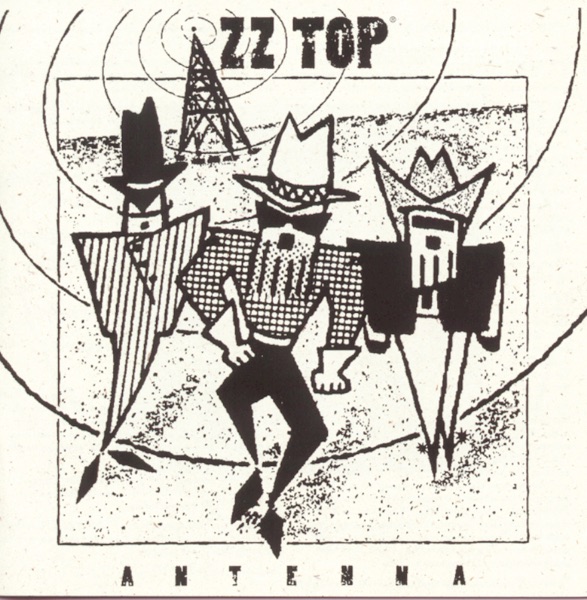
- 1993 Antenna
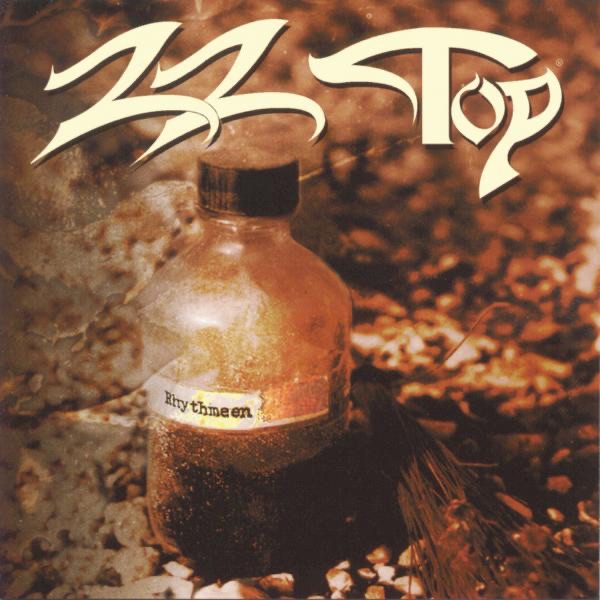
- 1996 Rhythmeen
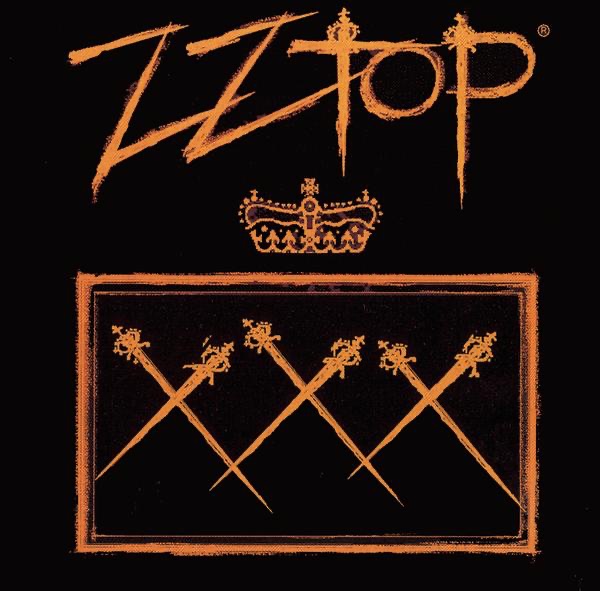
- 1999 XXX
- 2002 Beer, Beards and Moore
- 2003 Mescalero
- 2004 The Best Blues & Ballads
- 2008 Ultimate Collection
- 2012 La futura
Source: MusicBrainz
Deep Dive
Overview
ZZ Top is an American blues-rock band formed in Houston, Texas, in 1969. Anchored by the singular guitar voice of Billy Gibbons, the rhythmic anchor of Frank Beard’s drums, and Dusty Hill’s bass and vocal harmonies, the trio built a catalog and reputation spanning over five decades that few acts in rock history can match. Their music—grounded in Texas blues but amplified into hard-rock intensity—became inseparable from their visual identity: matching sunglasses, hats, and the now-legendary long beards worn by Gibbons and Hill. ZZ Top represents both a musical lineage (the blues played through a rock-and-roll amplifier) and a philosophy: groove, humor, and the unwavering commitment to a singular vision.
Formation Story
ZZ Top crystallized in Houston in 1969 from the convergence of three musicians already seasoned in the Texas rock and blues underground. Billy Gibbons, a guitarist steeped in blues tradition, Frank Beard, a drummer raised in the rhythm-and-blues idiom, and Dusty Hill, a bassist and vocalist with deep roots in regional rock, united to form a power trio. Houston’s geographic isolation from the major music industry centers of the coasts meant the band developed its sound in relative autonomy, drawing directly from the blues heritage of Texas and the South. The city’s active club circuit and blues tradition provided both audience and inspiration. Unlike many power trios that emerged in the late 1960s, ZZ Top was not a psychedelic or progressive experiment but a return to essentials: three instruments, one voice (or two in harmony), and the groove as law.
Breakthrough Moment
ZZ Top’s earliest albums—ZZ Top’s First Album (1970) and Rio Grande Mud (1972)—established their template: riff-driven blues-rock with Gibbons’ guitar as the dominant voice and Hill’s bass lines locking into Beard’s drums with machine-like precision. However, it was Tres hombres (1973) that signaled their ascension beyond regional act. The album’s combination of straight-ahead rockers, blues shuffles, and Gibbons’ increasingly distinctive tone—a fusion of blues vocabulary and hard-rock aggression—began to attract national attention. Fandango! (1975) amplified this reach, demonstrating the band’s ability to translate their live intensity onto record. By the mid-1970s, ZZ Top had moved from opening-act status to arena headliners, a trajectory powered entirely by their own groove and Gibbons’ guitar voice rather than by radio hits or trend-riding.
Peak Era
ZZ Top’s commercial and creative apex arrived in the early 1980s with Eliminator (1983) and Afterburner (1985). Eliminator, in particular, became a cultural phenomenon—a record that managed to synthesize the band’s blues-rock foundation with synthesizers, drum machines, and production techniques that reflected the era’s sound without compromising their core identity. The album’s accessibility and visual presentation (the famous red hot rod, the band’s appearance in music videos) broadened their audience dramatically. Afterburner sustained this momentum, proving the success was not anomalous. Throughout this period, ZZ Top remained fundamentally a live band; their studio albums were documents of their groove, but their true domain was the stage. The early 1980s saw them become one of the most toured and most dependable rock acts in the world—a position they maintained through subsequent decades.
Musical Style
ZZ Top’s sound is built on the marriage of the electric blues (specifically Texas and Delta traditions) with the power and attitude of hard rock. Gibbons’ guitar tone—thick, sustained, heavy on bends and vibrato, yet always blues-rooted—is the band’s signature. His riffs eschew flash and virtuosity in favor of groove; a ZZ Top song succeeds or fails on whether the riff makes you move, not whether it dazzles. Hill’s bass lines are anchor and counterpoint, locking with Beard’s drums to create a rhythm section of rare tightness. Beard’s drumming is economical and propulsive—no flourish, no excess, just the beat driving forward. Lyrically, the band traded in humor, double entendre, and narrative storytelling rooted in the everyday and the absurd. Gibbons and Hill’s vocal arrangements—often in unison or simple harmony—added a singalong quality that made their records accessible while remaining unmistakably blues-rock. Over their career, ZZ Top incorporated synthesizers, drum machines, and contemporary production without ever abandoning the blues as their foundation.
Major Albums
Tres hombres (1973)
The album that established ZZ Top as a major force, combining blues fundamentals with hard-rock power and marking the beginning of their national ascension.
Fandango! (1975)
A live-and-studio hybrid that captured the band’s reputation for explosive live performance and solidified their status as arena rock attractions.
Degüello (1979)
A raw-edged record that reasserted the band’s blues roots while maintaining the hard-rock intensity and humor that defined their style.
Eliminator (1983)
The band’s commercial and cultural peak, a record that integrated synthesizers and production technology without sacrificing their groove-based identity and became a touchstone of 1980s rock.
Afterburner (1985)
A successful follow-up to Eliminator that sustained their mainstream visibility and demonstrated their adaptability to contemporary production trends.
La futura (2012)
The band’s final studio album with Dusty Hill, released nearly three decades after their previous record and showing ZZ Top’s enduring commitment to the blues-rock groove.
Signature Songs
- La Grange — A blues shuffle built on a riff and myth, exemplifying ZZ Top’s storytelling humor and instrumental lockdown.
- Tush — A swaggering hard-rock blues that became one of their most recognizable songs and a concert staple.
- Sharp Dressed Man — From Eliminator, a synth-rock reinvention that proved the band could embrace 1980s production while retaining their groove.
- Legs — The video and song that made ZZ Top a mainstream cultural fixture in the 1980s, combining accessibility with their signature blues-rock foundation.
- Cheap Sunglasses — A humorous, hooks-driven rocker that balanced the band’s wit with melodic accessibility.
- Barstool Blues — A slower-tempo blues ballad showcasing Gibbons’ nuanced guitar work and the band’s blues lineage.
Influence on Rock
ZZ Top’s influence lies in their demonstration that blues-rock, when played with absolute commitment to groove and delivered with visual presence, could sustain a 50-year career and remain vital across multiple eras. Their refusal to chase trends—even as they adopted synthesizers and contemporary production in the 1980s—established a template for longevity in rock. Bands that followed, from AC/DC to newer blues-rock acts, drew lessons from ZZ Top’s insistence that the riff, the rhythm section, and the groove were more important than technical facility or conceptual ambition. Their success with Eliminator and Afterburner also demonstrated that blues-rock could thrive commercially in the synthesizer-dominated 1980s if the groove remained intact. Their live performances—consistent, energetic, and fully committed to entertaining—set a standard for touring rock bands that has influenced how artists in the genre approach the stage.
Legacy
ZZ Top’s legacy is inseparable from their longevity and consistency. A band that maintained its original lineup from 1969 through 2021 (when Dusty Hill’s death ended that run) is a rarity in rock history. Their albums remain in print and widely streamed; their catalog has been reissued and repackaged multiple times, indicating enduring commercial and cultural relevance. The band’s visual identity—the beards, the sunglasses, the cowboy hats—transcended music to become part of American rock iconography. In the 21st century, as blues-rock has fragmented into smaller niches and nostalgia, ZZ Top’s records continue to find audiences through streaming and physical sales, a testament to the durability of their groove. Their influence on rock guitarists and rhythm sections remains steady; young musicians continue to dissect their records and learn from their economy and tightness. The band’s decision to tour continuously, long after commercial peaks had passed, reinforced their status as working musicians rather than resting on past glories.
Fun Facts
- ZZ Top’s visual identity—the long beards and sunglasses worn by Gibbons and Hill—became so iconic that they were as recognizable without speaking as with music playing; Frank Beard famously chose not to grow a beard, a fact that became part of the band’s mystique and humor.
- The band’s 1976 album title ZZ Top’s Worldwide Texas Tour referenced the reality that much of their earliest touring was confined to Texas, a nod to the regional specificity from which they emerged.
- The red hot rod featured prominently in Eliminator-era visuals and music videos became as associated with the band as their instruments, exemplifying how thoroughly ZZ Top controlled and integrated their visual presentation.
- Despite their hard-rock image and heavy grooves, ZZ Top’s lyrics often contained humor and storytelling elements derived from blues tradition and American folk narrative, distinguishing them from purely aggressive or serious rock contemporaries.
Discography & Previews
Click any album to expand its track list. Each track plays a 30-second preview streamed from Apple Music. Tap the link icon next to a track to open it in Apple Music for full playback.


- 1 Thunderbird ↗ 4:11
- 2 Jailhouse Rock ↗ 1:56
- 3 Backdoor Medley: Backdoor Love Affair / Mellow Down Easy / Backdoor Love Affair No. 2 / Long Distance Boogie ↗ 9:55
- 4 Nasty Dogs and Funky Kings ↗ 2:45
- 5 Blue Jeans Blues ↗ 4:47
- 6 Balinese ↗ 2:37
- 7 Mexican Blackbird ↗ 3:06
- 8 Heard It on the X ↗ 2:29
- 9 Tush ↗ 2:17


- 1 Poke Chop Sandwich ↗ 4:51
- 2 Crucifixx-A-Flatt ↗ 3:58
- 3 Fearless Boogie ↗ 4:02
- 4 36-22-36 ↗ 2:35
- 5 Made Into a Movie ↗ 5:14
- 6 Beatbox ↗ 2:48
- 7 Trippin' ↗ 3:55
- 8 Dreadmonboogaloo ↗ 2:36
- 9 Introduction by Ross Mitchell (Live) ↗ 0:35
- 10 Sinpusher (Live) ↗ 5:12
- 11 (Let Me Be Your) Teddy Bear (Live) ↗ 5:20
- 12 Hey Mr. Millionaire (Live) ↗ 4:16
- 13 Belt Buckle (Live) ↗ 4:11

- 1 Mescalero ↗ 3:50
- 2 Two Ways to Play ↗ 4:16
- 3 Alley-Gator ↗ 3:30
- 4 Buck Nekkid ↗ 3:02
- 5 Goin' So Good ↗ 5:35
- 6 Me So Stupid ↗ 3:34
- 7 Piece ↗ 4:19
- 8 Punk Ass Boyfriend ↗ 3:06
- 9 Stackin' Paper ↗ 2:58
- 10 What Would You Do ↗ 3:03
- 11 What It Is Kid ↗ 4:14
- 12 Qué Lástima ↗ 4:24
- 13 Tramp ↗ 5:13
- 14 Crunchy ↗ 3:14
- 15 Dusted ↗ 3:56
- 16 Liquor ↗ 3:20
- 17 As Time Goes By ↗ 4:28
