Photo by Burzo796 , licensed under CC BY-SA 4.0 · Wikimedia Commons
Rank #235
Wishbone Ash
British twin-guitar rock band whose 'Argus' helped invent the dual-lead style.
From Wikipedia
Wishbone Ash are a British rock band who achieved success in the early to mid-1970s.
Members
- Andy Powell
- John Wetton
- Mark Abrahams
- Martin Turner
- Ted Turner
Studio Albums
- 1970 Wishbone Ash
- 1971 Pilgrimage
- 1972 Argus
- 1973 Wishbone Four
- 1974 There’s the Rub
- 1976 Locked In
- 1976 New England
- 1977 Front Page News
- 1978 No Smoke Without Fire
- 1980 Just Testing
- 1981 Number the Brave
- 1982 Twin Barrels Burning
- 1984 Raw to the Bone
- 1987 Nouveau Calls
- 1989 Here to Hear
- 1991 Strange Affair
- 1996 Illuminations
- 1998 Trance Visionary
- 1999 Psychic Terrorism
- 1999 Bare Bones
- 2002 Bona Fide
- 2006 Clan Destiny
- 2007 The Power of Eternity
- 2007 First Light
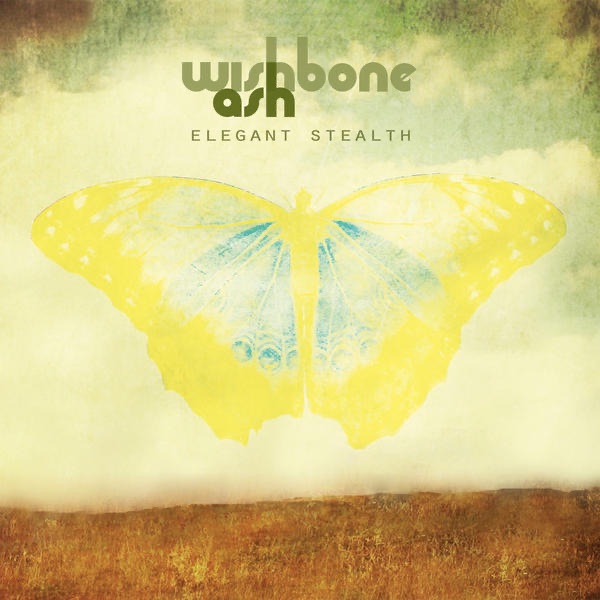
- 2011 Elegant Stealth
- 2014 Blue Horizon
- 2020 Coat of Arms
- — Playin’ Free
Source: MusicBrainz
Deep Dive
Overview
Wishbone Ash are a British rock band who emerged from Torquay in 1969 and achieved sustained success throughout the early to mid-1970s. Their defining contribution to rock music was the popularization of the dual-lead guitar interplay—two guitarists playing melodic, harmonized lines rather than the traditional rhythm-and-lead separation. The 1972 album Argus codified this approach and remains their most enduring statement, a record that showed hard rock and progressive rock could coexist within a structured pop framework.
Formation Story
Wishbone Ash formed in 1969 in Torquay, a coastal town in Devon. The founding lineup coalesced around guitarist Andy Powell and other founding members from the local scene. By the early 1970s, the band had solidified with Andy Powell and Ted Turner as dual guitarists, bassist Martin Turner, drummer John Wetton, and keyboardist Mark Abrahams. This five-piece configuration became the classic Wishbone Ash sound—a tight ensemble built on the interplay between Powell and Turner’s complementary guitar voices.
Breakthrough Moment
Wishbone Ash’s first self-titled album in 1970 and the follow-up Pilgrimage in 1971 established them as a serious rock force on the British circuit, but Argus in 1972 became the breakthrough that defined their career. The album’s title track and the precision of its two-guitar arrangements attracted listeners beyond the hard rock faithful, positioning the band as a bridge between heavy rock and more sophisticated instrumental work. Argus demonstrated that dual-lead guitars could carry an entire album’s emotional and structural weight, a lesson that would ripple through rock for decades.
Peak Era
Between 1972 and 1976, Wishbone Ash released a sequence of strong albums that consolidated their commercial and critical standing: Wishbone Four (1973), There’s the Rub (1974), Locked In (1976), and New England (1976). This period saw the band touring extensively and refining their craft, with Argus remaining their high-water mark but each subsequent record expanding their audience and technical range. The band’s ability to sustain output and maintain lineup stability during this window—rare for rock acts of the era—allowed them to build a loyal international following.
Musical Style
Wishbone Ash’s sound combined hard rock’s heavy riffing and blues-based phrasing with the compositional ambition and instrumental density of progressive rock. The signature element was the interplay between Andy Powell and Ted Turner, whose guitars would weave around each other in carefully arranged sequences that sounded spontaneous without sacrificing precision. Their hard rock foundation came from blues and early British rock, but the arrangement sophistication pushed them toward the progressive wing of the genre. Unlike the distortion-heavy approach of much contemporary hard rock, Wishbone Ash favored clarity and melodic content, letting the architectural beauty of their compositions speak as loudly as raw power.
Major Albums
Argus (1972)
The album that crystallized the band’s two-guitar philosophy and their most commercially successful statement. Argus proved that dual-lead guitars could sustain an entire record’s emotional narrative without yielding to bombast.
Pilgrimage (1971)
The follow-up to their debut, Pilgrimage refined their live-band energy and expanded the twin-guitar concept into fuller arrangements, establishing them as more than a one-album curiosity.
Wishbone Four (1973)
Released at the height of their commercial momentum, Wishbone Four continued the band’s winning formula while exploring slightly more adventurous production and composition.
There’s the Rub (1974)
The band’s final album of their first creative peak, There’s the Rub maintained their standards while showing signs of the stylistic restlessness that would mark the latter 1970s.
Locked In (1976)
A double album signaling the band’s ambition to stretch beyond the confines of their early success, though not achieving the clarity or focus of their best work.
Signature Songs
- “Argus” — The title track of their landmark 1972 album, an instrumental showcase for Powell and Turner’s dual-guitar dialogue.
- “Wishbone Ash” — The opening track from their self-titled debut, establishing the hard rock foundation that underpinned all their work.
- “Phoenix” — A mid-1970s cut exemplifying the band’s melodic sensibility and compositional craft.
Influence on Rock
Wishbone Ash’s primary legacy is the legitimization of dual-lead guitar as a sustainable compositional approach rather than a novelty or occasional flourish. Before Argus, the twin-guitar idea had been explored (the Allman Brothers Band being a crucial precedent), but Wishbone Ash systematized it within a hard rock context and proved it could anchor radio-friendly, album-oriented rock. Their influence traces through decades of rock bands who embraced twin-guitar harmonies and interplay, from Southern rock successors to progressive rock acts and beyond. The band demonstrated that technical sophistication and commercial appeal were not mutually exclusive—a lesson rock radio would keep learning and relearning.
Legacy
Wishbone Ash remained active well into the 2000s and beyond, releasing albums including Bona Fide (2002), Clan Destiny (2006), The Power of Eternity (2007), and Coat of Arms (2020), demonstrating unusual longevity for a 1970s rock band. While later work never matched the cultural footprint of Argus, the band’s persistence kept them visible to both longtime fans and newcomers curious about early-1970s rock architecture. Their fundamental contribution—the elevation of twin-lead guitars to the center of a rock band’s identity—remains audible across generations of musicians and continues to draw interest from rock historians examining how production and arrangement shape musical meaning.
Fun Facts
- Wishbone Ash were signed to MCA Records and later worked with Decca, I.R.S. Records, and other labels across their long career, reflecting both their commercial reach and the fragmentary nature of the record industry in later decades.
- The band maintained a working lineup through much of the 1970s and beyond, with Andy Powell remaining at the helm across all their recorded output from 1969 onward.
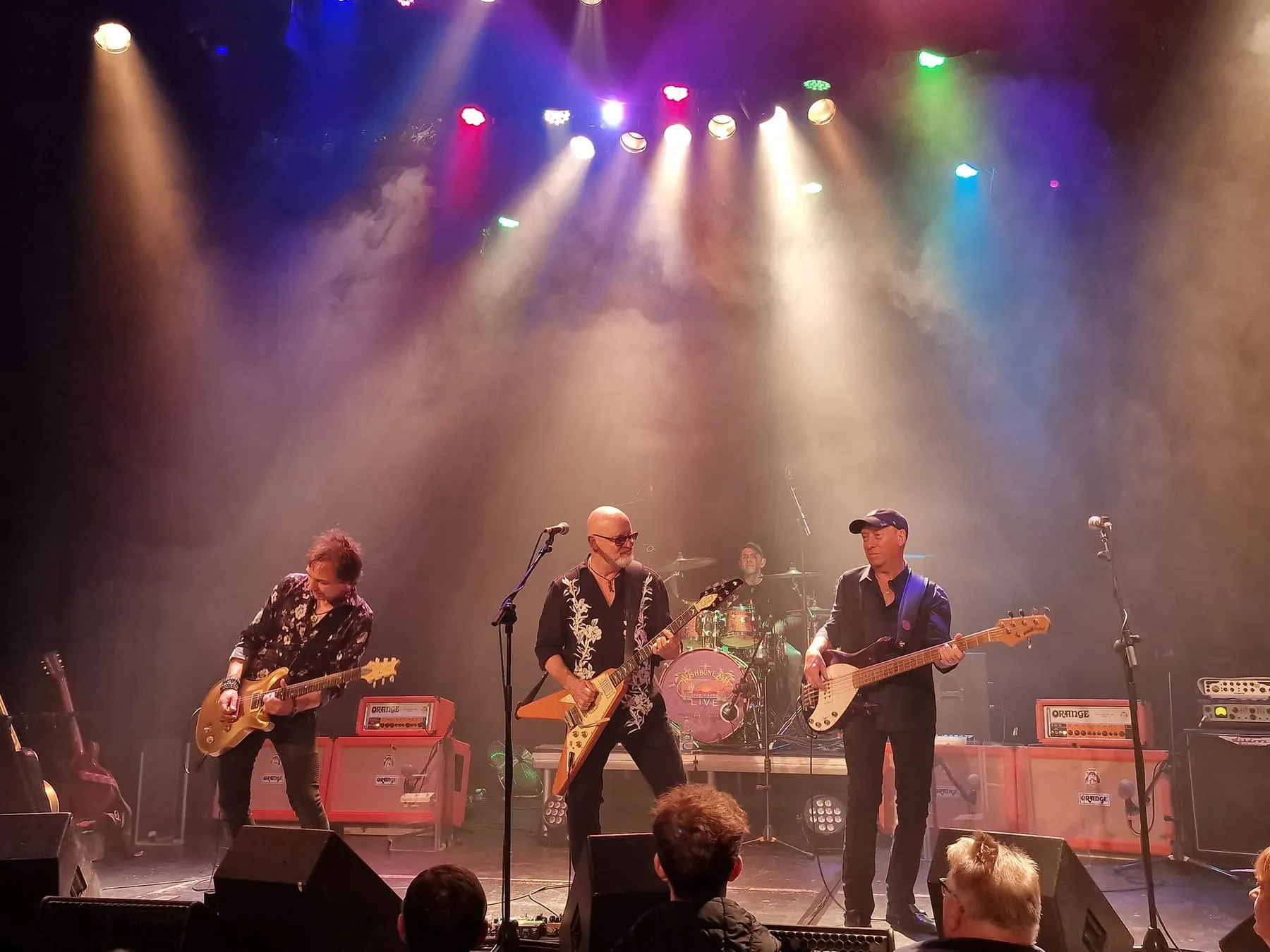
- Despite their technical sophistication and album-oriented approach, Wishbone Ash maintained a strong live reputation, translating their studio precision to stage performances that showcased the dual-guitar concept in real time.
Discography & Previews
Click any album to expand its track list. Each track plays a 30-second preview streamed from Apple Music. Tap the link icon next to a track to open it in Apple Music for full playback.


- 1 You See Red ↗ 5:58
- 2 Baby the Angels Are Here ↗ 4:48
- 3 Ships in the Sky ↗ 3:00
- 4 Stand and Deliver ↗ 7:18
- 5 Anger in Harmony ↗ 5:05
- 6 Like a Child ↗ 4:59
- 7 The Way of the World, Pt. 1 ↗ 4:06
- 8 The Way of the World, (Pt. 2 ↗ 5:29
- 9 Firesign ↗ 5:04
- 10 Time and Space (Remix) ↗ 5:55
- 11 Lorelei (Live) ↗ 6:14
- 12 Come in from the Rain (Live) ↗ 5:07
- 13 Bad Weather Blues (Live) ↗ 8:38


- 1 Cell of Fame ↗ 4:37
- 2 People in Motion ↗ 3:51
- 3 Don't Cry ↗ 3:29
- 4 Love is Blue ↗ 3:44
- 5 Long Live the Night ↗ 3:33
- 6 Rocket in My Pocket ↗ 3:47
- 7 It's Only Love ↗ 4:13
- 8 Don't You Mess ↗ 3:53
- 9 Dreams (Searching for an Answer) ↗ 3:30
- 10 Perfect Timing ↗ 3:57
- 11 She's Still Alive ↗ 3:39
- 12 Apocalypso ↗ 3:48
- 13 Valley of Tears ↗ 4:32
- 14 Nkomo ↗ 3:39
- 15 Talk to Me ↗ 3:23

- 1 Tangible Evidence ↗ 4:24
- 2 Clousseau ↗ 3:43
- 3 Flags Of Convenience ↗ 4:34
- 4 From Soho To Sunset ↗ 3:29
- 5 Arabesque ↗ 4:33
- 6 In The Skin ↗ 4:55
- 7 Something Happening In Room 602 ↗ 3:36
- 8 Johnny Left Home Without It ↗ 3:41
- 9 The Spirit Flies Free ↗ 3:45
- 10 A Rose Is A Rose ↗ 3:42
- 11 Real Guitars Have Wings ↗ 3:14


- 1 Mountainside ↗ 6:02
- 2 On Your Own ↗ 5:33
- 3 Top of the World ↗ 6:39
- 4 No Joke ↗ 6:48
- 5 Tales of the Wise ↗ 10:04
- 6 Another Time ↗ 5:25
- 7 A Thousand Years ↗ 4:07
- 8 The Ring ↗ 4:37
- 9 Comfort Zone ↗ 4:28
- 10 Mystery Man ↗ 4:30
- 11 Wait out the Storm ↗ 3:46
- 12 The Crack of Dawn ↗ 3:19
- 13 Mountainside (Live) ↗ 5:58
- 14 On Your Own (Live) ↗ 5:27
- 15 Top of the World (Live) ↗ 5:53
- 16 No Joke (Live) ↗ 6:46
- 17 Tales of the Wise (Live) ↗ 9:52
- 18 The Ring (Live) ↗ 4:34
- 19 Comfort Zone (Live) ↗ 4:27
- 20 Wait out the Storm (Live) ↗ 5:03
- 21 Interview with Andy Powell on the Album Illuminations ↗ 31:25

- 1 Wings Of Desire ↗ 3:40
- 2 Errors Of My Way ↗ 5:15
- 3 Master Of Disguise ↗ 3:51
- 4 You Won't Take Me Down ↗ 5:28
- 5 Love Abuse ↗ 4:02
- 6 (Won't You Give Him)One More Chance ↗ 3:14
- 7 Baby Don't Mind ↗ 3:49
- 8 Living Proof ↗ 4:14
- 9 Hard Times ↗ 4:43
- 10 Strange Affair ↗ 5:52
- 11 Everybody Needs A Friend ↗ 5:58