
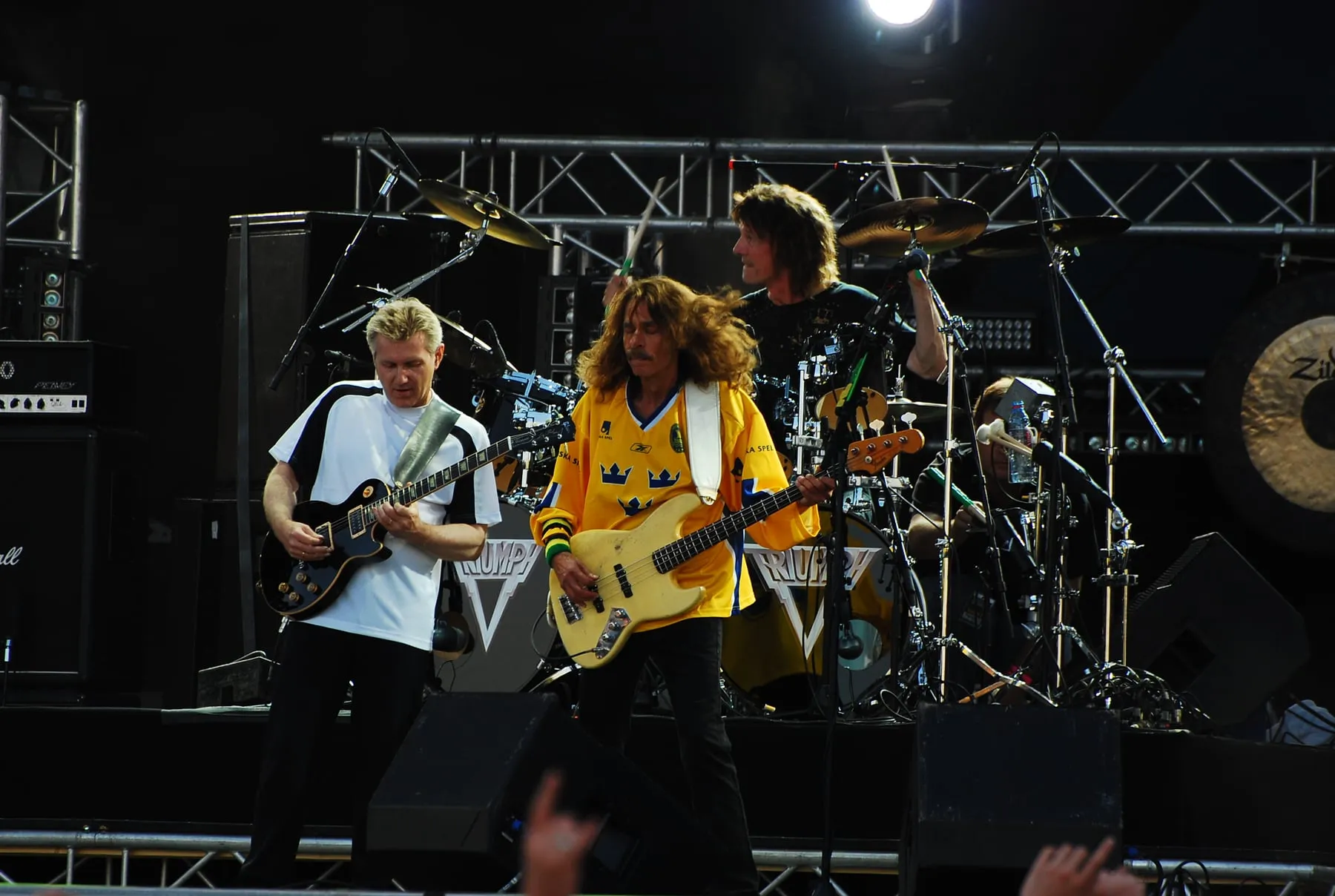
Photo by Knipil , licensed under CC BY 3.0 · Wikimedia Commons
Rank #326
Triumph
Toronto power trio of hard-rock anthems and progressive flourishes.
From Wikipedia
Triumph is a Canadian rock band formed in 1975 that was popular during the late 1970s and the 1980s, building on its reputation and success as a live band. Between its 16 albums and DVDs, the band has received 18 gold and nine platinum awards in Canada and the United States. They were nominated for multiple Juno Awards, including the "Group of the Year Award" in 1979, 1985, 1986 and 1987. They were inducted into the Canadian Music Industry Hall of Fame in 2007, into the Canadian Music Hall of Fame in 2008, and into Canada's Walk of Fame in 2019.
Members
- Gil Moore
- Mike Levine
- Phil X
- Rik Emmett
Deep Dive
Overview
Triumph is a Canadian rock band formed in Toronto in 1975 that built its reputation as a live ensemble and emerged as a major commercial force during the late 1970s and 1980s. The band functioned as a power trio, combining hard-rock intensity with progressive-rock complexity, producing arena-ready anthems that resonated across North America. Over their primary active period through 1988, Triumph accumulated 18 gold and nine platinum certifications in Canada and the United States—a measure of sustained commercial success that positioned them among the era’s most successful rock exports from north of the border.
Formation Story
Triumph coalesced in 1975 around the core lineup of Rik Emmett (guitar and vocals), Mike Levine (keyboards), and Gil Moore (drums), with Phil X later joining the band. The trio emerged from Toronto’s active rock scene at a moment when Canadian rock bands were gaining international distribution and touring infrastructure. Working with record labels including RCA, Attic, and MCA Records, the band developed its identity as a three-piece capable of generating the sonic density and technical proficiency typically associated with larger ensembles.
Breakthrough Moment
Triumph’s early albums—the self-titled Triumph (1976), Rock & Roll Machine (1977), and Just a Game (1979)—established them as a working band with growing regional credibility. The band’s live reputation accelerated their profile through the early 1980s, culminating in Progressions of Power (1980) and Allied Forces (1981), albums that captured their dynamic interplay between Emmett’s guitar-driven arrangements and Levine’s keyboard layers. The band’s commercial momentum was reflected in their multiple Juno Award nominations, including “Group of the Year” nominations across 1979, 1985, 1986, and 1987, evidence of sustained recognition within the Canadian music industry.
Peak Era
Triumph’s strongest commercial period extended through the mid-1980s, particularly with Never Surrender (1983), Thunder Seven (1984), The Sport of Kings (1986), and Surveillance (1987). This run consolidated their position as a touring fixture in North American rock venues and established their brand of guitar-and-keyboard-driven hard rock as distinct from the glam-metal and straight-ahead heavy-metal movements dominating the period. The band’s ability to sustain touring success and chart presence across multiple album cycles reflected both disciplined production values and a fanbase loyal to their energetic live presentation.
Musical Style
Triumph operated as a power trio in the structural sense—three musicians generating the harmonic and rhythmic architecture typically spread across four or five pieces. Rik Emmett’s guitar tone emphasized clarity and melodic phrasing within hard-rock frameworks, while Mike Levine’s keyboard parts provided harmonic depth and texture that pushed beyond simple rhythm-section accompaniment into genuinely compositional territory. Gil Moore’s drumming delivered both driving backbeat and precise, intricate fills that supported the band’s progressive inclinations. The interplay of guitar and keyboard created a signature sound that blended hard-rock intensity with progressive-rock’s harmonic ambition—neither side of the equation overwhelming the other. Vocally, Emmett’s delivery was straightforward and committed, prioritizing singability within rock-radio conventions rather than technical display.
Major Albums
Progressions of Power (1980)
This album marked a clear statement of the band’s ability to balance commercial rock songcraft with instrumental complexity, establishing the template for their sound through the decade.
Allied Forces (1981)
A landmark release that consolidated Triumph’s touring success into recorded form, demonstrating the tightness and energy the band brought to arena stages.
Thunder Seven (1984)
The band’s mid-decade statement, balancing hook-laden rock songs with extended instrumental passages that showcased Levine’s keyboard range and Emmett’s technical facility.
The Sport of Kings (1986)
Triumph’s most polished late-period offering, reflecting the band’s maturity as composers and arrangers while maintaining the hard-rock aggression that defined their core appeal.
Signature Songs
- “Magic Power” — The band’s most recognizable anthem, establishing their signature blend of accessibility and technical precision.
- “Never Surrender” — A power ballad showcasing Emmett’s vocal delivery and the band’s dynamic range.
- “Headed for the Action” — A mid-tempo rocker exemplifying the band’s guitar-keyboard dialogue.
- “Fighting for Our Lives” — A stadium-ready track demonstrating their arena-rock credentials during the 1980s.
Influence on Rock
Triumph’s success helped establish Canadian hard rock as a viable international category during an era when Canadian rock bands (Rush, Bryan Adams, Bachman-Turner Overdrive) were reshaping the global rock landscape. The band’s sustained commercial success across multiple albums proved that a power-trio format could compete commercially with conventional rock lineups, an implicit argument for instrumental and compositional sophistication as viable commercial strategies. Their progression from regional Toronto band to platinum-certified international touring act influenced how the Canadian music industry positioned and developed rock acts for global markets, and their hybrid of hard-rock directness and progressive-rock complexity provided a model for bands seeking to balance accessibility with musical ambition.
Legacy
Triumph’s induction into the Canadian Music Industry Hall of Fame (2007), the Canadian Music Hall of Fame (2008), and Canada’s Walk of Fame (2019) solidified their status as culturally significant contributors to Canadian rock history. The band’s 18 gold and nine platinum certifications across two countries represent durable commercial achievement that sustained them for more than a decade of active touring and recording. Though they dissolved their primary active period in 1988, the band’s catalog remained in circulation through streaming platforms and continued touring by its surviving members, ensuring ongoing listener access to their recordings. The 2025 tribute album Magic Power: All Star Tribute to Triumph indicates the band’s lasting resonance within the Canadian rock community and marks their continued presence in contemporary music conversation.
Fun Facts
- Triumph received Grammy and Juno Award recognition multiple times throughout their career, establishing them as award-circuit regulars in both the US and Canadian music industries.
- The band’s reputation as a live act was foundational to their success; their dynamic stage presence and instrumental interplay made their recorded albums extensions of their concert experience rather than studio-only products.
- Triumph’s reliance on keyboard and guitar as primary compositional voices anticipated the sound of many 1980s progressive-metal bands, establishing sonic templates that influenced the era’s technical rock landscape.