
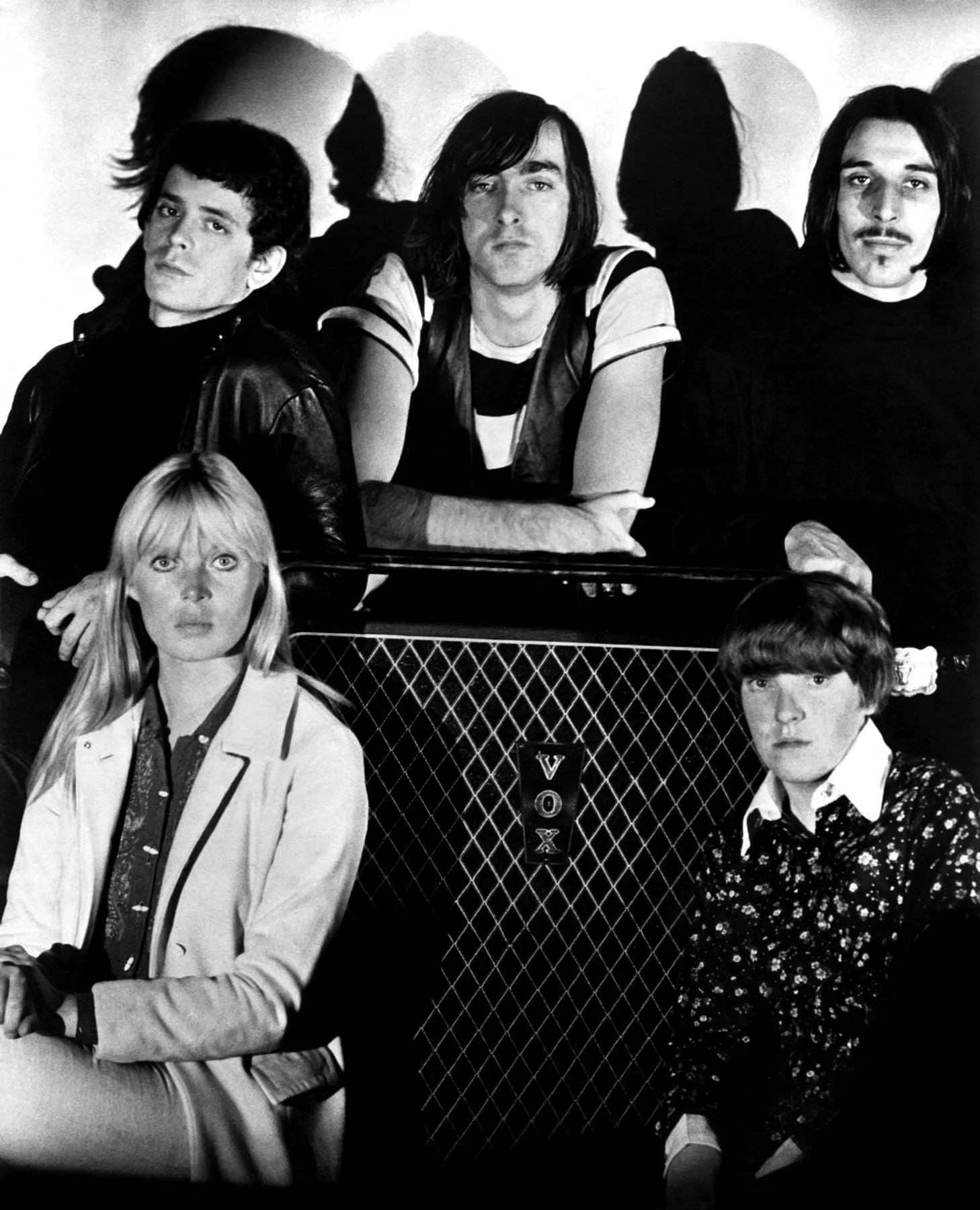
Photo by Photographer unknown. Published by Verve Records , a subsidiary of MGM Records at the time. , licensed under Public domain · Wikimedia Commons
Rank #14
The Velvet Underground
Underground New York pioneers whose influence on indie rock is incalculable.
From Wikipedia
The Velvet Underground was an American rock band formed in New York City in 1964. They became known for their integration of rock and roll and the avant-garde, which earned them little commercial success during their initial nine-year run but made them one of the most influential bands of their era, particularly in underground, experimental, and alternative music scenes. Their provocative subject matter and experimentation were instrumental in the development of punk rock, new wave and other genres. In 1998, The New York Times called them "arguably the most influential American rock band of our time".
Members
- John Cale
- Lou Reed
- Maureen Tucker
- Nicos
- Sterling Morrison
Deep Dive
Overview
The Velvet Underground was an American rock band formed in New York City in 1965 that became one of the most influential acts in rock history despite minimal commercial success during their initial run. They pioneered the integration of rock and roll with avant-garde sensibilities, creating a musical and conceptual framework that would ripple through underground, experimental, and alternative music for decades. Their provocative subject matter, sonic experimentation, and unapologetic artistic vision established them as architects of a new kind of rock music—one where the boundary between high art and popular music became deliberately blurred.
Formation Story
The Velvet Underground emerged from New York City’s avant-garde art scene rather than through traditional rock and roll channels. The band’s formation in 1965 brought together Lou Reed and John Cale, whose complementary sensibilities—Reed’s street-level narrative songwriting and Cale’s background in experimental music and orchestration—created an immediate creative tension that defined the group’s aesthetic. Sterling Morrison and Maureen Tucker rounded out the core lineup, with Nico joining as vocalist on their debut album. The band’s origins in New York’s underground culture, rather than in the blues-based or British Invasion traditions that dominated rock, meant they arrived with fundamentally different assumptions about what a rock band could be and do.
Breakthrough Moment
The Velvet Underground & Nico, released in 1967, stands as their entry point into broader consciousness. The album introduced listeners to a band uninterested in commercial convention: songs explored drug use, sexuality, and urban alienation with unflinching directness, while the production emphasized rawness and experimental textures over polish. White Light/White Heat followed in 1968, pushing further into noise and intensity. Though neither album achieved commercial success upon release, they circulated through underground channels and college radio, building a devoted following among artists, musicians, and cultural innovators who recognized something genuinely new. The album’s influence began immediately, particularly within avant-garde and experimental circles, establishing the band as essential listening for anyone pursuing unconventional music.
Peak Era
The band’s most creatively fertile period spanned 1967 to 1970, encompassing their first four studio albums. The Velvet Underground (1969) represented a deliberate shift toward more accessible arrangements while retaining their conceptual edge and lyrical sophistication. Loaded (1970) continued this trajectory, offering some of their most immediately melodic and direct songs while maintaining their refusal to compromise on subject matter or sonic approach. This four-year span established them as the primary bridge between rock music and avant-garde art practice, influencing how subsequent artists understood the possibilities of rock as an experimental medium. The period also cemented their role as mentors and inspiration to younger musicians and artists across multiple disciplines.
Musical Style
The Velvet Underground synthesized blues rock and folk rock foundations with avant-garde composition techniques, drone elements, and unconventional song structures. Lou Reed’s lyrics often employed spoken-word passages and narrative detail previously uncommon in rock, while John Cale’s arrangements incorporated viola, keyboards, and orchestral thinking into a rock setting. Maureen Tucker’s drumming eschewed conventional rock timekeeping in favor of minimalist, almost Eastern-influenced patterns. Their sound was deliberately lo-fi by contemporary standards, with audible tape hiss, distortion, and instrumental bleed creating an intentionally raw aesthetic that contradicted the polished production values dominating mainstream rock. Rather than smooth melody, they favored drone, repetition, and harmonic stasis as compositional tools, allowing lyrics and conceptual content to occupy the primary position in the listener’s attention.
Major Albums
The Velvet Underground & Nico (1967)
The band’s debut introduced their foundational aesthetic: raw production, avant-garde arrangements, and unflinching examination of urban experience and taboo subjects. The presence of Nico as vocalist provided an additional textural element and continental art-world credibility.
White Light/White Heat (1968)
A more aggressive and densely experimental follow-up that amplified noise and distortion, pushing their sonic approach further from conventional rock toward pure sound exploration. The album revealed their willingness to alienate mainstream listeners in pursuit of artistic vision.
The Velvet Underground (1969)
Their third album marked a conscious move toward greater melodic accessibility without sacrificing lyrical honesty or conceptual complexity. The shift toward more straightforward arrangements made their songwriting gifts more immediately apparent.
Loaded (1970)
The final album of their initial run, featuring some of their most direct and memorable songs while maintaining their uncompromising approach to subject matter and production aesthetic. The album balanced mainstream accessibility with underground credibility in a way that influenced the later trajectory of rock music.
Signature Songs
- “Sunday Morning” — A moment of haunting beauty from their debut, featuring Nico’s melancholic vocals and demonstrating the band’s capacity for vulnerability alongside aggression.
- “Heroin” — Lou Reed’s unflinching portrait of drug use, employing repetitive rhythm and droning instrumentation to sonically mirror the song’s subject matter.
- “White Light/White Heat” — An anarchic sonic assault that functioned as mission statement, embracing noise and distortion as compositional elements rather than flaws.
- “I’m Waiting for the Man” — A street-level narrative showcasing Reed’s gift for specific, observational songwriting within a rock and roll framework.
- “Pale Blue Eyes” — One of their most overtly romantic and melodic moments, proving their emotional range beyond transgressive subject matter.
- “Sweet Jane” — A guitar-driven song that became perhaps their most enduring composition, balancing accessibility with artistic integrity.
- “Rock and Roll” — A song about rock and roll’s cultural importance that demonstrated their self-awareness about their own position within music history.
Influence on Rock
The Velvet Underground’s influence extends across nearly every strand of rock music that has valued artistic experimentation over commercial formula. They provided the primary template for how rock bands could engage with avant-garde art without abandoning rock’s visceral power. Their approach to lyrics—treating rock songs as vessels for serious literary and thematic content—influenced generations of songwriters across punk, new wave, and alternative rock. Punk bands recognized in them a precedent for raw production and confrontational attitude; new wave artists drew from their synthesis of art and pop; alternative and indie rock musicians inherited their core conviction that commercial success was far less important than artistic integrity. Their demonstration that a rock band could exist outside mainstream commercial structures while exerting profound cultural influence became foundational to how underground rock operated for the following decades.
Legacy
Despite minimal chart success during their initial nine-year run from 1965 to the early 1970s, The Velvet Underground became one of the most written-about and studied rock bands in history. The New York Times recognized them in 1998 as arguably the most influential American rock band of the era. Their influence expanded geometrically through subsequent decades as punk, post-punk, experimental, and alternative rock all traced lineage directly back to their work. The band’s catalog remained in circulation through reissues and compilations, with later collections capturing live and alternate versions documenting their evolution. Each successive generation of artists—from David Bowie and Roxy Music in glam rock through to contemporary alternative and indie musicians—has acknowledged their debt to the band’s artistic fearlessness and conceptual ambition. Their model of underground influence eventually achieved what it never sought during their initial run: canonical status within rock history.
Fun Facts
- The band’s association with Andy Warhol, who produced their debut album and served as a creative collaborator, connected them directly to the visual art world and positioned rock music as a legitimate avant-garde practice.
- Maureen Tucker’s unconventional drumming approach, which eschewed standard rock timekeeping in favor of minimalist and non-Western-influenced patterns, made her one of rock’s most innovative and influential drummers despite the band’s underground status.
- The recording sessions and unreleased material from their initial era eventually circulated through bootlegs and official releases decades later, with posthumous collections like The Complete Matrix Tapes continuing to document their artistic output and creative process.