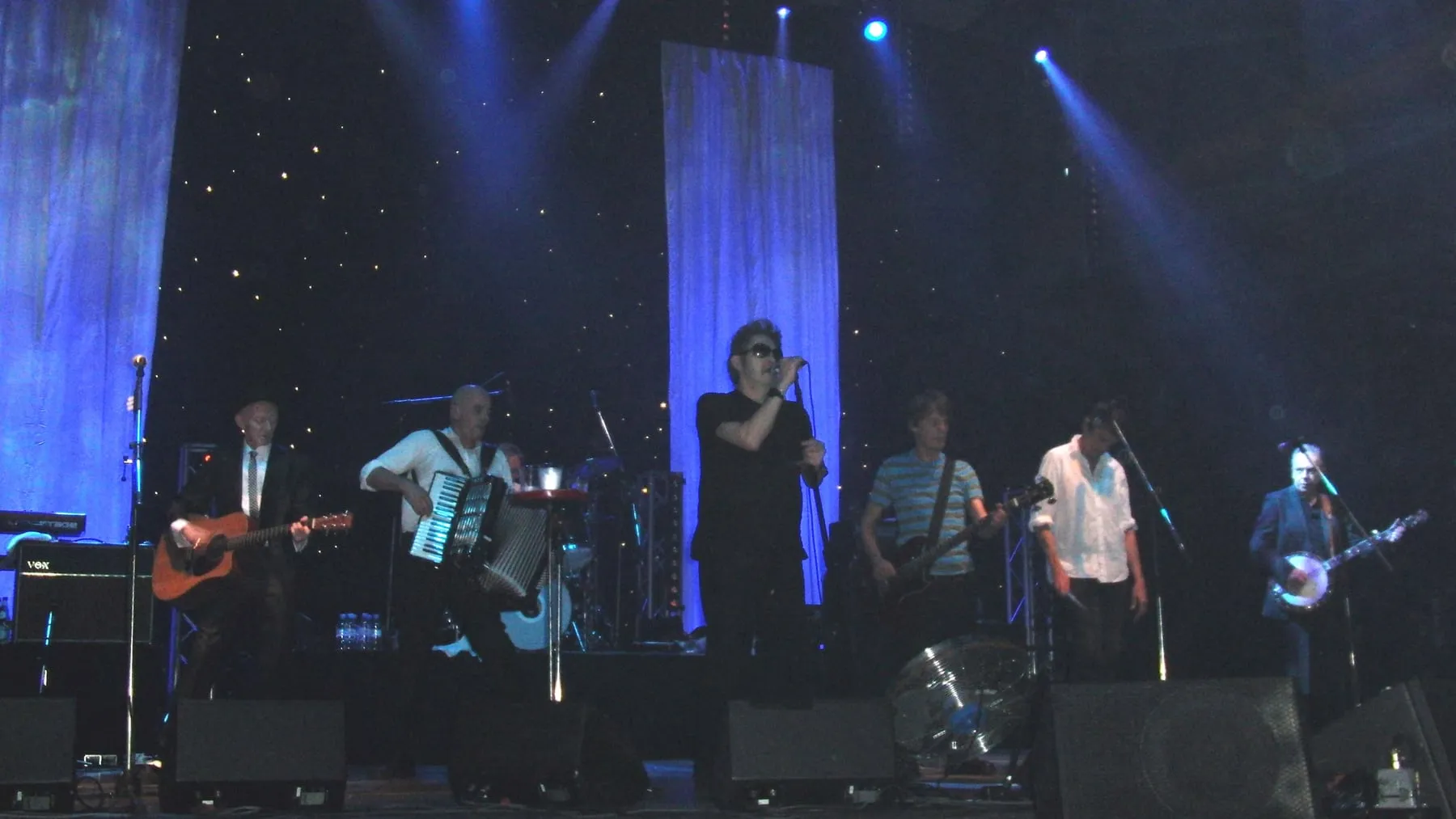
Photo by Redadeg , licensed under CC BY-SA 3.0 · Wikimedia Commons
Rank #224
The Pogues
Shane MacGowan's Anglo-Irish band fusing trad music with punk attitude.
From Wikipedia
The Pogues are an English Celtic punk band founded in King's Cross, London, in 1982, by Shane MacGowan, Spider Stacy and Jem Finer. Originally named Pogue Mahone—an anglicisation of the Irish phrase póg mo thóin, meaning "kiss my arse"—the band fused Irish traditional music with punk rock influences. After adding more members, including James Fearnley and Cait O'Riordan, the Pogues built a reputation with their live shows in London pubs and clubs.
Members
- Shane MacGowan
Studio Albums
- 1984 Red Roses for Me
- 1985 Live at the McGonagles
- 1985 Rum Sodomy & the Lash
- 1988 If I Should Fall From Grace With God
- 1989 Peace and Love
- 1990 Hell’s Ditch
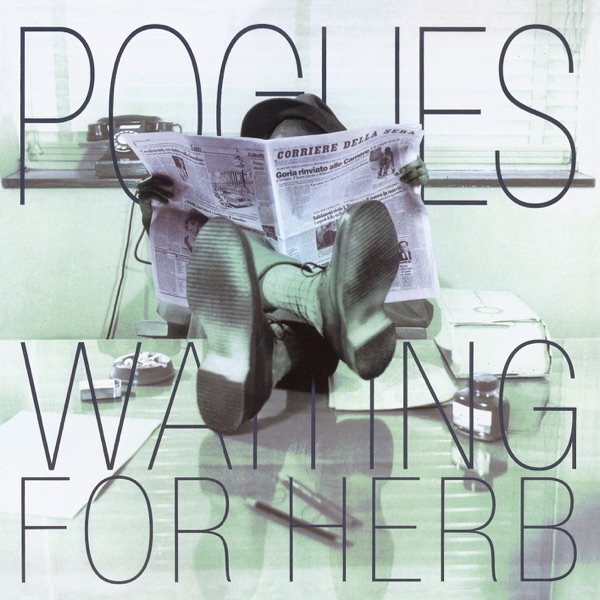
- 1993 Waiting for Herb
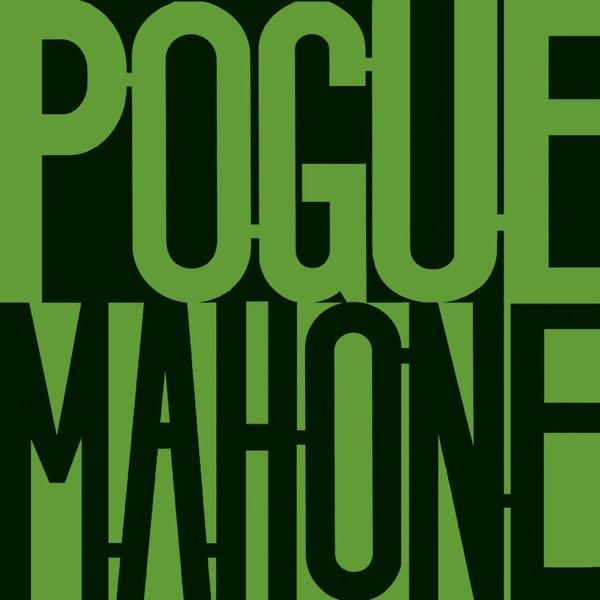
- 1996 Pogue Mahone
- 2023 Migrants on the Home Front
Source: MusicBrainz
Deep Dive
Overview
The Pogues are an English Celtic punk band that emerged from King’s Cross, London, in 1982 with a singular and audacious premise: fuse Irish traditional music with the energy and attitude of punk rock. Founded by Shane MacGowan, Spider Stacy, and Jem Finer, the band took their name from Pogue Mahone, an anglicisation of the Irish phrase póg mo thóin (“kiss my arse”), a defiant nod to their irreverent approach to both punk convention and folk reverence. The Pogues occupy a crucial position in rock history as the band that proved traditional music and punk ethics were not enemies but natural allies, opening a door that influenced countless artists across genres.
Formation Story
The Pogues coalesced in the early 1980s when Shane MacGowan, Spider Stacy, and Jem Finer recognized a shared vision: to strip Irish traditional music of its reverent coating and electrify it with punk’s raw urgency and working-class defiance. The three founded the band in London, a city already home to a thriving Irish immigrant community and a punk scene still reverberating from the Sex Pistols and The Clash. Rather than graft folk melodies onto punk templates, the founding members made a more radical choice: they would treat traditional Irish tunes as starting points for genuine compositional work, layering tin whistle, uilleann pipes, and accordion alongside electric guitars and drums. As the band’s live reputation grew through performances in London pubs and clubs, they expanded their lineup to include James Fearnley and Cait O’Riordan, musicians whose instrumental fluency and songwriting gifts solidified the Pogues as something genuinely new rather than a novelty act.
Breakthrough Moment
The Pogues’ early recorded work established their distinctive voice. Red Roses for Me, released in 1984, introduced the band’s sound to a wider audience, followed by the live album Live at the McGonagles and the studio effort Rum Sodomy & the Lash in 1985. By the mid-1980s, the band had transcended their pub origins and were being recognized as significant artists within both punk and world music circles. The combination of authentic traditional arrangements, punk energy, and MacGowan’s distinctive vocal delivery—part brogue, part snarl—gave the Pogues an unmistakable identity that radio, college radio, and alternative rock venues embraced. Their trajectory from London pubs to recording contracts with Stiff Records and beyond reflected how thoroughly they had crossed the genre divide that many thought unbridgeable.
Peak Era
The Pogues reached their commercial and artistic zenith in the late 1980s and early 1990s. If I Should Fall From Grace With God (1988) expanded their audience significantly, establishing them as one of the decade’s most vital rock bands. The album was followed by Peace and Love (1989) and Hell’s Ditch (1990), a period during which the band refined their sound without abandoning the core tension between tradition and innovation that defined them. These were years of maximum visibility and creative confidence, when the Pogues appeared on major stages, held down a place in the alternative rock mainstream, and proved that a band could be simultaneously scholarly about folk tradition and recklessly punk in attitude. The band’s live performances became legendary—energetic, unpredictable, and rooted in both Irish pub culture and punk rock theatricality.
Musical Style
The Pogues’ sound rests on a foundation of Irish traditional music: tin whistle, uilleann pipes, accordion, and bodhran provide the melodic and rhythmic spine. Over this came electric guitar, bass, and drums played with punk rock’s forward momentum and lack of apology. What distinguished the Pogues from both traditional Irish ensembles and punk bands was their refusal to see these elements as conflicting. MacGowan’s songwriting, whether adapting traditional material or composing originals, maintained a lyrical focus on Irish diaspora, working-class life, and the intersection of romance and hardship. The band’s arrangements moved fluidly between tight, almost session-like precision on slower tunes and explosive, chaotic energy on faster numbers. Vocally, MacGowan’s delivery—frequently slurred, always deeply felt—became the human center around which the instrumentation orbited. The Pogues were loud, drunk-sounding (whether or not they actually were), and entirely committed to the notion that folk and punk shared a common ancestor in the street music and labor songs of the working poor.
Major Albums
Red Roses for Me (1984)
The Pogues’ debut established their sound as a fully realized fusion of Irish traditional music and punk rock energy, with instrumental arrangements and compositions that balanced reverence for folk sources with raw contemporary energy.
Rum Sodomy & the Lash (1985)
Released the same year as Live at the McGonagles, this studio album deepened the band’s songwriting and solidified Cait O’Riordan’s role as a crucial voice, adding both tenderness and grit to the group’s arrangements.
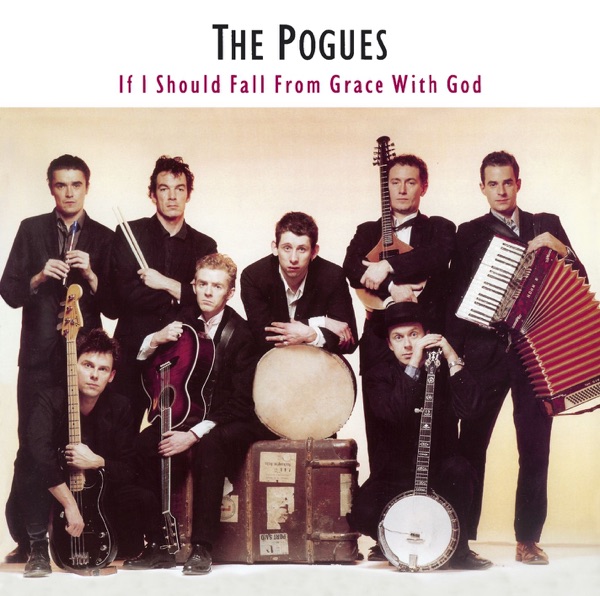
If I Should Fall From Grace With God (1988)
The Pogues’ third major studio album marked a significant expansion of their audience and influence, showcasing mature songwriting and the band at the height of their creative powers and public visibility.
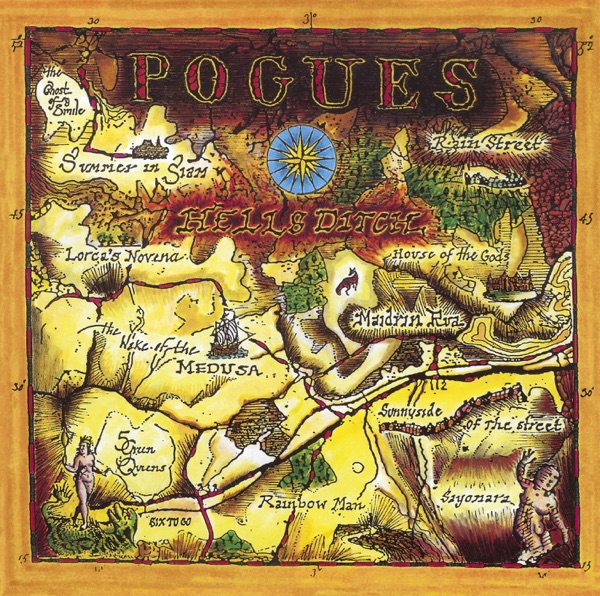
Hell’s Ditch (1990)
A darker, more densely arranged album that represented the band pushing their sound toward greater complexity and emotional depth while maintaining their core identity.
Waiting for Herb (1993)
Released after a period of relative quiet, this album found the Pogues maintaining their musical philosophy while navigating shifts in the wider rock and pop landscape of the 1990s.
Signature Songs
- A Pair of Brown Eyes — A tender but muscular acoustic ballad that showcases the band’s ability to balance folk restraint with emotional intensity.
- The Irish Rover — A traditional-style tune that became one of the band’s most recognizable songs, featuring the kind of infectious melody and instrumental interplay the Pogues made their signature.
- Fiesta — A song that captures the Pogues’ gift for merging Irish traditional melody with genuinely adventurous harmonic and instrumental arrangements.
- Dirty Old Town — A haunting composition that reflects the band’s interest in working-class life and urban decay, delivered with MacGowan’s characteristic vocal conviction.
- Sally MacLennane — A drinking song that embodies the Pogues’ commitment to Irish pub culture as both literal subject matter and compositional aesthetic.
Influence on Rock
The Pogues fundamentally altered what rock and punk bands believed they could incorporate into their music. They proved that acoustic instruments, traditional melodies, and cultural specificity were not markers of irrelevance but could energize rock music with fresh material and perspectives. The band influenced a generation of artists working at the intersection of folk tradition and contemporary rock, from the Dropkick Murphys to Flogging Molly to countless Irish and Celtic-influenced acts. Beyond genre, the Pogues demonstrated that punk rock’s central ethics—authenticity, working-class perspective, refusal of pretense—could live inside traditional music, not just guitar-driven rebellion. They showed that cultural rootedness and contemporary urgency were not opposing forces but could amplify each other. Radio programmers, rock critics, and audiences learned from the Pogues that the categories separating “folk,” “punk,” and “rock” were more porous and negotiable than decades of gatekeeping had suggested.
Legacy
The Pogues remain influential figures in rock and folk music decades after their 1982 founding. Their studio albums, particularly those released through the late 1980s, continue to circulate widely on streaming platforms and in physical formats, introducing new generations to their sound. The band’s fusion of Celtic music and punk rock established a template that numerous subsequent acts have followed and adapted. The Pogues’ integration of non-English language sources, immigrant narratives, and working-class perspectives into rock music prefigured broader shifts in how rock bands understood cultural identity and lyrical substance. After Pogue Mahone (1996), the band entered a period of relative quietness before returning in 2023 with Migrants on the Home Front, demonstrating that their creative vision remained viable and relevant even in the contemporary music landscape. The Pogues’ status as a band that successfully married tradition with innovation, respectability with danger, and specificity with broad appeal has ensured their place in rock history.
Fun Facts
- The band’s original name, Pogue Mahone, was an anglicisation of the Irish phrase póg mo thóin, meaning “kiss my arse”—a detail that captured their irreverent approach to both punk and folk conventions.
- The Pogues recorded both studio albums and live performances in their early years, with Live at the McGonagles (1985) capturing their energetic pub performances that had built their initial reputation.
- Shane MacGowan’s distinctive vocal delivery and songwriting became so central to the band’s identity that his role extended beyond singing to shaping the band’s overall artistic direction and public persona.
- The band’s membership evolved significantly from their 1982 founding, with James Fearnley and Cait O’Riordan joining as crucial contributors to their most celebrated recordings of the late 1980s.
Discography & Previews
Click any album to expand its track list. Each track plays a 30-second preview streamed from Apple Music. Tap the link icon next to a track to open it in Apple Music for full playback.

- 1 Transmetropolitan ↗ 4:25
- 2 The Battle of Brisbane ↗ 1:52
- 3 The Auld Triangle ↗ 4:22
- 4 Waxie's Dargle ↗ 1:55
- 5 Boys from the County Hell ↗ 2:56
- 6 Sea Shanty ↗ 2:25
- 7 Dark Streets of London ↗ 3:18
- 8 Streams of Whiskey ↗ 2:33
- 9 Poor Paddy ↗ 3:09
- 10 Dingle Regatta ↗ 2:54
- 11 Greenland Whale Fisheries ↗ 2:35
- 12 Down In the Ground Where the Deadmen Go ↗ 3:32
- 13 Kitty ↗ 4:26
- 14 The Leaving of Liverpool ↗ 3:43
- 15 Muirshin Durkin ↗ 1:51
- 16 Repeal of the Licensing Laws ↗ 2:11
- 17 The Band Played Waltzing Matilda ↗ 4:52
- 18 Whiskey You're the Devil ↗ 2:10
- 19 The Wild Rover ↗ 2:38

- 1 The Sick Bed of Cuchulainn ↗ 3:00
- 2 The Old Main Drag ↗ 3:19
- 3 Wild Cats of Kilkenny ↗ 2:49
- 4 I'm a Man You Don't Meet Every Day ↗ 2:54
- 5 A Pair of Brown Eyes ↗ 5:01
- 6 Sally MacLennane ↗ 2:45
- 7 A Pistol for Paddy Garcia ↗ 2:32
- 8 Dirty Old Town ↗ 3:45
- 9 Jesse James ↗ 2:59
- 10 Navigator ↗ 4:13
- 11 Billy's Bones ↗ 2:02
- 12 The Gentleman Soldier ↗ 2:04
- 13 The Band Played Waltzing Matilda ↗ 8:15
- 1 If I Should Fall from Grace with God ↗ 2:21
- 2 Turkish Song of the Damned ↗ 3:27
- 3 Bottle of Smoke ↗ 2:48
- 4 Fairytale of New York (feat. Kirsty MacColl) ↗ 4:32
- 5 Metropolis ↗ 2:50
- 6 Thousands Are Sailing ↗ 5:27
- 7 Fiesta ↗ 4:12
- 8 Medley: The Recruiting Sergeant / The Rocky Road to Dublin / Galway Races ↗ 4:04
- 9 Streets of Sorrow / Birmingham Six ↗ 4:37
- 10 Lullaby of London ↗ 3:32
- 11 Sit Down by the Fire ↗ 2:19
- 12 The Broad Majestic Shannon ↗ 2:51
- 13 Worms ↗ 1:04
- 14 The Battle March Medley ↗ 4:12
- 15 The Irish Rover (feat. The Dubliners) ↗ 4:08
- 16 Mountain Dew (with the Dubliners) ↗ 2:18
- 17 Shanne Bradley ↗ 3:41
- 18 Sketches of Spain ↗ 2:15
- 19 South Australia ↗ 3:30
- 1 The Sunnyside of the Street ↗ 2:44
- 2 Sayonara ↗ 3:08
- 3 The Ghost of a Smile ↗ 2:57
- 4 Hell's Ditch ↗ 3:04
- 5 Lorca's Novena ↗ 4:41
- 6 Summer In Siam ↗ 4:08
- 7 Rain Street ↗ 4:02
- 8 Rainbow Man ↗ 2:46
- 9 The Wake of the Medusa ↗ 3:04
- 10 House of the Gods ↗ 3:47
- 11 Five Green Queens and Jean ↗ 2:36
- 12 Maidrin Rua ↗ 1:47
- 13 Six to Go ↗ 2:59
- 14 Whiskey In the Jar ↗ 2:42
- 15 Bastard Landlord ↗ 3:10
- 16 Infinity ↗ 2:48
- 17 Curse of Love ↗ 2:43
- 18 Squid Out of Water ↗ 3:48
- 19 Jack's Heroes ↗ 3:06
- 20 A Rainy Night In Soho ↗ 4:44
- 1 Tuesday Morning ↗ 3:30
- 2 Smell of Petroleum ↗ 3:12
- 3 Haunting ↗ 4:03
- 4 Once Upon a Time ↗ 3:54
- 5 Sitting On Top of the World ↗ 3:38
- 6 Drunken Boat ↗ 6:36
- 7 Big City ↗ 2:40
- 8 Girl from the Wadi Hammamat ↗ 4:51
- 9 Modern World ↗ 3:55
- 10 Pachinko ↗ 3:10
- 11 My Baby's Gone ↗ 2:23
- 12 Small Hours ↗ 4:35
- 13 First Day of Forever ↗ 3:16
- 14 Train Kept Rolling On ↗ 3:16
- 15 Paris St. Germaine ↗ 3:04
- 1 How Come ↗ 2:49
- 2 Living In a World Without Her ↗ 3:17
- 3 When the Ship Comes In ↗ 3:12
- 4 Anniversary ↗ 4:04
- 5 Amadie ↗ 1:51
- 6 Love You 'Till the End ↗ 4:31
- 7 Bright Lights ↗ 2:37
- 8 Oretown ↗ 3:50
- 9 Point Mirabeau ↗ 3:29
- 10 Tosspoint ↗ 3:30
- 11 Four O'Clock In the Morning ↗ 3:12
- 12 Where That Love's Been Gone ↗ 3:50
- 13 The Sun and the Moon ↗ 3:18
- 14 Eyes of an Angel ↗ 2:53
- 15 Love You 'Till the End ↗ 3:54