
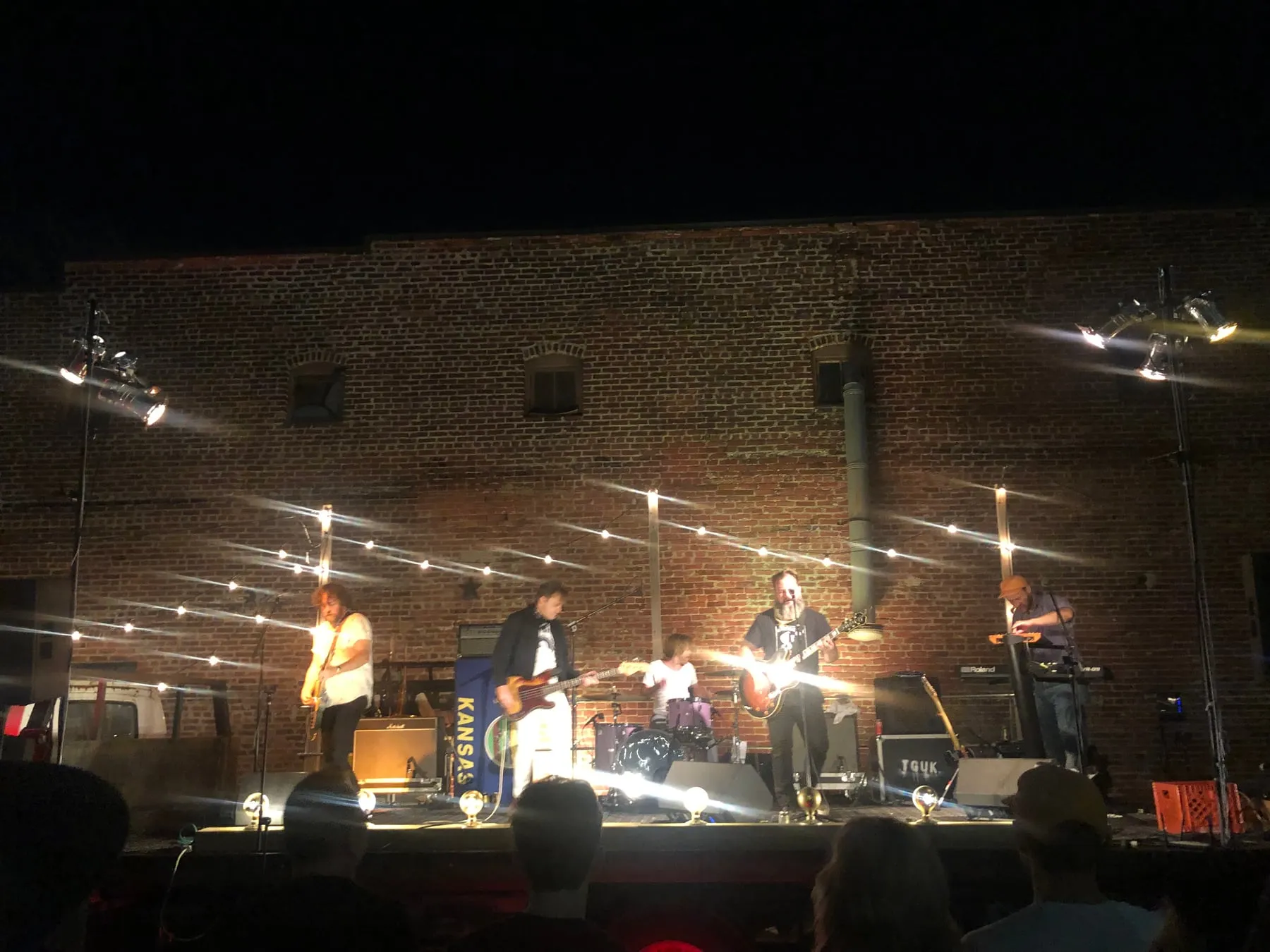
Photo by Conman33 , licensed under CC BY-SA 4.0 · Wikimedia Commons
Rank #490
The Get Up Kids
Kansas City Midwest-emo standard-bearers.
From Wikipedia
The Get Up Kids are an American Midwest emo band from Kansas City. Formed in 1995, the band was a major act in the mid-1990s Midwest emo scene, otherwise known as the "second wave" of emo music. Their second album Something to Write Home About remains their most widely acclaimed album, and is considered to be one of the quintessential albums of the second-wave emo movement. They are considered forefathers of the emo genre, and have been widely credited as being an influence, both by contemporaries Saves the Day and later bands such as Fall Out Boy, Taking Back Sunday and the Wonder Years.
Studio Albums
- 1997 Four Minute Mile
- 1999 Something to Write Home About
- 2002 On a Wire
- 2004 Guilt Show
- 2011 There Are Rules
- 2019 Problems
Source: MusicBrainz
Deep Dive
Overview
The Get Up Kids are an American emo band from Kansas City who emerged as defining figures of the mid-1990s Midwest emo movement. Formed in 1995, they arrived during what is widely understood as the second wave of emo—a period when the genre moved beyond its post-hardcore roots into more melodic and accessible territory. Their second album, Something to Write Home About, solidified their status as standard-bearers of the style and remains one of the most influential releases of the second-wave emo canon. The band’s combination of introspective lyrics, propulsive guitar work, and infectious pop-punk sensibilities established a blueprint that would influence both their contemporaries and a generation of rock acts that followed.
Formation Story
The Get Up Kids coalesced in Kansas City in 1995, emerging from a regional Midwest scene that was beginning to forge its own identity apart from the coastal alternative-rock centers. The city’s relative isolation from major music industry hubs allowed a distinct sound to develop organically among local bands. Kansas City in the mid-1990s was home to a tight community of musicians and fans, many of whom would later move between bands and collaborate across projects. This grassroots environment proved fertile for the kind of earnest, emotionally direct songwriting that would become synonymous with Midwest emo. The band’s formation coincided with the maturation of the broader emo movement, which was transitioning from underground punk venues to college radio and eventually mainstream alternative channels.
Breakthrough Moment
The Get Up Kids’ breakthrough came with the release of their second album, Something to Write Home About, in 1999. The record arrived at a moment when Midwest emo was gaining recognition beyond regional college circuits, and it crystallized the aesthetic and emotional vocabulary of the movement. Something to Write Home About showcased the band’s ability to balance melodic accessibility with genuine emotional vulnerability, earning both critical acclaim and a devoted fanbase. The album’s success marked a shift for the band from promising local act to nationally recognized force within alternative rock. The record became a touchstone for fans discovering the broader second-wave emo landscape and established The Get Up Kids as architects of a style rather than mere practitioners. Songs from the album circulated on college radio and among fans trading mix CDs and downloading bootlegs in the pre-streaming era.
Peak Era
The Get Up Kids’ creative and commercial peak extended through the early 2000s, roughly from 1999 through the middle of the decade. Following the success of Something to Write Home About, the band released On a Wire in 2002 and Guilt Show in 2004, albums that demonstrated their ability to evolve their sound while maintaining the core elements that made them distinctive. During this period, they toured extensively, building a strong live reputation and a dedicated international fanbase. The band’s presence in the Midwest emo movement grew even as they influenced contemporaries like Saves the Day and provided a template for younger bands entering the scene. Their records received consistent college radio play and critical attention, and their fanbase expanded beyond the Midwest to encompass a national audience of listeners drawn to both the musicality and the emotional honesty of their work.
Musical Style
The Get Up Kids’ sound is rooted in the intersection of pop-punk energy and emo introspection, with clear lineage to both the post-hardcore influences that spawned emo and the melodic punk traditions of bands who prioritized hooks and accessibility. Their music is characterized by driving basslines, clean and articulate guitar work, and vocals that balance sung melodies with spoken or half-sung passages, a technique common in emo but deployed here with particular effectiveness. The production across their albums tends toward clarity and precision, allowing each instrument to be heard distinctly rather than buried in walls of distortion. Lyrically, the band explores themes of youth, uncertainty, relationships, and emotional struggle with a specificity that avoids excessive abstraction—songs are rooted in concrete moments and feelings rather than metaphorical grandstanding. As their career progressed, particularly with albums like There Are Rules (2011) and Problems (2019), the band demonstrated a willingness to experiment with arrangements and production approaches while remaining fundamentally recognizable as themselves.
Major Albums
Four Minute Mile (1997)
The Get Up Kids’ debut established the core elements of their sound: catchy melodies, earnest vocals, and the balance between punk energy and emotional vulnerability that would define their career. The album introduced the band’s regional audience to their style and established them as a serious force in the Kansas City scene.
Something to Write Home About (1999)
This landmark second album distilled the band’s approach into perfect form and remains the definitive record of their legacy. It became one of the quintessential albums of the second-wave emo movement and continues to be a touchstone for fans of the genre, influencing everyone from Taking Back Sunday to the Wonder Years.
On a Wire (2002)
Released as the band’s profile grew nationally, On a Wire found them consolidating their sound while exploring new textural possibilities. The album demonstrated that they could sustain quality across multiple releases and weren’t a one-album phenomenon.
There Are Rules (2011)
Returning after a hiatus, the band proved they could revisit their classic approach with maturity and fresh perspective. The album reasserted their relevance to both longtime fans and a new generation discovering their work.
Signature Songs
- “Four Minute Mile” — The band’s debut single and title track, establishing their melodic approach to emo songwriting and their regional presence.
- “Holiday” — A standout from Something to Write Home About showcasing the band’s gift for crafting emotionally resonant pop-punk anthems.
- “Jenny” — Another key track from their second album that demonstrates their ability to write about specific emotional situations with universal appeal.
Influence on Rock
The Get Up Kids’ influence on the evolution of alternative and rock music cannot be overstated. They helped define and popularize the second-wave emo sound at a moment when the genre was moving from underground punk basements toward mainstream alternative radio and beyond. The band’s template—combining accessibility with emotional honesty, pop-punk energy with introspective lyrics—became a blueprint for countless bands that emerged in the 2000s and beyond. Fall Out Boy, Taking Back Sunday, and the Wonder Years all cite The Get Up Kids as a major influence, and the band’s imprint on modern indie rock and alternative music extends through these acts and their imitators. By proving that emo could be both critically respected and commercially viable, the band helped legitimize the genre during a period when it was often dismissed by mainstream critics. Their success demonstrated that regional bands from outside traditional music industry centers could achieve national and international prominence through consistent artistry and strong songwriting.
Legacy
The Get Up Kids have maintained an active presence in rock music through the 2010s and 2020s, touring regularly and releasing new material that demonstrates their continued relevance. Problems (2019) showed a band capable of creating vital work alongside their classic catalog, ensuring they remained a living concern rather than purely a nostalgic act. The band’s influence on the emo and indie-rock scenes remains substantial, and their albums continue to circulate widely across streaming platforms, introducing their music to listeners who were not yet born when Something to Write Home About first appeared. They are considered forefathers of the emo genre, a designation that reflects not merely historical placement but ongoing artistic credibility. Rock fans and critics continue to recognize them as essential figures in understanding how alternative music evolved in the late 1990s and early 2000s.
Fun Facts
- The Get Up Kids were among the early acts signed to Vagrant Records, a label that would become a major incubator of indie and alternative rock talent in the 2000s.
- The band released their first album, Four Minute Mile, on Doghouse Records, a small independent label that gave them their initial platform before wider distribution became possible.
- Kansas City, despite being far from the traditional music industry centers of Los Angeles, New York, and Seattle, produced a distinctly recognizable emo scene in which The Get Up Kids became the most widely known representatives.
- The band’s longevity—active from 1995 through to the present day—reflects both the durability of their songwriting and the genuine fan loyalty they cultivated across multiple decades.
Discography & Previews
Click any album to expand its track list. Each track plays a 30-second preview streamed from Apple Music. Tap the link icon next to a track to open it in Apple Music for full playback.


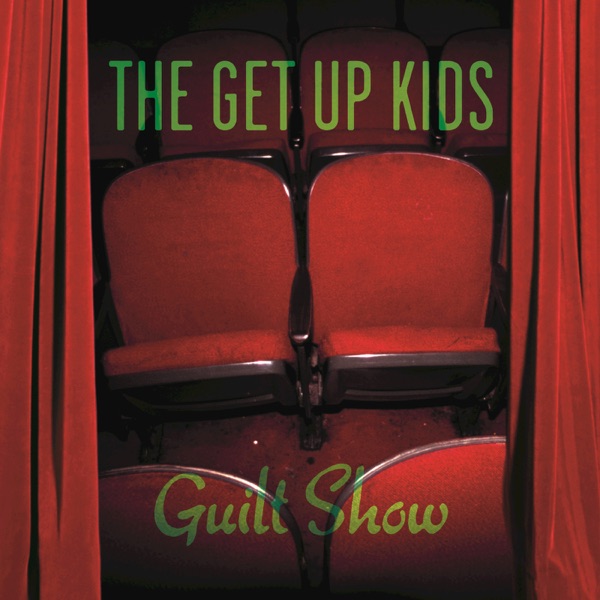
- 1 Man of Conviction ↗ 1:34
- 2 The One You Want ↗ 3:15
- 3 Never Be Alone ↗ 3:17
- 4 Wouldn't Believe It ↗ 3:47
- 5 Holy Roman ↗ 2:51
- 6 Martyr Me ↗ 3:26
- 7 How Long Is Too Long ↗ 2:25
- 8 Sick In Her Skin ↗ 4:25
- 9 In Your Sea ↗ 3:02
- 10 Sympathy ↗ 3:09
- 11 The Dark Night of the Soul ↗ 3:01
- 12 Is There a Way Out ↗ 6:20
- 13 Conversation ↗ 4:56

- 1 Tithe ↗ 3:40
- 2 Regent's Court ↗ 2:06
- 3 Shatter Your Lungs ↗ 2:49
- 4 Automatic ↗ 2:56
- 5 Pararelevant ↗ 3:37
- 6 Rally 'round the Fool ↗ 5:17
- 7 Better Lie ↗ 4:19
- 8 Keith Case ↗ 4:05
- 9 The Widow Paris ↗ 3:37
- 10 Birmingham ↗ 2:36
- 11 When It Dies ↗ 4:04
- 12 Rememorable ↗ 2:57
- 13 Your Petty Pretty Things ↗ 3:28
- 14 Tommy Gentle ↗ 2:32
- 15 How You’re Bound ↗ 6:03
- 16 Past Is Past ↗ 3:53
- 17 Walk ’em with Grace ↗ 2:33
- 18 Neverending ↗ 3:28
