Photo by Columbia Records , licensed under Public domain · Wikimedia Commons
Rank #282
Soft Machine
Canterbury-scene pioneers blending rock with jazz fusion.
From Wikipedia
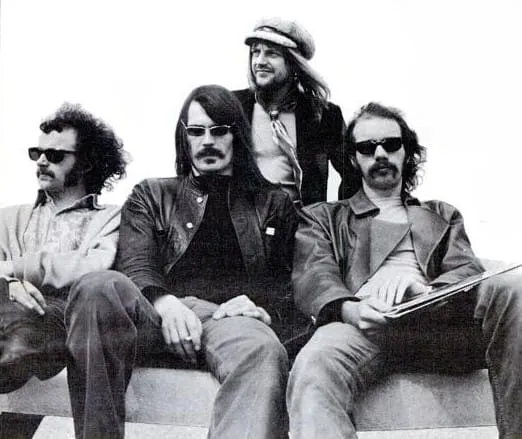
Soft Machine are an English rock band from Canterbury, Kent. The band were formed in 1966 by Mike Ratledge, Robert Wyatt, Kevin Ayers, Daevid Allen and Larry Nowlin. Soft Machine were central in the Canterbury scene; they became one of the first British psychedelic acts, and later helped pioneer progressive and jazz rock, widely regarded as the first progressive rock band. Soft Machine's lineup has undergone many changes, and has included Andy Summers, Hugh Hopper, Elton Dean, John Marshall, Karl Jenkins, Roy Babbington and Allan Holdsworth. As of 2025, the current lineup consists of John Etheridge, Theo Travis, Fred Thelonious Baker and Asaf Sirkis. The band's name originates from William S. Burroughs's novel The Soft Machine.
Members
- Roy Babbington (1973–1976)
- Daevid Allen
- John Etheridge
- John Marshall
- Kevin Ayers
- Mike Ratledge
- Robert Wyatt
- Theo Travis
Studio Albums
- 1968 The Soft Machine
- 1969 Volume Two
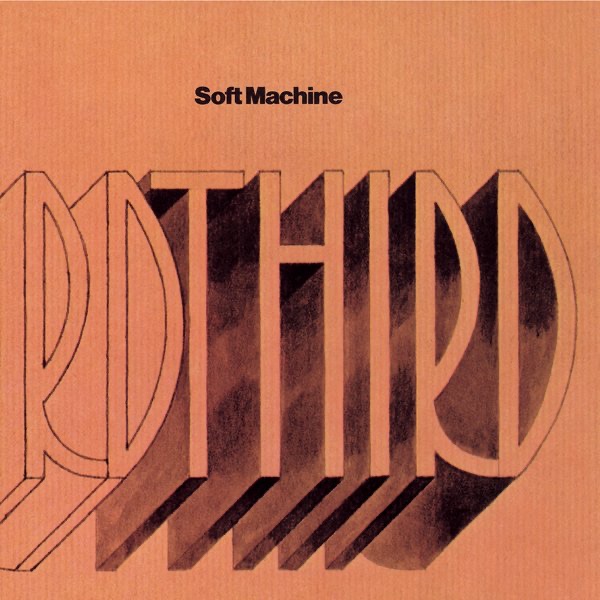
- 1970 Third
- 1971 Fourth
- 1972 Fifth
- 1973 Seven
- 1973 Six
- 1975 Bundles
- 1976 Rubber Riff
- 1976 Softs
- 1981 Land of Cockayne
- 1996 Spaced
- 2018 Hidden Details
- 2023 Other Doors
- 2026 Thirteen
Source: MusicBrainz
Deep Dive
Overview
Soft Machine stands as one of the most influential yet often understated acts in progressive rock history. Formed in Canterbury in 1966, the band emerged as central figures in the Canterbury scene—a distinctive musical community that synthesized psychedelic rock, jazz, and avant-garde experimentation. Where many early British rock bands grafted blues onto acoustic folk, Soft Machine drew from the fractured narratives of William S. Burroughs, the free jazz innovations of the American underground, and the harmonic sophistication of twentieth-century classical music. By the early 1970s, they had become pioneers of progressive rock and jazz fusion, establishing templates that would define those genres for decades.
Formation Story
Soft Machine coalesced in Canterbury in 1966 around the creative nucleus of Mike Ratledge, Robert Wyatt, Kevin Ayers, and Daevid Allen, with Larry Nowlin completing the initial lineup. The band’s name itself signaled their literary and conceptual ambitions, borrowed directly from William S. Burroughs’s 1961 novel The Soft Machine. Canterbury was not London; it was a provincial market town with a modest but vital underground music scene. The members brought different musical vocabularies—Ratledge’s keyboard facility and compositional rigor, Wyatt’s inventive drumming and vocal presence, Ayers’s melodic sensibility, and Allen’s guitar abstraction—that coalesced into something wholly their own. Rather than pursuing the blues-rock path that dominated British rock in the mid-1960s, they oriented toward experimental music, psychedelia, and structures drawn from jazz and classical forms.
Breakthrough Moment
Soft Machine’s debut album, The Soft Machine (1968), announced their arrival with a sound that was both psychedelic and intellectually rigorous. The record showcased extended instrumental passages, complex time signatures, and a willingness to abandon verse-chorus-verse song structure in favor of compositional development. What began as an outsider gesture—psychedelic experimentalism rooted in a cathedral town rather than Swinging London—quickly drew serious attention from critics and fellow musicians. By Volume Two (1969), the band had deepened their commitment to free-form improvisation and instrumental virtuosity. Third (1970) marked a watershed moment, shifting dramatically toward what would be called progressive rock and jazz fusion. The album featured extended, album-side compositions with baroque counterpoint, time-signature changes, and a jazz sensibility that few rock bands had attempted at that level of sophistication. The release positioned Soft Machine not merely as psychedelic revivalists but as genuine innovators in a nascent genre.
Peak Era
The period from 1970 through 1973 represented Soft Machine’s peak of both critical esteem and creative ambition. Third, Fourth (1971), Fifth (1972), and the two releases Six (1973) and Seven (1973)—the latter titles reflecting the band’s characteristically unconventional numbering—established them as the intellectual vanguard of British rock. These albums moved progressively deeper into jazz instrumentation and harmonic language while maintaining rock’s energy and structural freedom. The lineup underwent significant changes during this period, with Hugh Hopper joining on bass and later departing members being replaced by players such as Elton Dean on saxophone and John Marshall on drums, bringing even stronger jazz credentialing. By the mid-1970s, however, the market for avant-garde progressive rock had contracted; Bundles (1975), Rubber Riff (1976), and Softs (1976) found the band operating in an increasingly narrowed space, their experimental edge no longer guaranteed an audience.
Musical Style
Soft Machine’s sound was built on the collision of rock and jazz idioms, with production and orchestration drawn from contemporary classical music. Mike Ratledge’s keyboards—initially electric organ, later synthesizers—provided both harmonic foundation and abstract textural elements, moving fluidly between bluesy runs and atonal washes. Robert Wyatt’s drumming was rarely conventionally metronomic; he played with a dancer’s fluidity, supporting the band’s frequent shifts in tempo and meter while maintaining an almost conversational interplay with the horn section. As the band evolved, saxophones and other jazz instruments became increasingly central, while the electric guitar—present in early recordings—receded or disappeared altogether. Vocally, the band was largely instrumental by the early 1970s, though Wyatt’s voice had appeared on earlier material. The songwriting process, insofar as it can be reconstructed, favored composition over the three-minute single format; most pieces unfolded across five, eight, or even fifteen minutes, with thematic development, soloing space, and modulation taking precedence over melodic hook or structural repetition. The overall effect was cerebral without being cold, improvisational without being formless—music that demanded active listening.
Major Albums
The Soft Machine (1968)
The band’s debut established their willingness to blend psychedelic texture with formal complexity, drawing influences from both the underground and the avant-garde. It announced their arrival as serious compositional voices.
Third (1970)
A transformative statement that moved the band decisively into progressive rock and jazz fusion territory, Third featured the extended album-side composition “Moon in June” and set the template for their most ambitious work. This is the album that marks Soft Machine as genuine pioneers rather than psychedelic also-rans.
Fourth (1971)
An even deeper exploration of jazz harmonies and improvisation, Fourth solidified the band’s standing as one of the most adventurous British rock acts of the era. The album showcases virtuosity and compositional ambition in equal measure.
Fifth (1972)
Continuing their jazz-inflected trajectory, Fifth demonstrates the band’s refinement of their approach, with increasingly sophisticated arrangements and interplay between ensemble members. By this point, Soft Machine had fully established themselves within the progressive and jazz-fusion camps.
Signature Songs
- “Love Song” — An early composition showcasing the band’s ability to wed psychedelic texture to melodic content, with Wyatt’s distinctive vocal delivery.
- “Moon in June” — A centerpiece from Third, the extended composition exemplifies their approach to progressive development and multi-sectional form.
- “Slightly All the Time” — A showcase for the band’s improvisational prowess and ensemble interplay across multiple time signatures.
- “All White” — Demonstrates the band’s jazz-fusion sensibility and the central role of Ratledge’s keyboard work in defining their sound.
Influence on Rock
Soft Machine’s legacy in progressive rock and jazz fusion is foundational. They demonstrated that rock bands could absorb jazz language—its harmonic sophistication, its improvisational ethos, its instrumental specialization—without sacrificing rock’s visceral power or contemporary relevance. Their influence traces through numerous progressive and fusion acts of the 1970s and beyond. Bands and musicians who engaged with extended compositional forms, time-signature complexity, and the integration of jazz soloists into rock contexts were operating on terrain Soft Machine had mapped. Beyond direct musical influence, they helped establish the Canterbury scene as a significant alternative to both psychedelia-dominated London and the blues-rock hegemony of the Midlands and the North. The scene’s combination of literary intellectualism, musical adventurousness, and provincial insularity from commercial pressures created space for genuine experimentation at a moment when such space was increasingly rare in rock music.
Legacy
After the creative and commercial decline of the mid-to-late 1970s, Soft Machine entered a long dormancy, with Land of Cockayne (1981) marking a return that drew less attention. The band continued intermittently, with a reunion and new recording cycle beginning in the 1990s, including Spaced (1996). The twenty-first century has seen occasional new activity, including the albums Hidden Details (2018) and Other Doors (2023), demonstrating that the band—now featuring John Etheridge, Theo Travis, and others—retains commitment to their experimental legacy. Soft Machine’s standing in rock history has been subject to revision; while their critical reputation has remained strong among musicians and serious listeners, they have never achieved the popular visibility or commercial scale of their more blues-oriented contemporaries. Nonetheless, any serious history of progressive rock, jazz fusion, or 1970s experimental music must reckon with their contributions. Reissues and archival projects have kept their catalog in circulation, and younger musicians discovering their work often do so with a sense of having uncovered a secret history—a band that did things few others dared attempt, with technical facility and intellectual rigor that remains largely unmatched.
Fun Facts
- The band’s name derives from William S. Burroughs’s 1961 experimental novel The Soft Machine, reflecting their commitment to literary and conceptual sophistication from inception.
- During the early 1970s, the band numbered their albums in unconventional sequence, releasing both Six and Seven in 1973, reflecting their avant-garde approach to commercial presentation.
- Robert Wyatt, the band’s original drummer and a central creative voice, later pursued a solo career marked by his experimental approach and distinctive vocals, becoming a significant artist in his own right.
Discography & Previews
Click any album to expand its track list. Each track plays a 30-second preview streamed from Apple Music. Tap the link icon next to a track to open it in Apple Music for full playback.

- 1 Hope for Happiness ↗ 4:21
- 2 Joy of a Toy ↗ 2:50
- 3 Hope for Happiness (Reprise) ↗ 1:40
- 4 Why Am I So Short? ↗ 1:38
- 5 So Boot If At All ↗ 7:24
- 6 A Certain Kind ↗ 4:14
- 7 Save Yourself ↗ 2:25
- 8 Priscilla ↗ 1:03
- 9 Lullabye Letter ↗ 4:42
- 10 We Did It Again ↗ 3:46
- 11 Plus Belle Qu'une Poubelle ↗ 1:01
- 12 Why Are We Sleeping? ↗ 5:32
- 13 Box 25 / 4 Lid ↗ 0:50


- 1 Fanfare (Live) ↗ 0:43
- 2 All White (Live) ↗ 4:49
- 3 Between (Live) ↗ 2:25
- 4 Riff (Live) ↗ 4:33
- 5 37½ (Live) ↗ 6:53
- 6 Gesolreut (Live) ↗ 6:16
- 7 E.P.V. (Live) ↗ 2:48
- 8 Lefty (Live) ↗ 5:02
- 9 Stumble (Live) ↗ 1:37
- 10 5 from 13 (Live) ↗ 5:15
- 11 Riff II (Live) ↗ 1:27
- 12 The Soft Weed Factor ↗ 11:18
- 13 Stanley Stamps Gibbon Album (For B.O) ↗ 5:59
- 14 Chloe and the Pirates ↗ 9:30
- 15 1983 ↗ 7:55


- 1 Lemon Poem Song ↗ 3:23
- 2 Open Road ↗ 7:29
- 3 Seven Hours ↗ 5:13
- 4 Waltz for Robert ↗ 4:21
- 5 The Longest Night ↗ 13:05
- 6 Disappear ↗ 3:58
- 7 Green Books ↗ 5:35
- 8 Beledo Balado ↗ 4:34
- 9 Pens to the Foal Mode ↗ 2:43
- 10 Time Station ↗ 2:49
- 11 Which Bridge Did You Cross ↗ 2:59
- 12 Turmoil ↗ 5:06
- 13 Daevid's Special Cuppa (feat. Daevid Allen) ↗ 3:11