Photo by No especificado , licensed under Public domain · Wikimedia Commons
Rank #264
Soda Stereo
Buenos Aires trio who became Latin America's biggest rock band.
From Wikipedia
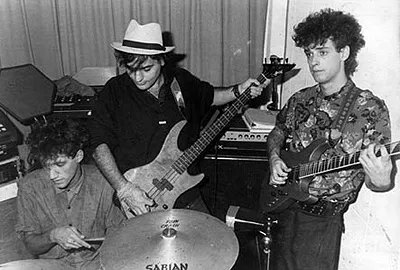
Soda Stereo was an Argentine rock band formed in Buenos Aires in 1982. The band's membership consisted of singer-guitarist Gustavo Cerati, bassist Zeta Bosio and drummer Charly Alberti. During their career, the band released seven studio albums before disbanding in 1997. Soda Stereo is the best-selling Argentine band of all time, having sold seven million records by 2007.
Members
- Charly Alberti
- Gustavo Cerati
- Zeta Bosio
Studio Albums
- 1984 Soda Stereo
- 1985 Nada personal
- 1986 Signos
- 1988 Doble vida
- 1990 Canción animal
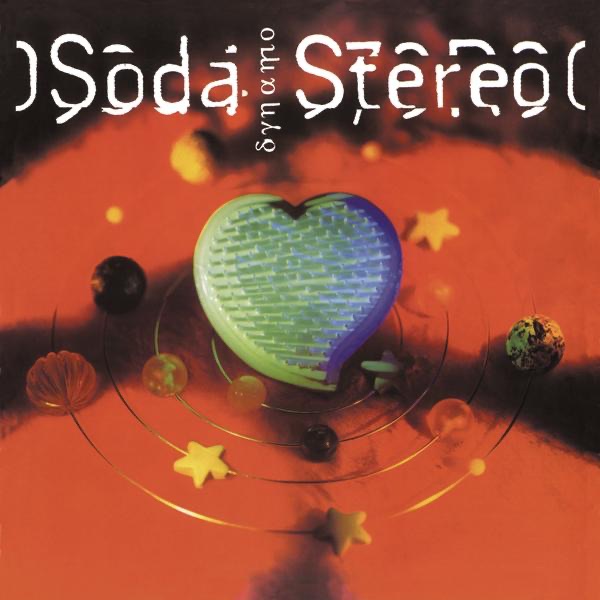
- 1992 Dynamo
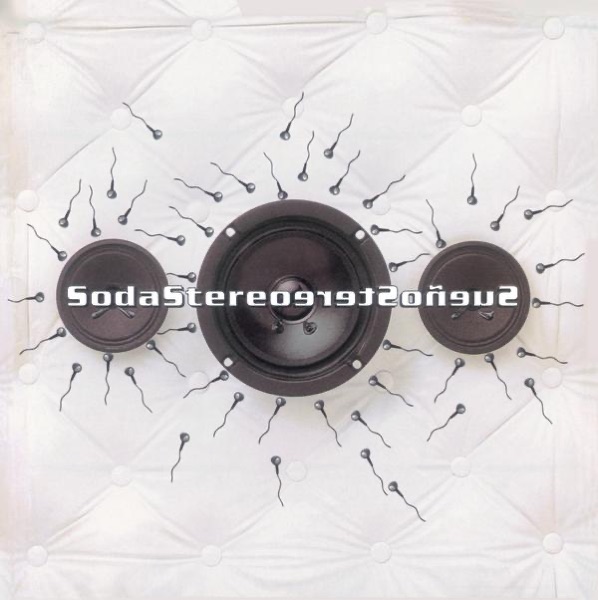
- 1995 Sueño Stereo
Source: MusicBrainz
Deep Dive
Overview
Soda Stereo stands as Latin America’s most commercially successful rock band, a distinction earned through their dominance of the Argentine and wider Spanish-speaking rock landscape during the 1980s and 1990s. Formed in Buenos Aires in 1982, the trio of Gustavo Cerati (vocals and guitar), Zeta Bosio (bass), and Charly Alberti (drums) synthesized new wave sensibilities with alternative rock urgency, creating a sound that transcended national borders and established them as the continent’s standard-bearers for contemporary rock music. By the time of their 1997 dissolution, they had sold seven million records worldwide and become synonymous with a generation’s aspirations in a country where rock music held genuine cultural power.
Formation Story
The band coalesced in Buenos Aires in 1982, emerging from a city whose rock tradition was already decades old but largely defined by covers and imitation. Cerati, Bosio, and Alberti shared a vision of creating original music that drew from post-punk and new wave influences circulating through Anglo-American rock at the time—bands like Talking Heads, The Police, and Joy Division—while remaining rooted in a distinctly Argentine sensibility. The timing was crucial: Argentina’s return to democracy in 1983 created a cultural opening, a moment when new artistic voices could flourish without the constraints of the preceding military dictatorship. Soda Stereo arrived at precisely the right historical moment to become the soundtrack to this renewal.
Breakthrough Moment
The band’s self-titled debut album, Soda Stereo, appeared in 1984 and introduced their compressed, taut aesthetic to local audiences. The record’s lean production and angular songwriting distinguished it immediately from the softer rock bands dominating Argentine radio. However, their second album, Nada personal (1985), cemented their status as more than a promising novelty act. This record found Cerati and company refining their approach with greater sophistication and wider commercial appeal, establishing the template that would sustain their success across the decade. Nada personal transformed them from a promising Buenos Aires group into a phenomenon that began to register across Latin America.
Peak Era
The late 1980s and early 1990s represented Soda Stereo’s creative and commercial apex. Signos (1986) extended their reach further, followed by Doble vida (1988), which marked a consolidation of their sound into something more refined and arrangement-heavy than the bare-bones debut work. The momentum carried into the 1990s with Canción animal (1990) and Dynamo (1992), records that demonstrated the band’s capacity to evolve without abandoning their core identity. Their final studio album, Sueño Stereo (1995), arrived as the culmination of their artistic trajectory. During this entire period, from roughly 1985 through 1995, Soda Stereo occupied a position in Latin American rock equivalent to that held by major acts in the English-speaking world—they were not merely successful; they were foundational to how an entire region understood what contemporary rock music could be.
Musical Style
Soda Stereo’s sound was built on the architecture of post-punk and new wave, genres that privileged rhythmic precision, economical arrangement, and lyrical sophistication over the guitar-heavy bombast of classic rock. Cerati’s voice—conversational yet expressive, never histrionic—functioned as another instrument rather than the dominant focal point, allowing Bosio’s bass lines and Alberti’s drumming to maintain equal compositional weight. The band worked in minor keys and syncopated rhythms, favoring open spaces within arrangements rather than dense orchestration. Lyrically, Cerati wrote in Spanish with the kind of poetic economy that elevated rock songwriting in the Spanish language to new levels of artistic credibility. The band’s production aesthetic was clean and contemporary, reflecting 1980s and 1990s studio techniques without becoming dated or overcomplicated. As they progressed from album to album, they incorporated more synthesizers and production layering, but never at the expense of the restraint and clarity that defined their fundamental approach.
Major Albums
Nada personal (1985)
The album that transformed a promising local act into a phenomenon, Nada personal established Soda Stereo’s core sound with greater sophistication and wider accessibility than their debut.
Signos (1986)
This record extended their commercial reach across Latin America while maintaining the angular new wave aesthetic that set them apart from competitors.
Doble vida (1988)
Marking a technical and arrangement evolution, Doble vida showcased the band’s growing confidence with more complex production and layered instrumentation.
Canción animal (1990)
A landmark of the decade, this album solidified their position as Latin America’s preeminent rock band with songs that became generational touchstones.
Dynamo (1992)
Released in the early 1990s, Dynamo demonstrated the band’s continued creative vitality and commercial dominance heading into their final studio work.
Sueño Stereo (1995)
Their final studio album, Sueño Stereo represented the artistic culmination of their career, synthesizing thirteen years of stylistic development and experience.
Signature Songs
- De música ligera — The definitive Soda Stereo track, exemplifying Cerati’s melodic sensibility and the band’s command of pop-rock arrangement.
- Persiana americana — A showcase for the band’s ability to build emotional intensity through restraint and precision.
- Cuando pase el temblor — A song that demonstrates Cerati’s lyrical sophistication and the band’s sophisticated harmonic approach.
- Ella usó mi cabeza como un revólver — Title track demonstrating the band’s knack for memorable hooks deployed within complex arrangements.
Influence on Rock
Soda Stereo’s impact on Latin American rock cannot be overstated. They demonstrated that Spanish-language rock need not follow Anglo-American templates blindly; instead, it could absorb international influences while maintaining authentic local character. By achieving massive commercial success without compromising artistic integrity, they elevated the cultural status of rock music throughout Spanish-speaking countries and proved that the continent could produce world-class rock bands competing directly with established international acts. Subsequent generations of Latin American and Spanish rock musicians inherited a landscape shaped by Soda Stereo’s accomplishments—they had established that new wave and alternative rock approaches could flourish in Spanish, that sophisticated production techniques and lyrical intelligence were compatible with popular success, and that Buenos Aires could export cultural products of genuine international consequence.
Legacy
Soda Stereo’s seven million records sold by 2007 remain a testament to their commercial dominance and cultural penetration. Their 1997 dissolution marked the end of an era in Latin American rock, and despite periodic reunion conversations, their catalog has remained their primary legacy. The band’s influence persists through streaming platforms and reissues, maintaining their visibility to new generations discovering their work decades after their dissolution. In Argentine and broader Latin American cultural memory, Soda Stereo occupies a status analogous to major international rock acts, a standing earned through consistent artistic output and deep connection to their audience across multiple decades. Their contribution to rock music history rests fundamentally on their achievement of creating a genuinely original sound that transcended national and linguistic boundaries while remaining rooted in their specific cultural moment.
Fun Facts
- The band’s official website, sodastereo.com, remains operational, preserving the group’s digital presence and maintaining fan engagement decades after dissolution.
- Soda Stereo was the best-selling Argentine band of all time, a distinction that reflected not merely commercial success but deep cultural integration into Argentine identity.
- The trio’s lineup remained unchanged throughout their entire career from 1982 to 1997, an uncommon stability that contributed to the distinctive coherence of their sound across all seven studio albums.
Discography & Previews
Click any album to expand its track list. Each track plays a 30-second preview streamed from Apple Music. Tap the link icon next to a track to open it in Apple Music for full playback.

- 1 Por Qué No Puedo Ser del Jet Set? ↗ 2:20
- 2 Sobredosis de T.V. ↗ 4:09
- 3 Te Hacen Falta Vítaminas ↗ 2:38
- 4 Trátame Suavemente ↗ 3:21
- 5 Dietético ↗ 3:47
- 6 Tele-Ka ↗ 2:25
- 7 Ni un Segundo ↗ 3:27
- 8 Un Misil en Mi Placard ↗ 3:07
- 9 El Tiempo Es Dinero ↗ 2:57
- 10 Afrodisíacos ↗ 4:24
- 11 Mi Novía Tiene Bíceps ↗ 2:26