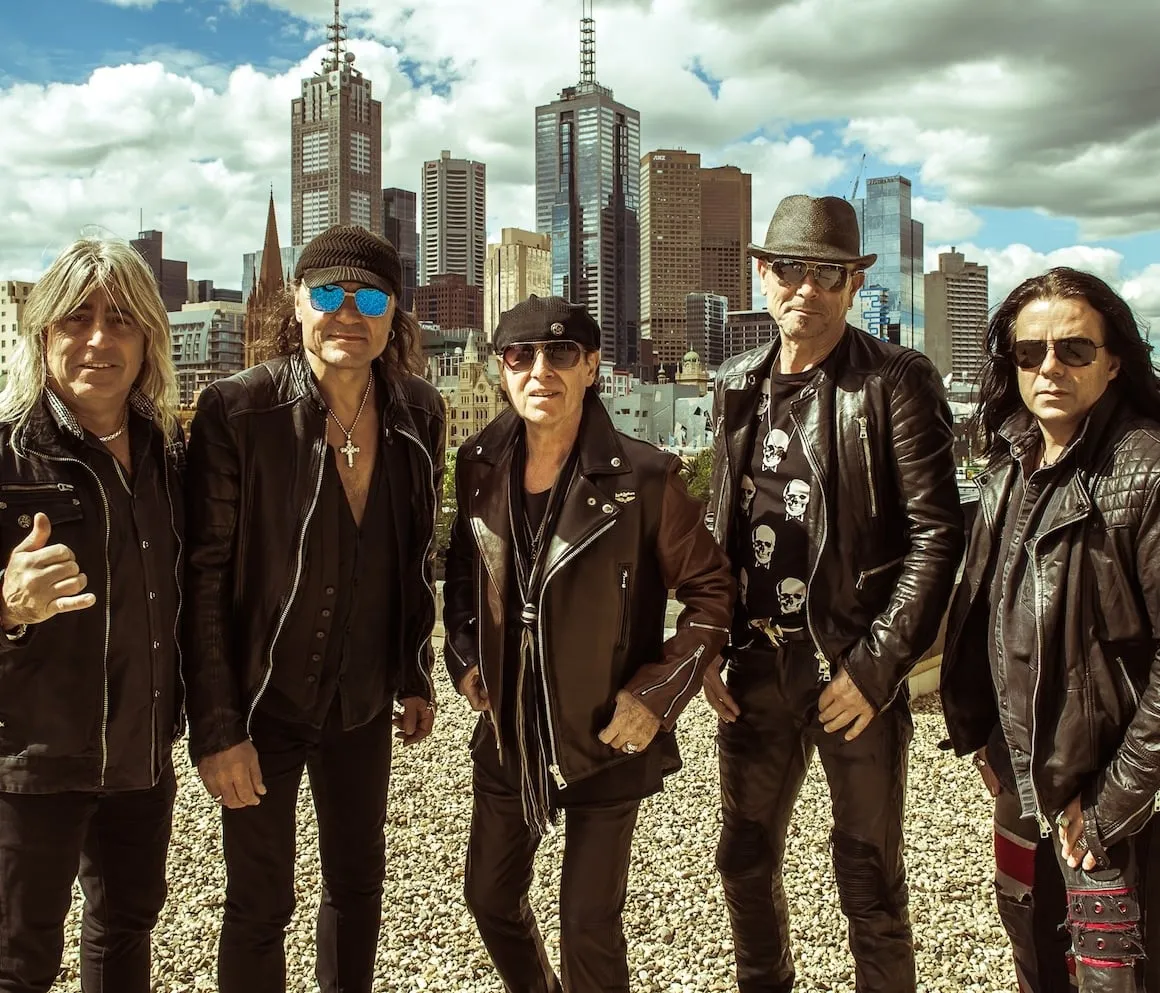
Photo by Ian Robert Laidlaw , licensed under Copyrighted free use · Wikimedia Commons
Rank #189
Scorpions
Hannover hard-rock band whose 'Wind of Change' soundtracked the post-Cold-War era.
From Wikipedia
Scorpions are a German hard rock and heavy metal band formed in Hanover in 1965 by guitarist Rudolf Schenker. The longest-running and most successful line-up of the band included Schenker, Klaus Meine (vocals), Matthias Jabs, Francis Buchholz (bass), and Herman Rarebell (drums), and lasted from 1978 to 1992. The band's only continuous member has been Schenker, although Meine has been with the band continuously since 1969, while Jabs has been a consistent member since 1978 and bassist Paweł Mąciwoda and drummer Mikkey Dee have been in the band since 2003 and 2016, respectively.
Members
- Rudolf Schenker · voice (1965–present)
- Wolfgang Dziony · drum kit (1965–1973)
- Harald Grosskopf · drum kit (1967–1967)
- Lothar Heimberg · bass guitar (1968–1973)
- Klaus Meine · voice (1969–present)
- Achim Kirschning · electronic keyboard (1973–1974)
- Francis Buchholz · bass guitar (1973–1992)
- Jürgen Rosenthal · drum kit (1973–1975)
- Uli Jon Roth · voice (1973–1978)
- Rudy Lenners · drum kit (1975–1976)
- Herman Rarebell · drum kit (1977–1996)
- Matthias Jabs · guitar (1978–present)
- Michael Schenker · guitar (1978–1979)
- Ralph Rieckermann · bass guitar (1993–2003)
- James Kottak · drum kit (1996–2016)
- Paweł Mąciwoda · bass guitar (2003–present)
- Mikkey Dee · drum kit (2016–present)
Studio Albums
- 1972 Lonesome Crow
- 1974 Fly to the Rainbow
- 1975 In Trance
- 1976 Virgin Killer
- 1977 Taken by Force
- 1979 Lovedrive
- 1980 Animal Magnetism
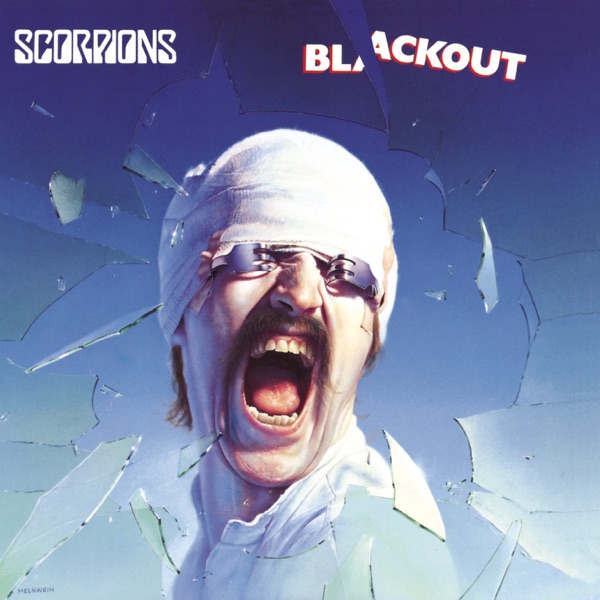
- 1982 Blackout
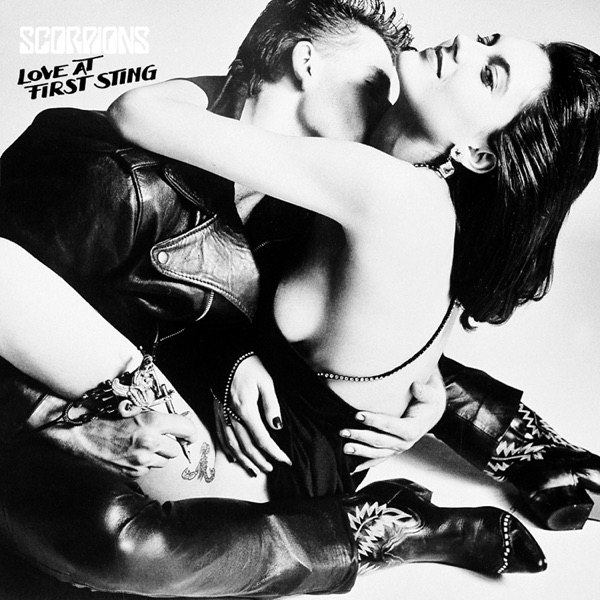
- 1984 Love at First Sting
- 1988 Savage Amusement
- 1990 Crazy World
- 1993 Face the Heat
- 1996 Pure Instinct
- 1999 Eye II Eye
- 2000 Moment of Glory
- 2004 Unbreakable
- 2010 Sting in the Tail
- 2011 Comeblack
- 2015 Return to Forever
- 2022 Rock Believer
Source: MusicBrainz
Deep Dive
Overview
Scorpions are a German hard rock and heavy metal band formed in Hanover in 1965 by guitarist Rudolf Schenker. Over nearly six decades, they became one of Europe’s most commercially successful rock exports, anchored by Schenker’s founding vision and the powerful vocals of Klaus Meine, who joined in 1969. The band’s catalog spans from early proto-metal experiments through stadium-filling arena rock, culminating in one song—“Wind of Change”—that would become inextricably linked with the fall of the Berlin Wall and the cultural watershed of 1990.
Formation Story
Rudolf Schenker assembled the first iteration of Scorpions in Hanover in 1965 with guitarist Michael Schenker (his brother), bassist Lothar Heimberg, and drummer Wolfgang Dziony. The band’s early years were marked by rapid personnel turnover as they refined their sound from blues-rock foundations. Klaus Meine arrived in 1969, providing the high, clarion vocal presence that would define the band’s mature identity. Francis Buchholz replaced Heimberg on bass in 1973, and by 1977, Herman Rarebell took over drums. This lineup, solidified when Matthias Jabs joined as guitarist in 1978 (replacing his brother Michael), became the classic Scorpions formation that would dominate arenas throughout the next decade and a half.
Breakthrough Moment
Scorpions achieved initial chart success in continental Europe during the mid-1970s with albums like Virgin Killer (1976) and Taken by Force (1977), but their international breakthrough came with Lovedrive (1979), an album that married heavy, riff-driven hard rock with unexpected melodic sophistication. The band’s trajectory steepened dramatically with Animal Magnetism (1980) and Blackout (1982), both of which penetrated the North American rock market and cemented their status as arena headliners. These releases showcased a band fully realized: Schenker’s rhythm guitar providing muscular foundation, Jabs’ lead work delivering both technical flash and memorable hooks, Buchholz and Rarebell locking into a groove-oriented rhythm section, and Meine’s voice cutting through with the power and flexibility to handle both hard-rock belting and quieter, more intimate moments.
Peak Era
The band’s creative and commercial zenith occurred between 1980 and 1992, the period encompassing Animal Magnetism, Blackout, Love at First Sting (1984), and Crazy World (1990). Love at First Sting in particular became their best-selling album worldwide, anchored by the power ballad “Rock You Like a Hurricane,” a track that demonstrated their ability to craft radio-friendly yet musically substantial songs without sacrificing their hard-rock credibility. Crazy World, released in 1990, arrived at a historically significant moment—the album’s lead single, “Wind of Change,” became an anthem for the transformations sweeping Eastern Europe. Though not originally conceived as a geopolitical statement, the song’s lyrical imagery of change and new beginnings resonated globally, and the band found themselves positioned at the nexus of rock music and world events in a way few groups have experienced.
Musical Style
Scorpions’ sound rested on a foundation of blues-based hard rock with Eastern European melodic influences—a distinctly European sensibility that set them apart from American and British hard-rock contemporaries. Jabs and Schenker developed a guitar interplay balancing Schenker’s percussive, rhythm-driven playing with Jabs’ more fluid and expressive lead style. The rhythm section of Buchholz and Rarebell favored locked, groovable time signatures over the technical complexity or sheer brutality that characterized heavier metal bands. Meine’s voice proved remarkably versatile: capable of powerful, high-register screams on uptempo rockers, but equally comfortable delivering the melodic vulnerability required by the band’s extended ballad sequences. Production across their major albums leaned toward clarity and dynamic range, allowing each instrument distinct presence while maintaining cohesion—a studio discipline that translated effectively to the arena setting where they built their reputation.
Major Albums
Lovedrive (1979)
A watershed moment for the band: the first album to achieve significant American radio play and the record that introduced Scorpions to stadium audiences, establishing the template for their biggest successes.
Animal Magnetism (1980)
Built on the momentum of Lovedrive, this album deepened the band’s commercial penetration while showcasing their compositional maturity and the fully integrated lineup’s collective strength.
Love at First Sting (1984)
Their best-selling album and the apex of their 1980s stadium-rock period; “Rock You Like a Hurricane” became an enduring global rock radio staple and exemplified their gift for crafting immediate yet substantive hooks.
Crazy World (1990)
Closed out the classic lineup era and captured the band at a moment of global cultural relevance, with “Wind of Change” providing an unforeseen cultural monument to the end of the Cold War.
Unbreakable (2004)
Marked a successful return to the studio after the 1993–1996 period and demonstrated the band’s ability to sustain a touring and recording presence across multiple decades.
Signature Songs
- “Rock You Like a Hurricane” (Love at First Sting, 1984) — Their most recognizable anthem worldwide; a arena-rock masterpiece built on tightly wound riffing and infectious vocal melody.
- “Wind of Change” (Crazy World, 1990) — The quintessential post-Cold War rock ballad, forever linked to the cultural moment of Eastern European liberation.
- “No One Like You” (Love at First Sting, 1984) — A power ballad that proved the band’s emotional range and melodic gift on slower material.
- “Tainted Love” — Demonstrates their ability to reinterpret established material within their hard-rock idiom.
- “The Zoo” (Crazy World, 1990) — A mid-tempo groove rocker showcasing Rarebell’s rhythmic sophistication and the band’s tighter, funkier side.
Influence on Rock
Scorpions’ most significant contribution to rock music lies in demonstrating that European hard rock could achieve sustained global commercial success without slavishly mimicking American and British models. Their emphasis on melodic sophistication within hard-rock structures influenced a generation of bands across the 1980s and beyond who sought to balance heaviness with accessibility. The success of Love at First Sting in particular validated the power ballad format for rock radio and MTV, establishing a template that dominated the decade. Beyond commercial impact, their longevity—remaining a touring concern across five decades—established an archetype for European arena rock that emphasized musicianship, compositional craft, and professional consistency over short-term trend-chasing.
Legacy
Scorpions remained active performers and recording artists well into the 21st century, releasing Rock Believer in 2022 after a seven-year gap. Rudolf Schenker’s continued presence as founder and driving force, alongside Klaus Meine’s vocal performances into his seventh decade, marked them as one of rock’s most durable institutions. “Wind of Change” achieved perhaps permanent cultural weight—a rock song interwoven with historical memory of the Cold War’s conclusion in a way few others have achieved. The band’s influence extended beyond music into broader popular culture, their aesthetic of precision, spectacle, and melodic grandeur informing how hard rock positioned itself as entertainment suitable for mainstream venues and audiences. Streaming platforms and archival reissues have ensured their catalog remains accessible to subsequent generations, while their ongoing touring demonstrates sustained audience appetite for their particular brand of German hard-rock virtuosity.
Fun Facts
- Rudolf Schenker has been the sole continuous member of the band since its 1965 founding, making him the anchor of one of hard rock’s most stable institutional legacies.
- The band’s bass player evolved from Francis Buchholz (1973–1992) to Ralph Rieckermann (1993–2003) to Paweł Mąciwoda (2003–present), ensuring technical consistency across three distinct lineup eras.
- Drummer Herman Rarebell served the band for nearly two decades (1977–1996), establishing the groove-oriented rhythmic foundation that characterized their peak commercial period.
- “Wind of Change” became so historically emblematic of the Cold War’s end that it remains the song most commonly cited in connection with the geopolitical transformations of 1989–1991, an unusual crossover of rock music and world history.
Discography & Previews
Click any album to expand its track list. Each track plays a 30-second preview streamed from Apple Music. Tap the link icon next to a track to open it in Apple Music for full playback.
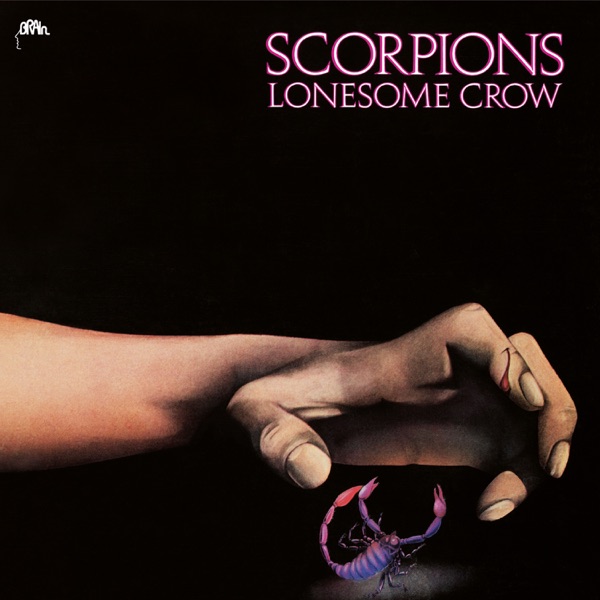


- 1 Dark Lady (Remastered 2023) ↗ 3:27
- 2 In Trance (Remastered 2023) ↗ 4:44
- 3 Life's Like a River (Remastered 2023) ↗ 3:50
- 4 Top of the Bill (Remastered 2023) ↗ 3:25
- 5 Living and Dying (Remastered 2023) ↗ 3:21
- 6 Robot Man (Remastered 2023) ↗ 2:44
- 7 Evening Wind (Remastered 2023) ↗ 5:05
- 8 Sun in My Hand (Remastered 2023) ↗ 4:25
- 9 Longing for Fire (Remastered 2023) ↗ 2:43
- 10 Night Lights (Remastered 2023) ↗ 3:17
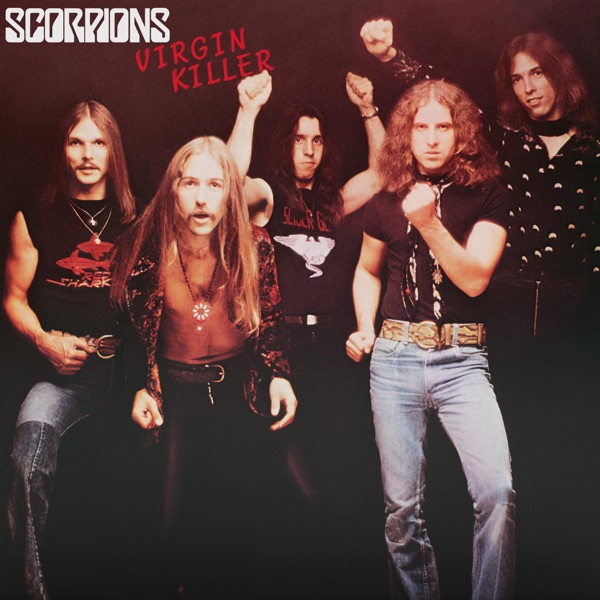
- 1 Pictured Life (Remastered 2023) ↗ 3:23
- 2 Catch Your Train (Remastered 2023) ↗ 3:34
- 3 In Your Park (Remastered 2023) ↗ 3:44
- 4 Backstage Queen (Remastered 2023) ↗ 3:12
- 5 Virgin Killer (Remastered 2023) ↗ 3:41
- 6 Hell Cat (Remastered 2023) ↗ 2:55
- 7 Crying Days (Remastered 2023) ↗ 4:37
- 8 Polar Nights (Remastered 2023) ↗ 5:09
- 9 Yellow Raven (Remastered 2023) ↗ 5:00

- 1 Steamrock Fever (2015 Remaster) ↗ 3:40
- 2 We'll Burn the Sky (2015 Remaster) ↗ 6:31
- 3 I've Got to Be Free (2015 Remaster) ↗ 4:05
- 4 The Riot of Your Time (2015 Remaster) ↗ 4:14
- 5 The Sails of Charon (2015 Remaster) ↗ 5:12
- 6 Your Light (2015 Remaster) ↗ 4:35
- 7 He's a Woman – She's a Man (2015 Remaster) ↗ 3:19
- 8 Born to Touch Your Feelings (2015 Remaster) ↗ 7:45
- 9 Suspender Love (2015 Remaster) ↗ 3:24
- 10 Busy Guys (Demo) ↗ 4:28
- 11 Believe in Love (Demo Version) ↗ 3:46
- 12 Midnight Blues Jam (Demo) ↗ 4:10
- 13 Blue Dream (Unfinished Instrumental) ↗ 4:10
- 14 Born to Touch Your Feelings (Demo Version) ↗ 5:06




- 1 New Generation ↗ 5:51
- 2 Love 'em or Leave 'em ↗ 4:04
- 3 Deep and Dark ↗ 3:37
- 4 Borderline ↗ 4:53
- 5 Blood Too Hot ↗ 4:16
- 6 Maybe I Maybe You ↗ 3:30
- 7 Someday Is Now ↗ 3:24
- 8 My City My Town ↗ 4:55
- 9 Through My Eyes ↗ 5:23
- 10 Can You Feel It ↗ 3:48
- 11 This Time ↗ 3:34
- 12 She Said ↗ 4:32
- 13 Remember the Good Times (Retro Garage Mix) ↗ 4:24


- 1 Rhythm of Love (Re-Recorded) ↗ 3:39
- 2 No One Like You (Re-Recorded) ↗ 4:07
- 3 The Zoo (Re-Recorded) ↗ 5:38
- 4 Rock You Like a Hurricane (Re-Recorded) ↗ 4:16
- 5 Blackout (Re-Recorded) ↗ 3:49
- 6 Wind of Change (Re-Recorded) ↗ 5:09
- 7 Still Loving You (Re-Recorded) ↗ 6:43
- 8 Tainted Love ↗ 3:28
- 9 Children of the Revolution ↗ 3:33
- 10 Across the Universe ↗ 3:18
- 11 Tin Soldier ↗ 3:14
- 12 All Day and All of the Night ↗ 3:16
- 13 Ruby Tuesday ↗ 3:55

- 1 Going Out with a Bang ↗ 3:47
- 2 We Built This House ↗ 3:54
- 3 Rock My Car ↗ 3:21
- 4 House of Cards ↗ 5:06
- 5 All for One ↗ 2:58
- 6 Rock 'N' Roll Band ↗ 3:55
- 7 Catch Your Luck and Play ↗ 3:33
- 8 Rollin' Home ↗ 4:04
- 9 Hard Rockin' the Place ↗ 4:07
- 10 Eye of the Storm ↗ 4:28
- 11 The Scratch ↗ 3:41
- 12 Gypsy Life ↗ 4:52
- 13 The World We Used to Know ↗ 3:52
- 14 Dancing with the Moonlight ↗ 3:42
- 15 When the Truth Is a Lie ↗ 4:27
- 16 Who We Are ↗ 2:34
- 17 Crazy Ride ↗ 4:20
- 18 One and One Is Three ↗ 4:21
- 19 Delirious ↗ 2:58

- 1 Gas In the Tank ↗ 3:40
- 2 Roots In My Boots ↗ 3:17
- 3 Knock 'Em Dead ↗ 4:11
- 4 Rock Believer ↗ 3:57
- 5 Shining of Your Soul ↗ 3:58
- 6 Seventh Sun ↗ 5:31
- 7 Hot and Cold ↗ 4:13
- 8 When I Lay My Bones to Rest ↗ 3:08
- 9 Peacemaker ↗ 2:56
- 10 Call of the Wild ↗ 5:21
- 11 When You Know (Where You Come From) ↗ 4:22