Photo by Richard Barnes , licensed under CC BY-SA 3.0 · Wikimedia Commons
Rank #288
Renaissance
British prog-folk band of orchestral arrangement and Annie Haslam vocals.
From Wikipedia
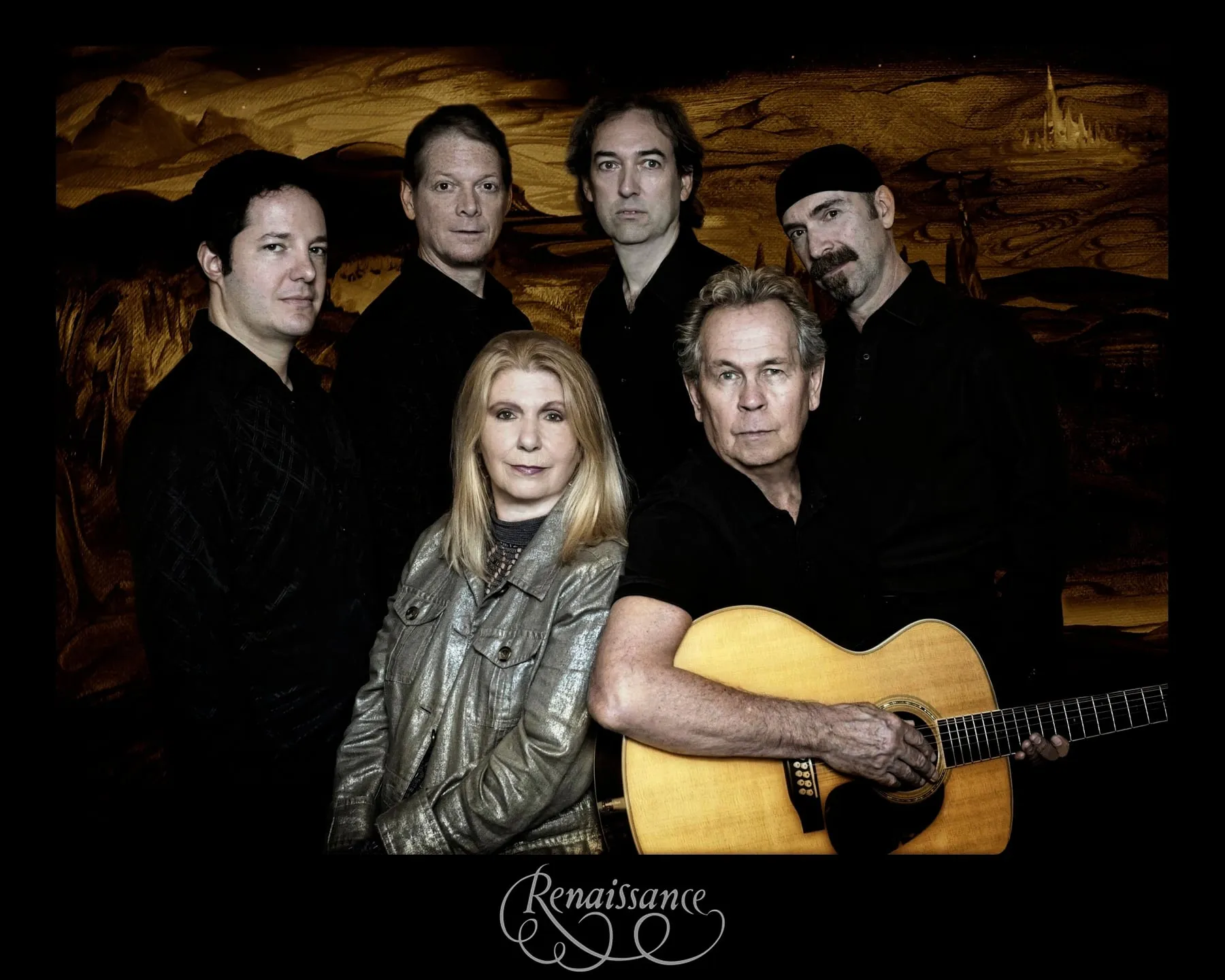
Renaissance are an English progressive rock band, best known for their 1978 UK top 10 hit "Northern Lights" and progressive rock classics like "Carpet of the Sun", "Mother Russia", and "Ashes Are Burning". They developed a unique sound, combining a female lead vocal with a fusion of classical, folk, rock, and jazz influences. Characteristic elements of the Renaissance sound are Annie Haslam's wide vocal range, prominent piano accompaniment, orchestral arrangements and vocal harmonies.
Members
- Annie Haslam
- David J. Keyes
- Jon Camp
- Leo Traversa
Studio Albums
- 1969 Renaissance
- 1971 Illusion
- 1972 Prologue
- 1973 Ashes Are Burning
- 1974 Turn of the Cards
- 1975 Scheherazade and Other Stories
- 1977 Novella
- 1978 A Song for All Seasons
- 1979 Azure d’Or
- 1981 Camera Camera
- 1983 Time‐Line
- 1994 The Other Woman
- 1997 Songs From Renaissance Days
- 2000 Tuscany
- 2013 Grandine il vento
Source: MusicBrainz
Deep Dive
Overview
Renaissance are an English progressive rock band that emerged from the British rock scene in 1969, establishing themselves as practitioners of a distinctive fusion sound that merged classical orchestration, folk melody, progressive rock structure, and jazz harmonies. The band became best known through a series of albums released during the 1970s, most notably their 1978 UK top 10 hit “Northern Lights.” Their defining characteristic—the interplay between Annie Haslam’s wide-ranging female vocals and elaborately arranged instrumental accompaniment—set them apart from most rock bands of their era and secured their place within the progressive rock canon.
Formation Story
Renaissance formed in 1969 in the United Kingdom, during a period when progressive rock was beginning to establish itself as a serious artistic movement. The band’s foundational lineup included Annie Haslam (vocals), Jon Camp, David J. Keyes, and Leo Traversa, musicians who shared a commitment to expanding rock’s instrumental and compositional ambitions. Rather than follow the blues-based hard rock template that dominated much of the era, the band gravitated toward classical forms, folk sensibilities, and complex harmonic writing. This orientation placed them from the outset in conversation with other art-rock and symphonic rock acts emerging across Britain and Europe during the late 1960s and early 1970s.
Breakthrough Moment
Renaissance’s path to wider recognition crystallized with the release of their 1973 album Ashes Are Burning, which introduced the progressive rock audience to their orchestral approach and Haslam’s distinctive vocal presence. The album’s title track became one of the band’s signature pieces, demonstrating how the group could construct a complex, multi-sectioned composition while maintaining a strong melodic identity. Their momentum continued through the mid-1970s with successive releases—Turn of the Cards (1974), Scheherazade and Other Stories (1975), and Novella (1977)—each further refining their sound and expanding their cult following. The release of A Song for All Seasons in 1978 proved to be their commercial peak in the UK market, where “Northern Lights” achieved top 10 chart status, giving the band their most substantial mainstream exposure and introducing their orchestral progressive sound to audiences beyond the dedicated progressive rock listener base.
Peak Era
The years from 1973 to 1979 represent Renaissance’s creatively most fertile and commercially most successful period. During this span, the band released five studio albums that collectively defined their artistic identity and secured their reputation within progressive rock circles. Ashes Are Burning, Turn of the Cards, Scheherazade and Other Stories, A Song for All Seasons, and Azure d’Or (1979) all demonstrated the band’s commitment to ambitious compositional structures, orchestral sophistication, and Haslam’s development as an interpretive vocalist. These records established Renaissance as one of the more polished and theatrically inclined progressive rock acts of the decade, appealing to listeners who valued melody and classical influence alongside complexity and instrumental prowess.
Musical Style
Renaissance’s sound was built upon the foundation of Annie Haslam’s wide vocal range, which became the central organizing principle around which the band’s arrangements revolved. Rather than treating the voice as one element among many, the band consistently positioned Haslam’s vocals as the primary melodic instrument, with the ensemble backing providing harmonic, textural, and rhythmic support. Prominent piano accompaniment anchored many of their compositions, offering both classical sensibility and romantic expressiveness. Orchestral arrangements—string sections, woodwind parts, and layered instrumental textures—distinguished Renaissance from heavier or blues-based rock contemporaries. The band incorporated folk influences through melodic phrasing and lyrical themes, while still maintaining rock’s rhythmic drive and progressive rock’s formal adventurousness. This fusion of classical arrangement, folk melody, and rock structure, occasionally inflected with jazz harmonies, created a distinctive sonic identity that remained relatively consistent across their 1970s output while allowing room for evolution in instrumental complexity and thematic ambition.
Major Albums
Ashes Are Burning (1973)
The album that introduced Renaissance to the progressive rock audience at large, featuring the title track as a showcase for the band’s ability to construct elaborate multi-part compositions with strong melodic cores.
Scheherazade and Other Stories (1975)
A concept-influenced work demonstrating the band’s facility with extended instrumental passages and orchestral elaboration while maintaining focus on Haslam’s vocal presence and the songs’ fundamental melodic appeal.
A Song for All Seasons (1978)
Renaissance’s most commercially successful release, containing “Northern Lights” and representing the band’s most polished presentation of their symphonic rock formula to a mainstream audience.
Azure d’Or (1979)
The final album of their first sustained creative period, showcasing continued refinement of their orchestral progressive rock approach before a lengthy gap in new material.
Signature Songs
- Northern Lights — Their most commercially successful composition, a UK top 10 hit that brought their orchestral progressive sound to mainstream radio audiences.
- Ashes Are Burning — A multi-part progressive rock composition that became a staple of the band’s identity and a calling card for their orchestral ambitions.
- Carpet of the Sun — One of the band’s most enduring progressive rock classics, demonstrating their command of melody and arrangement.
- Mother Russia — A notable composition from their 1970s output that exemplified the band’s ability to create thematic coherence within complex instrumental structures.
Influence on Rock
Renaissance occupied a distinctive niche within 1970s progressive rock, establishing an alternative model to the technical virtuosity and aggressive energy favored by many male-dominated prog acts. By centering a female vocalist within an orchestrally ambitious context, the band opened a different pathway for what progressive rock could sound like and whom it could speak to. Their emphasis on classical arrangement and vocal melody influenced subsequent art-rock and progressive rock acts who sought to balance complexity with accessibility. The band’s fusion of folk sensibility, classical form, and rock energy provided a template that later symphonic and progressive rock musicians referenced when seeking to move beyond the blues-based foundations that had grounded much rock music. While Renaissance never achieved the commercial dominance or critical canonization of the most celebrated progressive rock acts, their consistent presence on progressive rock radio and their influence on the symphonic rock subgenre ensured their contribution remained part of the genre’s historical record.
Legacy
Renaissance’s output from the 1970s has maintained a steady presence within progressive rock culture, with their albums remaining in circulation through reissue campaigns and streaming platforms. The band’s continued touring activity demonstrates the durability of their fan base and the enduring appeal of their particular blend of orchestral arrangement and vocal artistry. While the mainstream rock world moved decisively away from progressive rock’s formal ambitions during the 1980s, Renaissance’s 1970s catalog has been rediscovered and appreciated by successive generations of progressive rock enthusiasts, music historians, and listeners interested in the era’s experimental impulses. Annie Haslam’s distinctive vocal presence and the band’s commitment to orchestral sophistication have secured their place in any comprehensive historical accounting of progressive rock’s various subgenres and aesthetic approaches.
Fun Facts
- Renaissance released their eponymous debut album in 1969, though the band did not achieve significant recognition until their 1973 album Ashes Are Burning four years later.
- The band signed to both Elektra Records and Island Records during their career, indicating significant label backing for their ambitious orchestral productions.
- After a considerable hiatus following Azure d’Or in 1979, Renaissance returned to recording in 1994 with The Other Woman, demonstrating the band’s sustained commitment to composition and performance across multiple decades.
Discography & Previews
Click any album to expand its track list. Each track plays a 30-second preview streamed from Apple Music. Tap the link icon next to a track to open it in Apple Music for full playback.


- 1 Trip To The Fair (2021 Remaster) ↗ 10:51
- 1 Can You Understand (Live, Nottingham University, 24 January 1976) [2021 Remaster] ↗ 10:52
- 2 The Vultures Fly High (2021 Remaster) ↗ 3:09
- 2 Running Hard (Live, Nottingham University, 24 January 1976) [2021 Remaster] ↗ 9:29
- 3 Ocean Gypsy (2021 Remaster) ↗ 7:08
- 3 Ocean Gypsy (Live, Nottingham University, 24 January 1976) [2021 Remaster] ↗ 7:30
- 4 Song Of Scheherazade: Fanfare / The Betrayal / The Sultan / Love Theme / The Young Prince And Princess As Told By Scheherazade / Festival Preparations / Fugue For The Sultan / The Festival / Finale (2021 Remaster) ↗ 24:55
- 4 Prologue (Live, Nottingham University, 24 January 1976) [2021 Remaster] ↗ 6:29
- 5 Ocean Gypsy (Single Version) [2021 Remaster] ↗ 3:01
- 5 Song Of Scheherazade: Fanfare / The Betrayal / The Sultan / Love Theme / The Young Prince And Princess As Told By Scheherazade / Festival Preparations / Fugue For The Sultan / The Festival / Finale (Live, Nottingham University, 24 January 1 ↗ 24:53
- 6 Ashes Are Burning (Live, Nottingham University, 24 January 1976) [2021 Remaster] ↗ 20:13

- 1 Can You Hear Me? (2019 Remaster) ↗ 13:39
- 2 The Sisters (2019 Remaster) ↗ 7:13
- 3 Midas Man (2019 Remaster) ↗ 5:46
- 4 The Captive Heart (2019 Remaster) ↗ 4:16
- 5 Touching Once (Is So Hard To Keep) [2019 Remaster] ↗ 9:32
- 6 Can You Hear Me? (Single Edit) ↗ 8:08
- 7 Midas Man (Single Edit) ↗ 3:32
- 8 Prologue (Live, The Royal Albert Hall, 14 October 1977) ↗ 8:14
- 9 Can You Understand (Live, The Royal Albert Hall, 14 October 1977) ↗ 11:43
- 10 Carpet Of The Sun (Live, The Royal Albert Hall, 14 October 1977) ↗ 4:02
- 11 Can You Hear Me? (Live, The Royal Albert Hall, 14 October 1977) ↗ 14:02
- 12 Song Of Scheherazade: Fanfare/The Betrayal/The Sultan/Love Theme/The Young Prince And Princess As Told By Scheherazade/Festival Preparations/Fugue For The Sultan/The Festival/Finale (Live, The Royal Albert Hall, 14 October 1977) ↗ 25:29
- 13 Running Hard (Live, The Royal Albert Hall, 14 October 1977) ↗ 10:27
- 14 Midas Man (Live, The Royal Albert Hall, 14 October 1977) ↗ 4:32
- 15 Mother Russia (Live, The Royal Albert Hall, 14 October 1977) ↗ 10:01
- 16 Touching Once (Is So Hard To Keep) [Live, The Royal Albert Hall, 14 October 1977] ↗ 10:14

