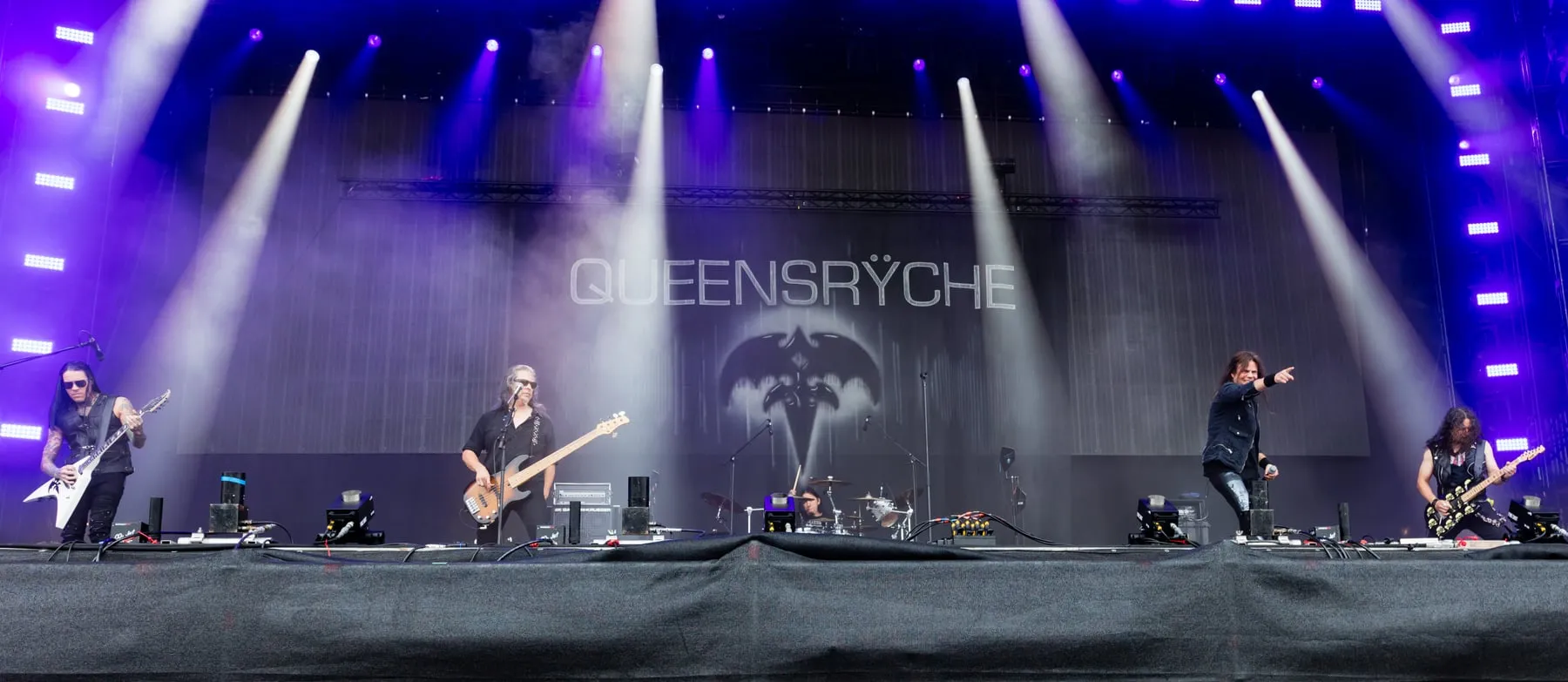
Photo by Sven Mandel , licensed under CC BY-SA 4.0 · Wikimedia Commons
Rank #293
Queensrÿche
Bellevue, Washington band whose 'Operation: Mindcrime' defined prog metal.
From Wikipedia
Queensrÿche is an American progressive metal band. It formed in 1980 in Bellevue, Washington, and first went by Cross+Fire and then by the Mob before settling on its current name in 1982. The band has released 16 studio albums, one EP, and several DVDs, and continues to tour and record. The original lineup consisted of guitarists Michael Wilton and Chris DeGarmo, drummer Scott Rockenfield and bassist Eddie Jackson; lead vocalist Geoff Tate was recruited in 1982 to round out the band.
Members
- Chris DeGarmo
- Eddie Jackson
- Geoff Tate
- Kelly Gray
- Michael Wilton
- Mike Stone
- Parker Lundgren
- Scott Rockenfield
- Todd La Torre
Studio Albums
- 1983 The Warning
- 1986 Rage for Order
- 1988 Operation: Mindcrime
- 1990 The Demos
- 1990 Nightryder
- 1990 Empire
- 1994 Promised Land
- 1997 Hear in the Now Frontier
- 1999 Q2K
- 2003 Tribe
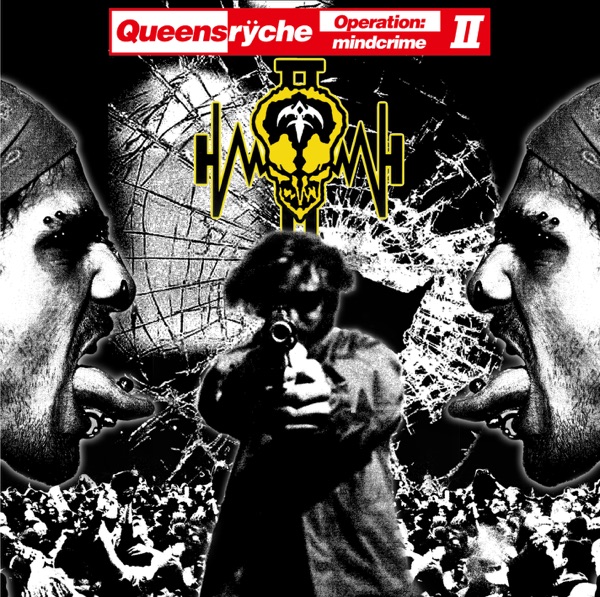
- 2006 Operation: Mindcrime II
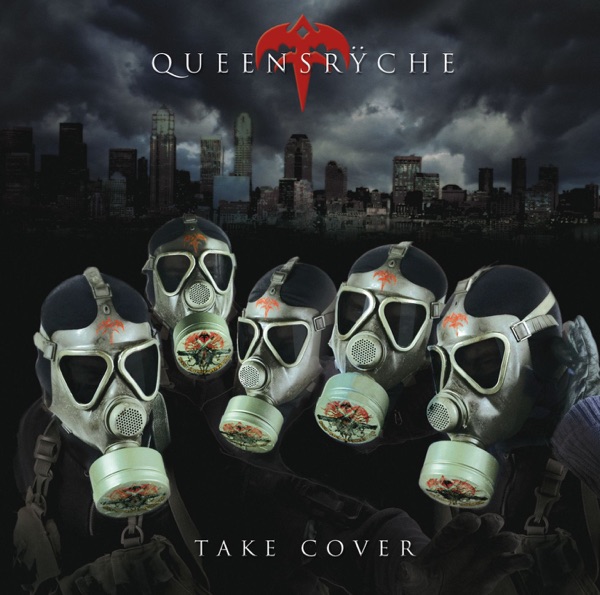
- 2007 Take Cover
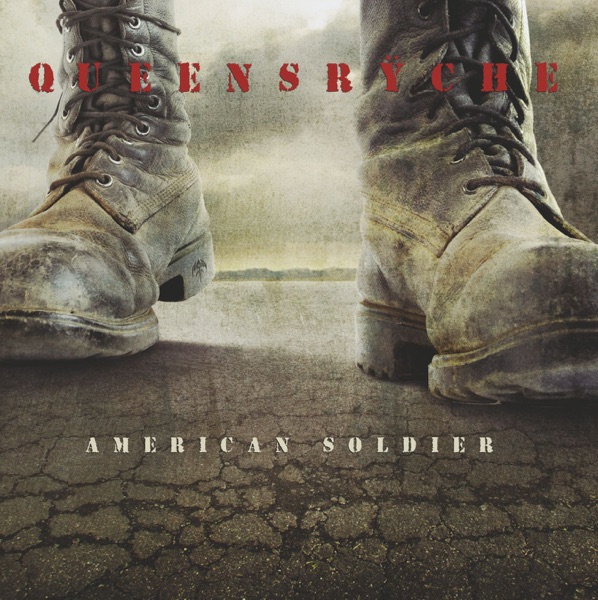
- 2009 American Soldier
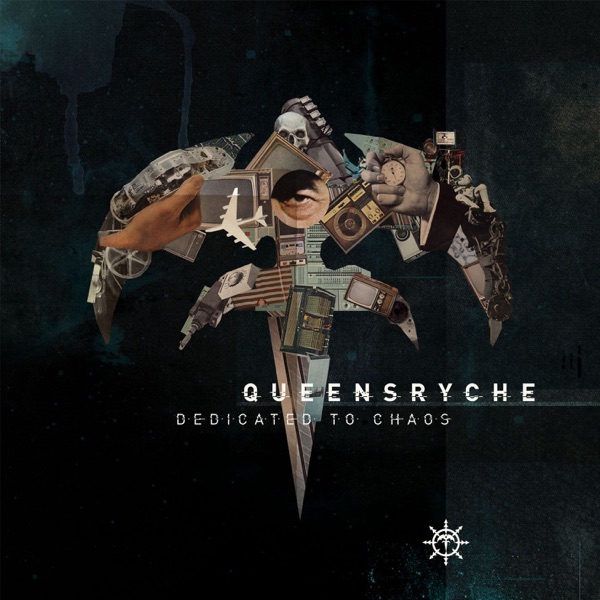
- 2011 Dedicated to Chaos
- 2013 Queensrÿche
- 2015 Condition Hüman
- 2019 The Verdict
- 2022 Digital Noise Alliance
Source: MusicBrainz
Deep Dive
Overview
Queensrÿche is an American progressive metal band that emerged from Bellevue, Washington in the early 1980s and became a defining force in the fusion of progressive rock’s complexity and heavy metal’s power. Operating across four decades, the band crafted concept albums and technical compositions that expanded the vocabulary of metal while maintaining accessibility to mainstream audiences. Their 1988 album Operation: Mindcrime remains their defining work—a rock opera that established the template for progressive metal’s narrative ambitions and proved the genre could sustain commercial success without sacrificing artistic depth.
Formation Story
Queensrÿche came together in Bellevue, Washington, initially performing under the names Cross+Fire and then the Mob before adopting their current name in 1982. The original core consisted of guitarists Michael Wilton and Chris DeGarmo, bassist Eddie Jackson, and drummer Scott Rockenfield. The band solidified its classic lineup with the recruitment of vocalist Geoff Tate in 1982, completing the essential five-piece that would drive the band through their most creatively fertile period. This formation arrived during a moment when heavy metal was fragmenting into subgenres—thrash was ascendant, while the progressive impulses that had defined 1970s rock were seen by many as exhausted. Queensrÿche’s emergence in the Pacific Northwest, years before Seattle’s grunge boom, positioned them as regional torchbearers of a more intricate, compositionally ambitious strain of metal.
Breakthrough Moment
The band’s earliest work—The Warning (1983) and Rage for Order (1986)—established their technical credentials and ambitious songwriting, but their breakthrough arrived with Operation: Mindcrime in 1988. This concept album told the story of a disillusioned man manipulated into becoming an assassin, delivered across eleven tracks with orchestral arrangements, shifting time signatures, and Tate’s soaring, multi-octave vocal range. The album’s commercial success and critical acclaim announced that progressive metal had found a viable commercial form. Operation: Mindcrime proved that bands could construct elaborate narrative frameworks, employ classical music structures, and still appeal beyond the underground metal audience. The album’s reach extended the band’s profile beyond metal circles into rock radio and MTV, establishing Queensrÿche as accessible art-metal rather than esoteric prog.
Peak Era
Queensrÿche’s most successful and creatively fertile period spanned 1988 through 1994, bookended by Operation: Mindcrime and Promised Land. The 1990 follow-up Empire expanded the band’s commercial footprint while maintaining their progressive identity, demonstrating that they could sustain momentum beyond their breakthrough concept album. Promised Land (1994) continued this trajectory, further refining their sound and approach to extended compositions. During this six-year window, Queensrÿche established themselves not merely as a cult concern but as a legitimate force in mainstream rock—selling substantial numbers of records, commanding festival slots, and influencing a generation of metal musicians who saw in their work a path toward intellectual rigor and pop accessibility coexisting.
Musical Style
Queensrÿche’s sound synthesizes progressive rock’s harmonic complexity, compositional ambition, and instrumentation—particularly multi-layered guitar work and synth-driven arrangements—with heavy metal’s distortion, intensity, and rhythmic power. Wilton and DeGarmo’s guitar interplay balances technical virtuosity with songwriting clarity; they employ unusual time signatures and key changes without sacrificing melodic hooks. Rockenfield’s drumming provides precision and dynamic control essential to the band’s shifting arrangements. Jackson’s bass playing supplies both harmonic depth and rhythmic propulsion. Tate’s vocal approach ranges from clean, soaring passages reminiscent of 1970s rock singers to aggressive, powerful delivery within the same song, giving his performance remarkable textural range. Lyrically, the band gravitates toward conceptual narratives and social commentary, particularly evident across their concept albums, rather than the personal or abstract imagery common in mainstream metal. This combination of technical sophistication, narrative ambition, and accessible melodic sensibility distinguishes Queensrÿche from both straightforward metal bands and prog-rock purists.
Major Albums
Operation: Mindcrime (1988)
A rock opera following a manipulated assassin, this album established the template for progressive metal’s narrative ambitions and remains the band’s most culturally significant work, blending orchestral arrangements with metal intensity and spawning a 2006 sequel.
Empire (1990)
A commercial expansion that maintained the band’s progressive credentials while achieving their widest mainstream reach, proving they could sustain momentum and evolve beyond their breakthrough concept album.
Promised Land (1994)
The final album of their classic commercial peak, this work further refined their approach to extended compositions and complex arrangements while continuing to balance accessibility with artistic ambition.
Operation: Mindcrime II (2006)
A sequel album that revisited the conceptual framework and characters of their definitive work, demonstrating the enduring narrative pull of their most celebrated creation.
Signature Songs
- “Anarchy in the U.K.” — A cover that showcased the band’s ability to recontextualize punk fury through a progressive metal lens.
- “Silent Lucidity” — A showcase for Tate’s vocal range and the band’s capacity for emotional resonance within heavier arrangements.
- “Take Hold of the Flame” — An early signature that established the band’s technical prowess and progressive approach on their debut.
- “The Needle Lies” — A Rage for Order track that demonstrated the band’s growing compositional sophistication and commercial appeal.
Influence on Rock
Queensrÿche fundamentally altered progressive metal’s viability by proving that complex, narrative-driven, technically ambitious compositions could achieve substantial commercial success without compromise. Their work influenced countless bands throughout the 1990s and 2000s who saw in Operation: Mindcrime evidence that metal audiences would embrace conceptual albums and rock operas. The band’s integration of classical arrangements, unconventional song structures, and elaborate vocal performances established conventions that subsequent prog-metal acts adopted and adapted. Their success coincided with and partly enabled the broader legitimization of progressive metal as a subgenre distinct from thrash, death metal, and traditional heavy metal—creating space for bands that prioritized technical proficiency and compositional complexity. The accessibility and narrative reach of their work also broadened metal’s audience beyond traditional metal demographics, introducing listeners to the genre through radio and MTV exposure rather than underground channels.
Legacy
Queensrÿche maintained recording and touring presence across subsequent decades, releasing albums through 2022 and continuing to perform, though lineup changes and internal tensions marked the later stages of their career. Operation: Mindcrime retains canonical status in progressive metal discourse and continues to circulate among both longtime fans and musicians discovering the band’s work through streaming platforms. The band’s ability to sustain a four-decade career while evolving their sound and subject matter—including addressing American military themes in American Soldier (2009) and later studio efforts—demonstrated the durability of their foundational approach. Queensrÿche’s trajectory from regional Pacific Northwest act to international metal institution remains a case study in how progressive ambition and commercial appeal, when balanced skillfully, can extend a band’s cultural relevance across generations.
Fun Facts
- The band toured steadily through the 1980s and beyond, building regional momentum in the Pacific Northwest before breaking through nationally with Operation: Mindcrime.
- Queensrÿche recorded both studio albums and an EP titled Nightryder and The Demos in 1990, a period of prolific output following Empire.
- The band released a self-titled album in 2013, marking a significant milestone in their recording history and continuing their evolution into their fourth decade.
- Their discography spans 16 studio albums across four decades, from The Warning in 1983 to Digital Noise Alliance in 2022, demonstrating sustained creative output and commercial viability.
Discography & Previews
Click any album to expand its track list. Each track plays a 30-second preview streamed from Apple Music. Tap the link icon next to a track to open it in Apple Music for full playback.


- 1 Walk in the Shadows ↗ 3:34
- 2 I Dream in Infrared ↗ 4:18
- 3 The Whisper ↗ 3:36
- 4 Gonna Get Close to You ↗ 4:37
- 5 The Killing Words ↗ 3:56
- 6 Surgical Strike ↗ 3:20
- 7 Neue Regel ↗ 5:05
- 8 Chemical Youth (We Are Rebellion) ↗ 4:06
- 9 London ↗ 5:05
- 10 Screaming in Digital ↗ 3:39
- 11 I Will Remember ↗ 4:38
- 12 Gonna Get Close To You ↗ 5:46
- 13 The Killing Words ↗ 4:10
- 14 I Dream in Infrared ↗ 4:02
- 15 Walk in the Shadows ↗ 3:41
- 1 I Remember Now ↗ 1:17
- 2 Anarchy-X ↗ 1:28
- 3 Revolution Calling ↗ 4:40
- 4 Operation: Mindcrime ↗ 4:45
- 5 Speak ↗ 3:43
- 6 Spreading the Disease ↗ 4:07
- 7 The Mission ↗ 5:48
- 8 Suite Sister Mary ↗ 10:40
- 9 The Needle Lies ↗ 3:09
- 10 Electric Requiem ↗ 1:23
- 11 Breaking the Silence ↗ 4:34
- 12 I Don't Believe in Love ↗ 4:24
- 13 Waiting For 22 ↗ 1:06
- 14 My Empty Room ↗ 1:32
- 15 Eyes of a Stranger ↗ 6:54
- 16 The Mission (Live at The Hammersmith Odeon, London/1990) ↗ 6:12
- 17 My Empty Room (Live at The Astoria Theatre, London/1994) ↗ 2:43

- 1 Best I Can ↗ 5:34
- 2 The Thin Line ↗ 5:43
- 3 Jet City Woman ↗ 5:22
- 4 Della Brown ↗ 7:05
- 5 Another Rainy Night (Without You) ↗ 4:29
- 6 Empire ↗ 5:24
- 7 Resistance ↗ 4:51
- 8 Silent Lucidity ↗ 5:48
- 9 Hand On Heart ↗ 5:33
- 10 One and Only ↗ 5:54
- 11 Anybody Listening? ↗ 7:59
- 12 Last Time In Paris ↗ 3:57
- 13 Scarborough Fair ↗ 3:50
- 14 Dirty Lil Secret ↗ 4:07
- 1 9:28 A.M. ↗ 1:43
- 2 I Am I ↗ 3:57
- 3 Damaged ↗ 3:58
- 4 Out of Mind ↗ 4:36
- 5 Bridge ↗ 3:30
- 6 Promised Land ↗ 7:58
- 7 Dis Con Nect Ted ↗ 4:45
- 8 Lady Jane ↗ 4:15
- 9 My Global Mind ↗ 4:22
- 10 One More Time ↗ 4:19
- 11 Someone Else? ↗ 5:01
- 12 Real World ↗ 4:24
- 13 Someone Else? (With Full Band) ↗ 7:13
- 14 Damaged (Live) ↗ 4:04
- 15 Real World (Live) ↗ 3:43

- 1 Sign of the Times ↗ 3:34
- 2 Cuckoo's Nest ↗ 4:01
- 3 Get a Life ↗ 3:40
- 4 The Voice Inside ↗ 3:52
- 5 Some People Fly ↗ 5:18
- 6 Saved ↗ 4:12
- 7 You ↗ 3:56
- 8 Hero ↗ 5:26
- 9 Miles Away ↗ 4:35
- 10 Reach ↗ 3:33
- 11 All I Want ↗ 4:06
- 12 Hit the Black ↗ 3:40
- 13 Anytime/Anywhere ↗ 2:57
- 14 Spool ↗ 5:09
- 15 Chasing Blue Sky ↗ 3:41
- 16 Silent Lucidity (MTV Unplugged) ↗ 5:25
- 17 The Killing Words (MTV Unplugged) ↗ 3:53
- 18 I Will Remember (MTV Unplugged) ↗ 3:59
- 1 Falling Down ↗ 4:27
- 2 Sacred Ground ↗ 4:11
- 3 One Life ↗ 4:46
- 4 When the Rain Comes ↗ 5:06
- 5 How Could I Know ↗ 3:43
- 6 Beside You ↗ 5:13
- 7 Liquid Sky ↗ 4:52
- 8 Breakdown ↗ 4:10
- 9 Burning Man ↗ 3:40
- 10 Wot Kinda Man ↗ 3:14
- 11 The Right Side of My Mind ↗ 5:50
- 12 Until There Was You ↗ 4:06
- 13 Howl ↗ 4:06
- 14 Sacred Ground (Live) ↗ 4:23
- 15 Breakdown (Radio Edit) ↗ 3:11

- 1 Freiheit Ouverture ↗ 1:36
- 2 Convict ↗ 0:09
- 3 I'm American ↗ 2:53
- 4 One Foot In Hell ↗ 4:13
- 5 Hostage ↗ 4:29
- 6 The Hands ↗ 4:37
- 7 Speed of Light ↗ 3:12
- 8 Signs Say Go ↗ 3:17
- 9 Re-Arrange You ↗ 3:11
- 10 The Chase ↗ 3:08
- 11 Murderer? ↗ 4:34
- 12 Circles ↗ 2:58
- 13 If I Could Change It All ↗ 4:28
- 14 An Intentional Confrontation ↗ 2:32
- 15 A Junkie's Blues ↗ 3:42
- 16 Fear City Slide ↗ 4:58
- 17 All the Promises ↗ 5:11