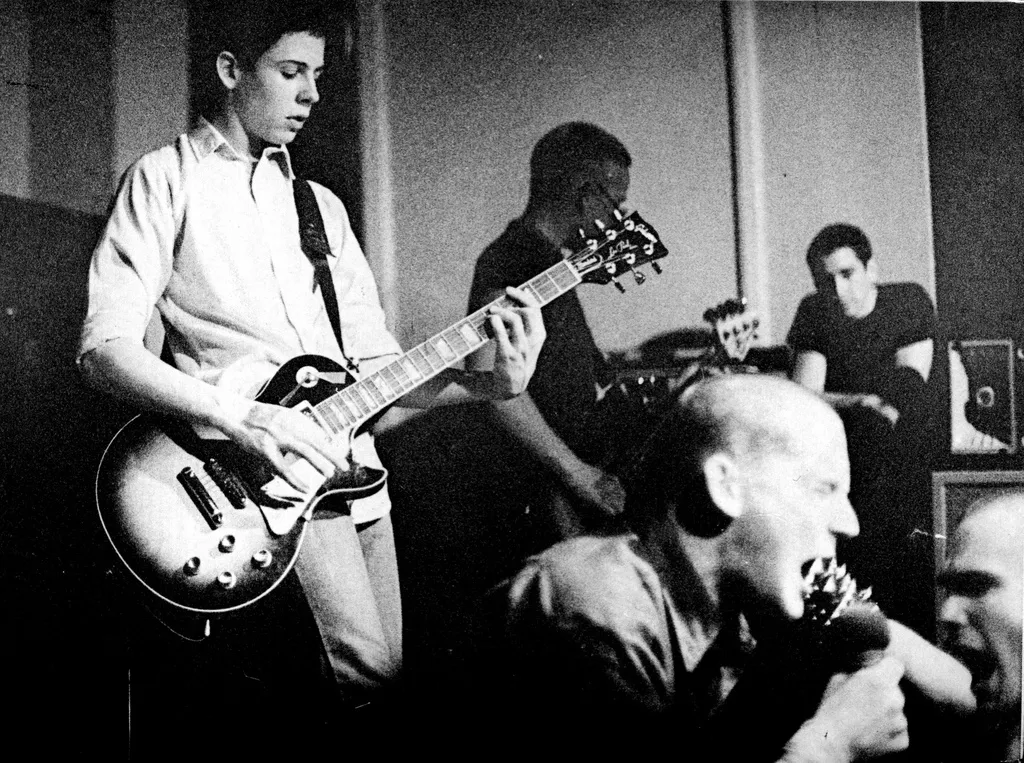
Photo by Malco23 , licensed under CC BY-SA 3.0 · Wikimedia Commons
Rank #144
Minor Threat
D.C. straight-edge hardcore short-timers whose influence vastly outsizes their run.
From Wikipedia
Minor Threat was an American hardcore punk band, formed in 1980 in Washington, D.C., by vocalist Ian MacKaye and drummer Jeff Nelson. MacKaye and Nelson had played in several other bands together, and recruited bassist Brian Baker and guitarist Lyle Preslar to form Minor Threat. They added a fifth member, Steve Hansgen, in 1982, playing bass, while Baker switched to second guitar.
Members
- Brian Baker (1980–1983)
- Ian MacKaye (1980–1983)
- Jeff Nelson (1980–1983)
- Lyle Preslar (1980–1983)
- Steve Hansgen (1982–1983)
Studio Albums
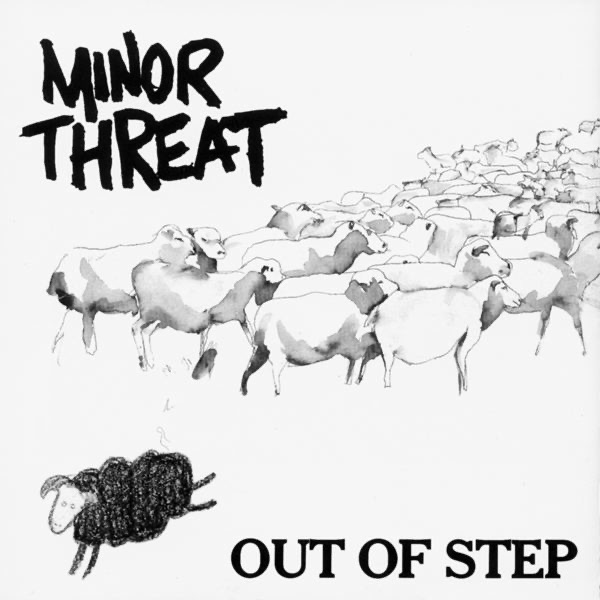
- 1983 Out of Step
Source: MusicBrainz
Deep Dive
Overview
Minor Threat was an American hardcore punk band formed in Washington, D.C., in 1980 by vocalist Ian MacKaye and drummer Jeff Nelson. Operating for just three years before dissolution in 1983, the band released a single studio album yet became one of the most influential acts in punk history. Their output and ethos—particularly the straight-edge philosophy they championed—transcended their brief tenure to shape hardcore punk ideology, independent record labels, and youth culture well beyond their era.
Formation Story
Ian MacKaye and Jeff Nelson had already played together in several bands before coalescing around Minor Threat in 1980. They recruited guitarist Lyle Preslar and bassist Brian Baker to complete the core quartet. Washington, D.C., in 1980 was not a major commercial music hub; the city’s punk and hardcore scenes operated largely outside the industry machinery that dominated New York, Los Angeles, and London. Minor Threat emerged within this smaller but intensely engaged community, a place where DIY ethics were not rhetorical flourishes but practical necessity. The band’s foundational lineup remained stable throughout 1980 and 1981, with Steve Hansgen added on bass in 1982, allowing Baker to move to second guitar and broaden the band’s instrumental palette.
Breakthrough Moment
Minor Threat’s breakthrough came through the release of Out of Step in 1983, their only studio album and the culmination of their three-year existence. The record arrived at a pivotal moment in hardcore punk history, when the genre was fragmenting into numerous substyles and scenes across America. Out of Step crystallized the straight-edge ideology that MacKaye and Nelson had been developing—a renunciation of drugs, alcohol, and sometimes other perceived vices—and married it to uncompromising, raw hardcore punk instrumentation. The album was issued on Dischord Records, a label founded by MacKaye and Nelson, establishing a template for artist-controlled independent music distribution that would influence underground and alternative music infrastructure for decades. Though Minor Threat disbanded shortly after the album’s release, Out of Step became the definitive statement of straight-edge philosophy and a foundational text for hardcore punk.
Peak Era
Minor Threat’s entire active period from 1980 to 1983 constituted their peak era. Because the band released only one studio album, their significance cannot be measured by a career arc of albums or chart performance. Instead, their impact accumulated through live performances, the 1983 release of Out of Step, and the philosophical and musical influence they exerted on their immediate scene and beyond. The band’s decision to disband in 1983, at the moment of their greatest attention, only amplified their mystique and enshrined their work as a complete, uncompromised statement rather than a career subject to commercial dilution or creative decline.
Musical Style
Minor Threat’s sound was characterized by brisk, driving hardcore punk—fast tempos, distorted guitars, forceful drums, and MacKaye’s direct, often shouted vocal delivery. The band operated within the broader hardcore punk tradition that had emerged from punk rock in the late 1970s, sharing kinship with bands working in shorter, sharper song structures and higher energy than their punk forebears. What distinguished Minor Threat was the tightness and clarity of their compositions; songs were economical, rarely exceeding three minutes, and structured around memorable riffs and chanted vocal hooks. The addition of Hansgen on bass in 1982, paired with Baker’s move to a second guitar position, added density to the guitar work without sacrificing the propulsive directness that defined the band’s core sound. Lyrically, MacKaye’s writing often addressed personal discipline, self-determination, and the rejection of substance use—themes that became synonymous with straight-edge culture. The band’s musicianship was precise and purposeful; there was no flourish or excess, only the elements required to convey conviction.
Major Albums
Out of Step (1983)
Minor Threat’s sole studio album, released on their own Dischord Records label, captured the band at their full creative and ideological apex. The record compiled the band’s essential statement on straight-edge living, youthful defiance, and hardcore punk aesthetics in nine concise tracks that established the sound and philosophy for which they remain revered.
Signature Songs
- “Straight Edge” — The anthemic title track that codified the straight-edge movement and became the defining statement of the band’s philosophy and sound.
- “Minor Threat” — A foundational hardcore punk anthem that established the band’s uncompromising aesthetic and rapid-fire delivery.
- “Out of Step” — The album’s opening track, setting the tone for the record’s thematic and sonic direction with urgent, driving energy.
- “Filler” — A brief, concise expression of the band’s compositional efficiency and lyrical directness.
Influence on Rock
Minor Threat’s influence extends far beyond hardcore punk into contemporary alternative rock, indie music, and youth culture at large. The straight-edge movement they articulated became a major ideological current within punk and metal communities, spawning a global subculture of sober, disciplined musicians and fans. Their aesthetic of uncompromising DIY ethics—releasing their own records through Dischord Records, playing small venues, refusing commercial opportunism—established a blueprint for independent music infrastructure that persists across genres. The band’s brief, focused existence became a template for punk authenticity: dissolve at your creative peak rather than decline into irrelevance. Generations of hardcore, punk, and alternative rock musicians have traced their approach to composition, production philosophy, and community engagement through Minor Threat’s example. Ian MacKaye’s subsequent work with Fugazi and his ongoing involvement with Dischord Records further cemented the band’s legacy as a foundational influence on independent music.
Legacy
Minor Threat’s cultural footprint has only widened since their 1983 dissolution. The straight-edge philosophy they championed has endured as a significant subcultural identity within punk and metal scenes worldwide. Out of Step has remained continuously available and remains a touchstone text for anyone investigating hardcore punk history or the origins of straight-edge ideology. The band’s brief, definitive run has become emblematic of punk integrity—the refusal to compromise, dilute, or exploit their artistic vision for commercial gain. Their influence on contemporary punk, hardcore, metal, and alternative rock musicians is pervasive, often unacknowledged but foundational. Dischord Records, the label they founded, continues to operate as one of American independent music’s most respected institutions, further extending their legacy into the present day.
Fun Facts
- Minor Threat disbanded in 1983, immediately after the release of Out of Step, ensuring their legacy would be defined by a single, uncompromised artistic statement rather than a protracted career trajectory.
- Ian MacKaye and Jeff Nelson’s prior collaborations before Minor Threat established a creative partnership that would continue to define D.C. hardcore and independent music for decades after the band’s dissolution.
- Dischord Records, the label through which Out of Step was released, was founded by MacKaye and Nelson and became a model for artist-controlled independent music distribution that influenced underground music infrastructure globally.
Discography & Previews
Click any album to expand its track list. Each track plays a 30-second preview streamed from Apple Music. Tap the link icon next to a track to open it in Apple Music for full playback.