
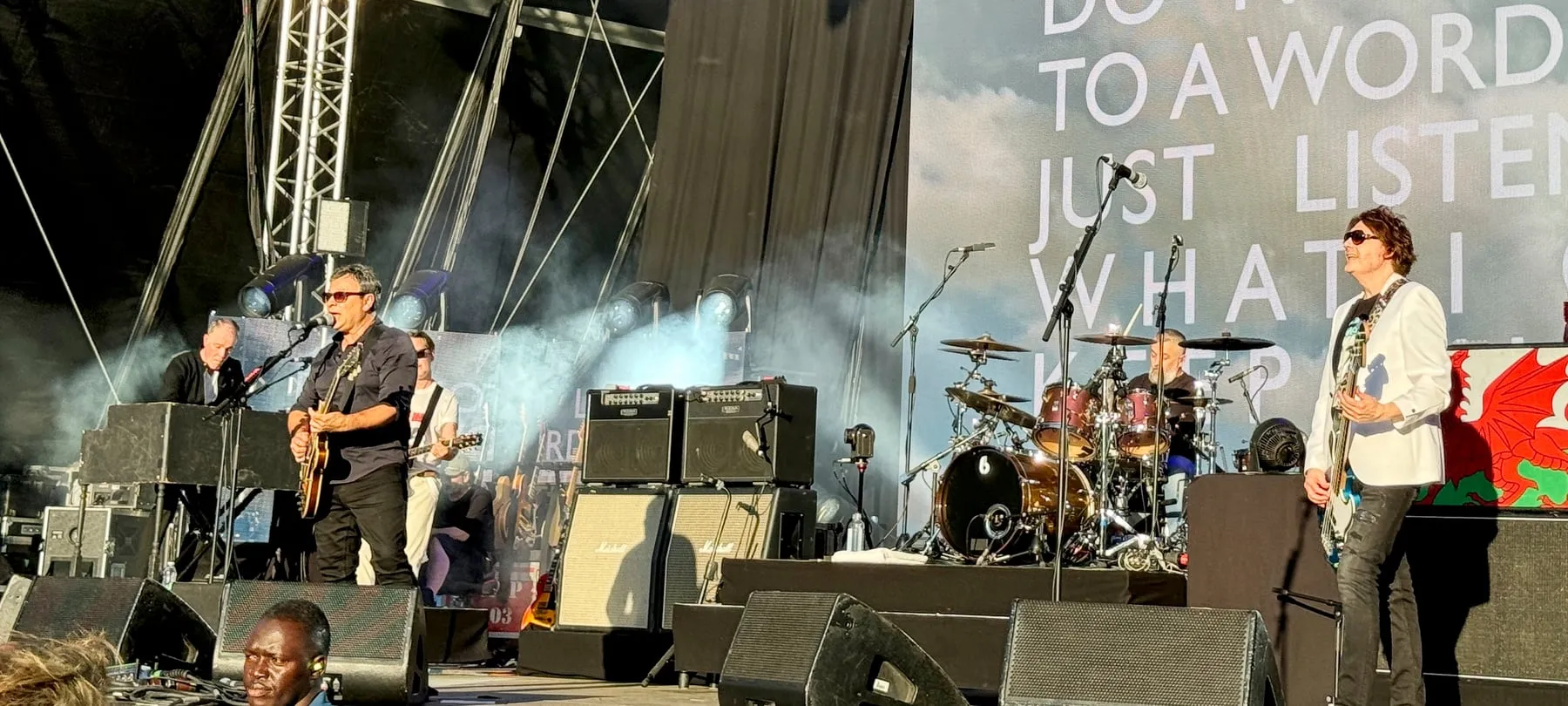
Photo by Bex.Walton , licensed under CC BY 2.0 · Wikimedia Commons
Rank #475
Manic Street Preachers
Welsh rockers whose literary, politicized arena-indie outlasted their dramatic 90s.
From Wikipedia
Manic Street Preachers are a Welsh rock band formed in Blackwood, Caerphilly, in 1986. Since 1995, the band has been a three-piece of Nicky Wire (bass/lyrics) and cousins James Dean Bradfield and Sean Moore (drums). They form a key part of the 1990s Welsh Cool Cymru cultural movement. The band's early releases were in a punk vein, eventually broadening to a wider alternative rock sound. Their early combination of androgynous glam imagery and lyrics about "culture, alienation, boredom and despair" gained them a loyal following.
Members
- James Dean Bradfield
- Nicky Wire
- Richey Edwards (?–1995)
- Sean Moore
Deep Dive
Overview
Manic Street Preachers are a Welsh rock band formed in Blackwood, Caerphilly, in 1986. Emerging from the valleys of South Wales, they became one of the defining acts of the 1990s British rock renaissance, blending literary ambition with punk energy and arena-sized alternative rock. Their legacy extends beyond the decade of their breakthrough, establishing them as a band whose politicized messaging and genre fluidity outlasted the commercial peak of Britpop itself.
Formation Story
The Manic Street Preachers coalesced in Blackwood in 1986, a small industrial town in South Wales. The classic lineup solidified around Nicky Wire on bass and vocals, cousins James Dean Bradfield and Sean Moore on guitar and drums respectively, alongside Richey Edwards. The band emerged from a provincial setting that lacked the major music industry infrastructure of London or Manchester, yet this distance from the center proved creatively generative. Their early approach drew from punk’s DIY ethos and confrontational spirit, though tempered by an intellectual engagement with literature, art, and social theory that would distinguish them from more straightforward punk revivalists.
Breakthrough Moment
Manic Street Preachers’ initial studio release, Generation Terrorists (1992), announced their arrival with a bold fusion of punk aggression and theatrical ambition. The band followed this with Gold Against the Soul (1993), which broadened their sound while maintaining their provocative edge. However, The Holy Bible (1994) emerged as the album that cemented their creative reputation and cult following in the UK. Released amid considerable media scrutiny and personal turmoil, the record showcased lyrics of unflinching darkness and despair set against alternative rock arrangements of considerable sophistication. The intensity of this period—both musically and personally—positioned them as the intellectual vanguard of emerging British rock.
Peak Era
Everything Must Go (1996) marked their commercial breakthrough, arriving as Britpop’s commercial and critical momentum crested. The album achieved substantial chart success and radio play, establishing the three-piece—Bradfield, Wire, and Moore—as the enduring core of the band following Edwards’ departure in 1995. This Is My Truth Tell Me Yours (1998) extended their commercial reach and critical credibility, demonstrating that their success was not a fleeting commercial moment. Between 1996 and 1998, the Manic Street Preachers occupied a rare position: simultaneously popular with mainstream audiences and respected by music critics for their refusal to compromise their literary, political voice.
Musical Style
The band’s sound evolved from punk foundations into a more expansive alternative rock idiom, characterized by Bradfield’s soaring vocal delivery, Wire’s distinctive bass work, and Moore’s precise drumming. Lyrically, Wire’s writing engaged directly with themes of class consciousness, cultural anxiety, alienation, and despair—drawing on literary and philosophical references that elevated rock lyricism beyond typical pop conventions. Early material leaned toward punk’s rawness and speed, but by the mid-1990s their arrangements incorporated larger harmonic ambitions, orchestral textures, and production sophistication that placed them within the broader alternative rock landscape alongside contemporary peers. Their androgynous visual presentation—combining glam imagery with punk’s anti-fashion stance—reinforced their positioning as intellectually serious artists rather than mere entertainers.
Major Albums
The Holy Bible (1994)
A landmark of 1990s alternative rock, this record distilled the band’s lyrical intensity and musical ambition into their most critically celebrated statement, marked by its unflinching emotional darkness and complex arrangements.
Everything Must Go (1996)
Their commercial breakthrough, this album consolidated the three-piece lineup and achieved substantial chart success while maintaining the band’s literary and political edge, becoming their most widely heard work.
This Is My Truth Tell Me Yours (1998)
Following their commercial peak, this album demonstrated sustained creative ambition, exploring political and social themes across a diverse sonic palette.
Know Your Enemy (2001)
Released into the post-Britpop landscape, this record signaled the band’s enduring presence and willingness to evolve their sound beyond their 1990s commercial period.
Send Away the Tigers (2007)
A return to more aggressive arrangements, this album showcased the band’s continued ability to generate fresh material while remaining rooted in their core artistic vision.
Signature Songs
- “A Design for Life” — The defining statement of their 1996 breakthrough, encapsulating their working-class consciousness and lyrical ambition.
- “If You Tolerate This Your Children Will Be Next” — A politically charged anthem that demonstrated their commitment to topical engagement through rock music.
- “A Taste of Honey” — A cover that became central to their live repertoire and cultural footprint during their peak commercial period.
- “Faster” — Showcasing their ability to blend punk energy with sophisticated production and Wire’s literary lyricism.
- “She Is Suffering” — Among their most emotionally direct moments, highlighting Bradfield’s vocal range and the band’s lyrical vulnerability.
Influence on Rock
The Manic Street Preachers’ insistence on political engagement and literary sophistication within rock music influenced subsequent generations of alternative and indie rock bands who sought to combine commercial ambition with intellectual seriousness. Their role in the Cool Cymru cultural movement elevated Welsh rock music’s profile internationally and demonstrated that major British rock acts could emerge from outside London and Manchester. By refusing to separate music from politics, they provided a template for rock musicians who rejected the notion that populist appeal requires artistic compromise. Their sustained career into the 2000s and beyond—continuing to release albums and tour—established them as representatives of 1990s Britpop who transcended the era’s commercial cycles.
Legacy
Manic Street Preachers endured where many of their 1990s peers either dissolved or faded into retrospective nostalgia. Their continued touring and album output—including releases such as Rewind the Film (2013), Futurology (2014), Resistance Is Futile (2018), The Ultra Vivid Lament (2021), and Critical Thinking (2025)—demonstrates their capacity to generate new work alongside playing heritage shows to audiences that span multiple generations. The band has become synonymous with Welsh cultural identity and working-class representation in British rock music. Their consistency and refusal to disband during fallow periods established them as elder statesmen of alternative rock, while their uncompromising political stance has only grown more central to their artistic identity as decades have passed.
Fun Facts
- The band was formed in Blackwood, Caerphilly, a former mining town in South Wales, an origin that directly informed their class-conscious lyrical sensibility.
- Richey Edwards disappeared in 1995, the same year the band transitioned to the three-piece lineup of Bradfield, Wire, and Moore that has defined them ever since.
- The title Everything Must Go references the bankruptcy liquidation sales ubiquitous in British high streets, embedding commercial critique within the album’s very name.
- Nicky Wire’s role expanded to encompass primary lyricist duties alongside bass, making him the conceptual voice of the band’s later era.
- The band has maintained continuous activity for nearly four decades, releasing new studio material as recently as 2025.