
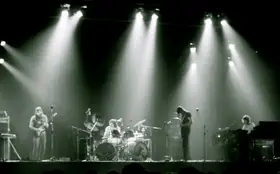
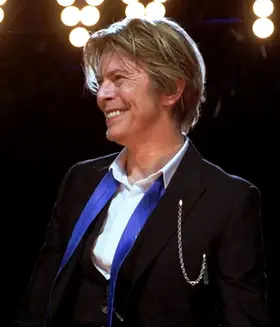
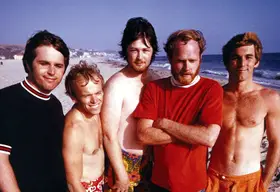
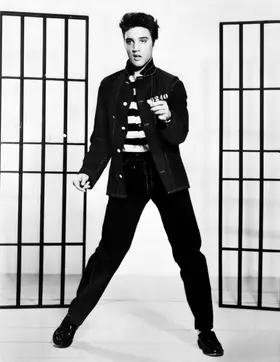
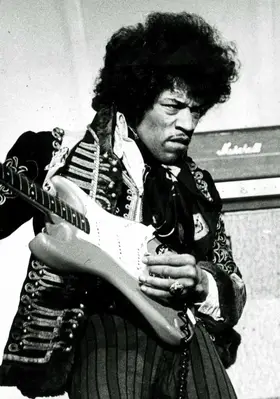







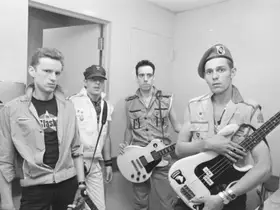

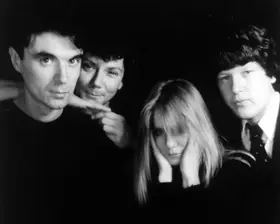
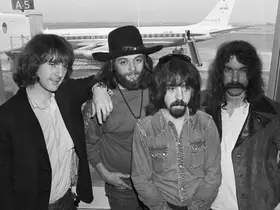
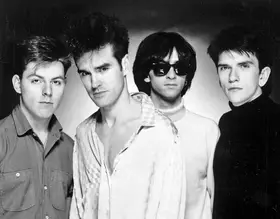
Magma band photograph

Photo by Grywnn , licensed under CC BY-SA 4.0 · Wikimedia Commons

Rank #280

Magma

Christian Vander's avant-prog band whose invented language and zeuhl style remain singular.

From Wikipedia

Magma is a French progressive rock band founded in Paris in 1969 by self-taught drummer Christian Vander, who claimed as his inspiration a "vision of humanity's spiritual and ecological future" that profoundly disturbed him. The style of progressive rock that Vander developed with Magma is termed "Zeuhl" and has been applied to other bands in France operating in the same period, and to some recent Japanese bands.

Members

  • Antoine Paganotti
  • Benoît Widemann
  • Bernard Paganotti
  • Christian Vander
  • Claude Engel
  • Claude Salmiéri
  • Didier Lockwood
  • Dominique Bertram
  • Emmanuel Borghi
  • Francis Moze
  • François Cahen
  • Guy Delacroix
  • Hervé Aknin
  • Isabelle Feuillebois
  • Jacques Bolognesi
  • Jannick Top
  • Klaus Blasquiz
  • Laurent Thibault
  • Lucien Zabuski
  • Marc Éliard
  • Marc Fosset
  • Michel Graillier
  • Patrick Gauthier
  • Pierre Dutour
  • Pierre-Michel Sivadier
  • Simon Goubert
  • Stella Vander
  • Teddy Lasry
  • Yochk’o Seffer

Studio Albums

  1. 1970 Kobaïa
  2. 1971 1.001° Centigrades
  3. 1973 Mëkanïk Dëstruktïẁ Kömmandöh
  4. 1974 Ẁurdah Ïtah
  5. 1974 Köhntarkösz
  6. 1976 Üdü Ẁüdü
  7. 1978 Attahk
  8. 1984 Merci
  9. 1989 Mekanïk Kommandöh
  10. 2004 K.A
  11. 2008 Archiẁ I & II
  12. 2009 Ëmëhntëhtt‐Ré
  13. 2012 Félicité Thösz
  14. 2014 Rïah Sahïltaahk
  15. 2015 Šlağ Tanƶ
  16. 2019 Zëss: Le jour du néant
  17. 2022 Kãrtëhl

Deep Dive

Overview

Magma is a French progressive rock band that emerged from Paris in 1969 under the direction of self-taught drummer Christian Vander. The band’s singular aesthetic—rooted in Vander’s claimed spiritual and ecological vision—developed into an avant-garde sound termed “Zeuhl,” a style so distinctive that it has become almost synonymous with Magma’s legacy and influenced subsequent generations of experimental rock musicians across Europe and Japan. Unlike many progressive rock bands that built their sound on complex instrumental virtuosity within recognizable song structures, Magma constructed a largely self-contained sonic universe, complete with invented language, non-linear compositional forms, and a fusion of orchestral density with rock’s fundamental drive.

Formation Story

Christian Vander, a largely self-taught musician who began as a drummer, founded Magma in Paris in 1969, driven by what he described as a vision concerning humanity’s spiritual and ecological future—a vision that “profoundly disturbed” him. This existential impetus shaped every aspect of the band’s formation and aesthetic direction. Rather than assembling musicians based on prior reputation or shared musical training, Vander gathered performers willing to explore his conceptual framework, including keyboardist Jannick Top and saxophonist Yochk’o Seffer, among early collaborators. The band’s membership would remain fluid across decades, with numerous musicians passing through its ranks, yet Vander’s vision remained the organizing principle. The Parisian context—home to experimental theater, avant-garde cinema, and a strong French tradition of art rock—provided fertile ground for Magma’s emergence as something outside the Anglo-American progressive rock mainstream.

Breakthrough Moment

Magma’s arrival was marked by the release of their debut album, Kobaïa, in 1970. The album introduced listeners to the Zeuhl aesthetic in nascent form: dense orchestral arrangements, Vander’s authoritative drumming, and the first use of invented phonetic language woven into compositions that resisted conventional verse-chorus structure. The following year, 1.001° Centigrades (1971) deepened this approach, establishing Magma as a band operating outside mainstream rock conventions. By 1973, with the release of Mëkanïk Dëstruktïẁ Kömmandöh, Magma had crystallized their sound into a fully realized vision: sprawling, narrative-driven compositions employing the constructed language Vander had developed, often presented as a theatrical work rather than a simple rock album. These early releases, particularly Mëkanïk Dëstruktïẁ Kömmandöh, positioned Magma not merely as a rock band but as a total artistic statement, earning them a devoted following among listeners seeking music that refused to compromise with commercial expectations.

Peak Era

The mid-to-late 1970s marked Magma’s period of greatest creative density and formal ambition. Between 1974 and 1978, the band released four albums—Ẁurdah Ïtah (1974), Köhntarkösz (1974), Üdü Ẁüdü (1976), and Attahk (1978)—that established the full scope of Zeuhl as a sustainable compositional language. During this period, Magma evolved beyond the initial shock of their linguistic invention toward increasingly sophisticated harmonic and rhythmic developments, with the rhythm section (Vander’s drumming paired with bassist Francis Moze and others) providing the driving foundation upon which layers of keyboards, winds, and strings were arranged. Attahk in particular, coming at the end of this sequence, demonstrated a band at the height of their powers: the invented language had become naturalized within the compositions, the orchestration had grown more refined, and the band’s ability to sustain lengthy structures without losing coherence had reached a peak. Though the band never achieved mainstream commercial success, their reputation among progressive rock devotees and avant-garde listeners solidified during these years.

Musical Style

Magma’s sound is fundamentally characterized by the marriage of orchestral arrangement with rock’s rhythmic foundation, all carried along by Vander’s constructed Zeuhl language. The band employs a large ensemble of acoustic and electric instruments—keyboards, saxophones, flutes, violins, cellos, bass, drums, and voices—creating a textural density that recalls both contemporary classical composition and the spectral music developing in France during the same period. Harmonically, the music often moves in chromatic sweeps and unconventional progressions rather than traditional rock chord changes; melodically, the invented language forces vocal performance toward phonetic rather than semantic meaning, freeing singers to function more as additional instruments in the overall texture. Vander’s drumming, always prominent in the mix, provides the most recognizable rock element, his patterns complex and polyrhythmic yet always maintaining a sense of propulsive forward motion. The band’s compositions typically eschew verse-chorus structures in favor of extended suite-like forms, often divided into multiple movements or sections, with thematic material returning and transforming across lengthy stretches. This approach places Magma squarely within progressive rock’s experimental wing, yet their sound remains more aligned with European avant-garde and art-rock traditions than with the virtuoso-instrumental or symphonic-pop branches of prog that dominated in the Anglo-American sphere.

Major Albums

Kobaïa (1970)

Magma’s debut introduced the Zeuhl concept in raw form, establishing the invented language and orchestral density that would define the band’s identity, with Vander’s commanding drumming and Jannick Top’s keyboard work providing the primary melodic anchors.

Mëkanïk Dëstruktïẁ Kömmandöh (1973)

The album that solidified Magma’s artistic vision, Mëkanïk Dëstruktïẁ Kömmandöh presents a full-length narrative work structured as multiple movements, with the Zeuhl language fully integrated into sprawling compositions that reject conventional song forms entirely.

Ẁurdah Ïtah (1974)

Released the same year as Köhntarkösz, this album showcases the band’s deepening harmonic sophistication and expanded ensemble arrangements, demonstrating Magma’s ability to sustain complex musical ideas across extended durations.

Attahk (1978)

Representing a peak of the band’s creative arc, Attahk balances the orchestral ambition of earlier works with increased accessibility without sacrificing experimental intent; the rhythm section locks into propulsive grooves while winds and strings provide intricate counterpoint.

Merci (1984)

After a gap in recording, Merci marked Magma’s return to the studio, continuing the band’s exploration of Zeuhl while incorporating sonic developments from the preceding decade.

K.A (2004)

Released after another extended silence, K.A demonstrated that Magma and Vander remained committed to their original vision, presenting new compositions in the established Zeuhl framework with undiminished ambition.

Signature Songs

  • “De Futura” — A cornerstone of the Zeuhl repertoire, demonstrating the band’s ability to construct memorable melodic hooks within their invented-language framework.
  • “Mekanïk Kommandöh” — The title work from one of their most celebrated albums, showcasing extended rhythmic and harmonic developments characteristic of their suite-based approach.
  • “Hhai” — Among the band’s most recognizable compositions, exemplifying how the Zeuhl language functions as pure phonetic material within complex orchestral arrangements.
  • “Dunwich” — A composition illustrating Magma’s darker harmonic palette and theatrical approach to progressive rock composition.
  • “Ẁurdah Ïtah” — The extended title track from the 1974 album, presenting narrative-like development across multiple sections and instrumental textures.

Influence on Rock

Magma’s influence on rock and progressive music operates primarily through the template they established for avant-garde prog: the notion that a rock band could operate almost entirely outside commercial expectations and marketplace conventions while building a dedicated international audience. The Zeuhl designation, initially applied narrowly to Magma’s output, became a broader categorization for experimental French progressive rock, and the band’s work directly inspired musicians across Europe to pursue similarly uncompromising aesthetic visions. In Japan particularly, where a distinctive progressive rock culture developed in relative isolation from Anglo-American market forces, Magma’s combination of orchestral ambition, rhythmic complexity, and resistance to convention found deep resonance, influencing subsequent generations of Japanese prog musicians. Beyond direct stylistic imitation, Magma demonstrated that invented language, non-linear narrative structures, and refusal of accessibility could become the basis for a serious artistic practice in rock music—an assertion that helped establish art rock and progressive rock as valid contexts for conceptual and formal experimentation rather than mere showmanship.

Legacy

Magma has remained actively recording and performing for over five decades, with new studio albums released as recently as 2022 (Kãrtëhl), confirming their status as one of the longest-continuously-active progressive rock bands. Though never achieving mainstream commercial prominence, the band’s cult reputation has only solidified with time, as successive generations of progressive rock enthusiasts and avant-garde music listeners have discovered their work. Christian Vander’s vision—that a rock band could be a vehicle for spiritual and ecological questioning, pursued through radically experimental formal means—proved remarkably durable and has attracted musicians and listeners precisely because it refused accommodation to broader musical or cultural trends. The release of archival material and reissues, alongside continued new compositions, has kept Magma’s catalogue in circulation and subject to ongoing critical reevaluation. Their presence on streaming platforms and continued touring activity maintain Magma’s connection to contemporary audiences, ensuring that the Zeuhl sound—singular, demanding, and utterly distinctive—remains accessible to musicians and listeners willing to engage with music that privileges artistic vision over commercial viability.

Fun Facts

  • Christian Vander’s claim that his creative vision stemmed from a profound spiritual disturbance distinguishes Magma from most rock bands, rooting their aesthetic in what Vander presented as existential necessity rather than musical fashion or commercial calculation.
  • The Zeuhl language, developed by Vander, functions entirely as phonetic material rather than carrying semantic meaning in the traditional sense, freeing vocalists to treat their voices as additional orchestral instruments within the larger compositional texture.
  • Magma’s record label, Seventh Records, has remained closely associated with the band’s output, emphasizing the degree to which their career operated outside major-label structures and mainstream distribution.
  • The band’s membership, though including many musicians across five decades, has always centered on Christian Vander’s compositional and directorial vision, with the drummer remaining the sole constant creative authority.

Discography & Previews

Click any album to expand its track list. Each track plays a 30-second preview streamed from Apple Music. Tap the link icon next to a track to open it in Apple Music for full playback.

Ẁurdah Ïtah cover art

Ẁurdah Ïtah

1974 · 12 tracks · 38 min

  1. 1 Malawëlëkaahm (2020 Remastered) 3:44
  2. 2 Bradiä da zï mehn iëgah (2020 Remastered) 2:13
  3. 3 Manëh fur da zëss (2020 Remastered) 1:40
  4. 4 Fur dï hël kobaïa (2020 Remastered) 4:51
  5. 5 Blüm tendiwa (2020 Remastered) 3:29
  6. 6 Wohldünt mëm dëwëlëss (2020 Remastered) 3:08
  7. 7 Waïsaht !!! (2020 Remastered) 2:30
  8. 8 Wlasïk steuhn kobaïa (2020 Remastered) 2:47
  9. 9 Sëhnntëht dros wurdah süms (2020 Remastered) 3:25
  10. 10 C'est la vie qui les a menés là ! (2020 Remastered) 4:58
  11. 11 Ëk sün da zëss (2020 Remastered) 2:17
  12. 12 De zeuhl ündazïr (2020 Remastered) 3:46

Open full album on Apple Music ↗

Üdü Ẁüdü cover art

Üdü Ẁüdü

1976 · 7 tracks · 41 min

  1. 1 Üdü wüdü (2020 Remastered Version) 4:13
  2. 2 Weidorje (2020 Remastered Version) 4:32
  3. 3 Tröller tanz (2020 Remastered Version) 3:47
  4. 4 Soleil d'ork (2020 Remastered Version) 3:54
  5. 5 Zombies (2020 Remastered Version) 4:25
  6. 6 De futura (2020 Remastered Version) 17:40
  7. 7 Ëmëhntëhtt-ré (Extrait n°2) [2020 Remastered Version] 3:13

Open full album on Apple Music ↗

Attahk cover art

Attahk

1978 · 7 tracks · 38 min

  1. 1 The Last Seven Minutes (Remastered) 7:33
  2. 2 Spiritual (Remastered) 3:16
  3. 3 Rind-e (Remastered) 3:06
  4. 4 Liriïk nëcronomicus kanht (Remastered) 5:04
  5. 5 Maahnt (Remastered) 5:30
  6. 6 Dondaï (Remastered) 8:00
  7. 7 Nono (Remastered) 6:22

Open full album on Apple Music ↗

Merci cover art

Merci

1984 · 6 tracks · 40 min

  1. 1 Call from the Dark (Remastered) 7:16
  2. 2 Do the Music (Remastered) 4:24
  3. 3 Otis (Remastered) 7:15
  4. 4 I Must Return (Remastered) 6:35
  5. 5 Eliphas Levi (Remastered) 11:05
  6. 6 The Night We Died (Remastered) 4:16

Open full album on Apple Music ↗

Mekanïk Kommandöh cover art

Mekanïk Kommandöh

1989 · 1 track · 37 min

  1. 1 Mekanïk kömmandöh (Remastered) 37:51

Open full album on Apple Music ↗

K.A cover art

K.A

2004 · 3 tracks · 48 min

  1. 1 K.A 1 11:12
  2. 2 K.A 2 15:53
  3. 3 K.A 3 21:44

Open full album on Apple Music ↗

Ëmëhntëhtt‐Ré cover art

Ëmëhntëhtt‐Ré

2009 · 6 tracks · 51 min

  1. 1 Ëmëhntëhtt-Ré I 6:54
  2. 2 Ëmëhntëhtt-Ré II 22:24
  3. 3 Emëhntëhtt-Ré III 13:08
  4. 4 Emëhntëhtt-Ré IV 3:55
  5. 5 Funëhrarïum Kahnt 4:14
  6. 6 Sêhë 0:26

Open full album on Apple Music ↗

Šlağ Tanƶ cover art

Šlağ Tanƶ

2015 · 8 tracks · 20 min

  1. 1 Imehntosz alerte ! 2:20
  2. 2 Slag 3:03
  3. 3 Dümb 2:57
  4. 4 Vers la nuit 3:30
  5. 5 Dümblao le silence des mondes 2:58
  6. 6 Zü zaïn 2:16
  7. 7 Slag tanz 2:29
  8. 8 Wohldünt 1:22

Open full album on Apple Music ↗