
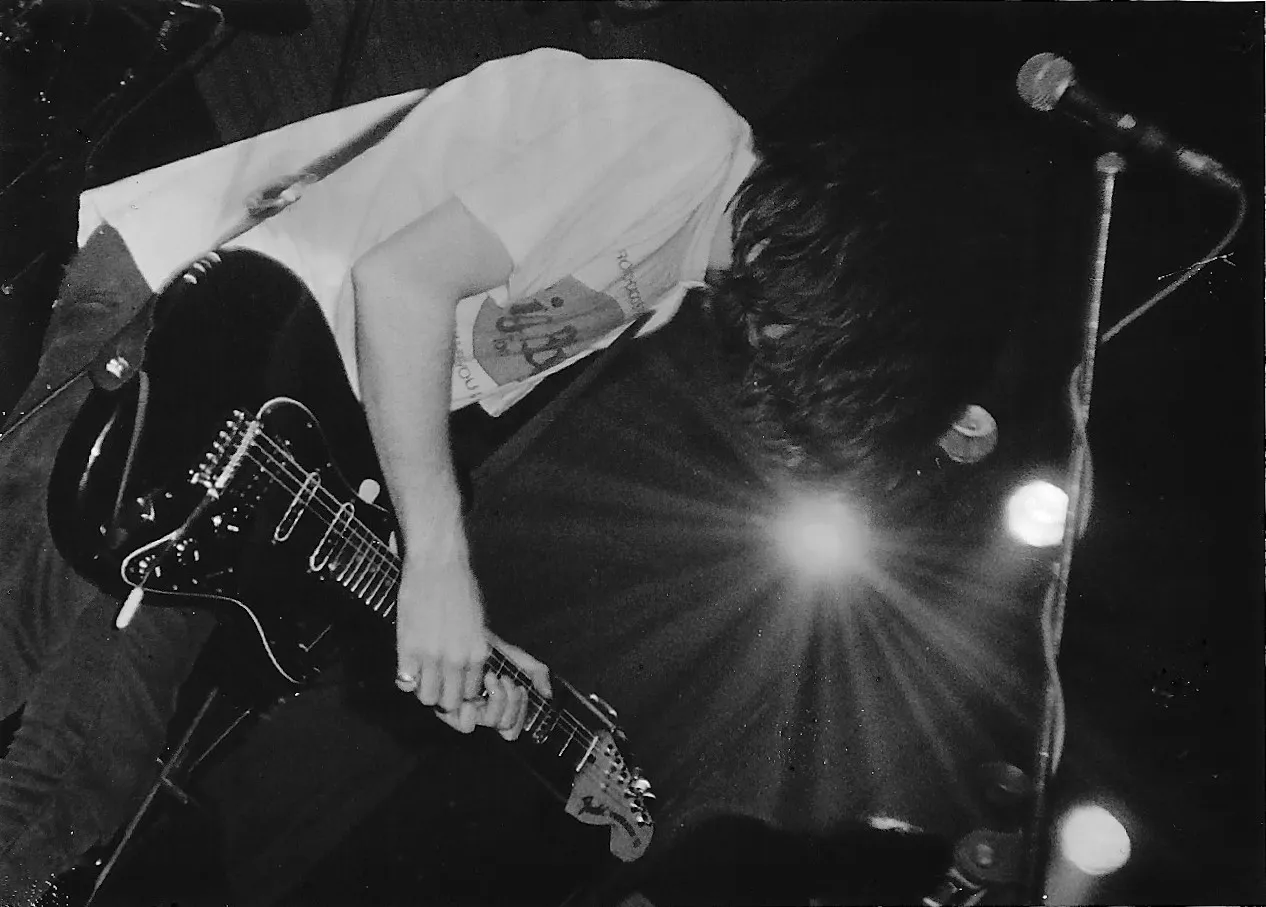
Photo by Greg Neate from Sussex, UK , licensed under CC BY 2.0 · Wikimedia Commons
Rank #462
Loop
London drone-rock band of motorik pulse and feedback haze.
From Wikipedia
Loop are an English rock band, formed in 1986 by Robert Hampson in Croydon. The group topped the UK independent charts with their albums Fade Out (1989) and A Gilded Eternity (1990). Their dissonant "trance-rock" sound drew on the work of artists like the Stooges and Can, and helped to resurrect the concept of space rock in the late 1980s.
Studio Albums
- 1987 Heaven's End
- 1988 Fade Out
- 1990 A Gilded Eternity
- 2022 Sonancy
Source: MusicBrainz
Deep Dive
Overview
Loop are an English rock band formed in Croydon in 1986 by Robert Hampson. Their dissonant “trance-rock” sound, built on repetitive motorik rhythms and walls of feedback, drew on the experimental legacies of the Stooges and Can, and helped resurrect space rock as a vital artistic current in the late 1980s. The group achieved substantial success on the UK independent charts, topping them with both Fade Out (1988) and A Gilded Eternity (1990), establishing themselves as singular practitioners of hypnotic, drone-inflected psychedelia at a moment when that aesthetic felt both archaic and urgently contemporary.
Formation Story
Loop emerged from Croydon in 1986 under the direction of Robert Hampson, who assembled the group to explore a deliberately retrogressive yet forward-thinking vision of rock music. The band positioned themselves in conversation with postwar avant-garde art rock—particularly the motorik pulses and instrumental density of Krautrock pioneers like Can, and the primal, repetition-based drive of the Stooges. Croydon, a suburb south of London, placed them outside the capital’s more fashionable music centers, which allowed the group to develop their aesthetic with relative freedom from immediate scene pressures. The formation of Loop coincided with a broader reawakening of interest in psychedelia and experimental rock across the UK underground, though few bands committed so thoroughly to the intersection of hypnotic pulse and textural density.
Breakthrough Moment
Loop’s first studio album, Heaven’s End (1987), introduced the group’s core sonic identity but the group achieved broader recognition with the release of Fade Out in 1988. The album topped the UK independent charts and crystallized Loop’s reputation as architects of a distinctly modern strain of psychedelia—one that privileged drone, repetition, and feedback as primary compositional tools rather than ornamental effects. Fade Out established the blueprint that would define the band’s early output: songs built on persistent, almost hypnotic rhythmic and melodic patterns, layered with distorted guitars and processed vocals that pulled toward abstraction rather than clarity. The album’s success positioned Loop as a significant force in late-1980s alternative rock and set the stage for their most celebrated period.
Peak Era
Loop’s peak period encompassed the release of A Gilded Eternity in 1990, which further refined and deepened their trance-rock formula. Like Fade Out, the album topped the UK independent charts and solidified the group’s standing as one of the decade’s most innovative psychedelic acts. The early 1990s represented a moment of creative maturity for the band, during which they synthesized their influences into a coherent and distinctive body of work. Their records arrived at a cultural inflection point where shoegaze and dream pop were gaining visibility, yet Loop’s approach remained more heavily rooted in the motorik traditions and experimental rigor of 1970s krautrock and art rock, giving their work a structural severity and hypnotic intensity that set them apart from their contemporaries. Between 1987 and 1990, Loop produced a compact but artistically significant discography that established their influence on subsequent generations of psychedelic and experimental rock musicians.
Musical Style
Loop’s sound was defined by a disciplined commitment to repetitive structures and textural density. Built on firm, mechanical rhythmic foundations reminiscent of Can’s motorik pulse, their arrangements layered distorted and echo-processed guitars, often moving away from traditional song hooks in favor of sustained, evolving sonic environments. Hampson’s vocals, when present, were frequently processed and subordinated to the instrumental landscape rather than positioned as the dominant voice. The group drew explicitly on 1970s precedents—the Stooges’ raw, propulsive energy and Can’s exploratory use of repetition and rhythm—but applied those influences to a modern context informed by contemporary recording techniques and the textural possibilities of layered electric guitars and electronic processing. This resulted in music that felt simultaneously archaic and contemporary: rooted in post-1960s experimental rock but reframed through the aesthetic priorities of late-1980s alternative rock, where texture and atmosphere held equal weight with melody and conventional song structure. Their “trance-rock” designation accurately captured the hypnotic, meditative quality that emerged from building passages around insistent, unchanging rhythmic and melodic kernels.
Major Albums
Heaven’s End (1987)
Loop’s debut introduced their signature trance-rock aesthetic, establishing the repetitive, motorik-driven approach that would define the band’s output across the following years.
Fade Out (1988)
The album that brought Loop to prominence on the UK independent charts, Fade Out refined their drone-based psychedelia into a set of fully realized compositions that merged hypnotic rhythms with layered, distorted guitars.
A Gilded Eternity (1990)
Loop’s most celebrated album, topping the UK independent charts and representing the artistic apex of their early period, deepening their exploration of trance-rock and feedback-driven textures.
Sonancy (2022)
Released over three decades after A Gilded Eternity, Sonancy marked Loop’s return to recording, demonstrating the band’s continued commitment to their foundational sonic vision.
Signature Songs
- “Fade Out” — The title track that anchored Loop’s breakthrough album and exemplified their gift for constructing hypnotic, guitar-driven psychedelia from minimal melodic material.
- “Black Sun” — A track showcasing the band’s ability to sustain meditative, drone-based passages while maintaining propulsive rhythmic momentum.
- “Collision” — Demonstrated Loop’s mastery of textural layering and the controlled application of feedback and distortion to create immersive sonic environments.
Influence on Rock
Loop’s primary contribution to rock music lay in their revival and recontextualization of space rock and krautrock aesthetics within the late-1980s alternative rock landscape. By demonstrating that motorik rhythms, drone textures, and experimental production techniques remained vital and contemporary tools rather than archival artifacts, they opened pathways for subsequent artists to engage seriously with the experimental rock traditions of the 1970s. Their work influenced later psychedelic and shoegaze practitioners who sought to expand the textural and structural possibilities of rock beyond conventional verse-chorus frameworks. The group’s insistence on hypnotic repetition and abstract sonic environment-building helped establish a lineage connecting 1970s postwar rock experimentalism to 1990s alternative and underground rock, validating a strain of psychedelia that prioritized immersion and atmosphere over direct melodic appeal.
Legacy
Loop’s long-term impact rests on their successful resurrection of space rock as a credible contemporary genre during a period when it might have remained culturally dormant. Their albums, particularly Fade Out and A Gilded Eternity, remain significant reference points for musicians and listeners interested in the intersection of experimental rock and hypnotic psychedelia. The band’s hiatus following their early-1990s peak meant that their influence operated primarily through recordings rather than sustained touring, yet those recordings proved durable and influential. The 2022 release of Sonancy demonstrated that Hampson and the band maintained both artistic purpose and a continuing audience interest, introducing their sound to listeners too young to have encountered their work in its original late-1980s context. Loop’s position in rock history reflects their particular success in creating a bridge between historical experimental rock traditions and contemporary alternative music, validating a vision of psychedelia built on rigorous formal principles rather than nostalgic recreation.
Fun Facts
- Loop recorded for Situation Two, an independent record label that also released work by other experimental and post-punk artists, establishing the band within a broader underground rock ecology.
- The band’s official website, maintained at http://www.heavensend.org, shares its title with their debut album, reflecting a continuity of vision across decades.
- Loop’s model of long-form, repetition-based composition predated the widespread adoption of motorik-influenced dance and electronic music, positioning them as early practitioners of minimalist and hypnotic structures within rock.
Discography & Previews
Click any album to expand its track list. Each track plays a 30-second preview streamed from Apple Music. Tap the link icon next to a track to open it in Apple Music for full playback.


