
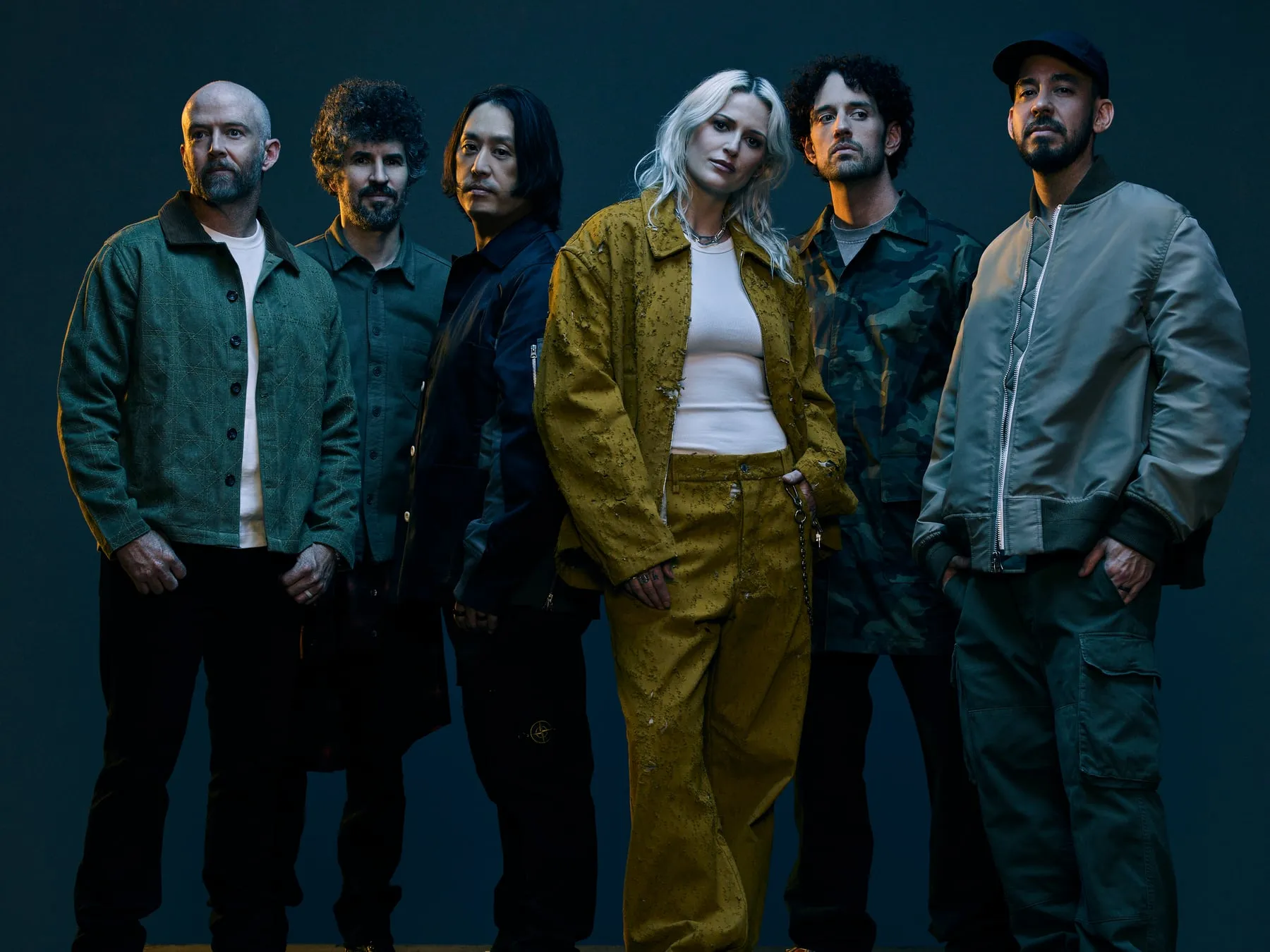
Photo by James Minchin III (rights holder), CeriRoberts (Warner Records representative) , licensed under CC BY-SA 4.0 · Wikimedia Commons
Rank #45
Linkin Park
Genre-blending L.A. rockers whose debut redefined post-grunge radio.
From Wikipedia
Linkin Park is an American rock band formed in Agoura Hills, California, in 1996. The band's current lineup consists of vocalist/rhythm guitarist/keyboardist Mike Shinoda, lead guitarist Brad Delson, DJ/turntablist Joe Hahn, bassist Dave Farrell, vocalist Emily Armstrong, and drummer Colin Brittain. The lineup for the band's first seven studio albums included lead vocalist Chester Bennington and drummer Rob Bourdon; after Bennington's suicide in July 2017, the band endured a seven-year hiatus, during which Bourdon chose to depart from the band. In September 2024, Linkin Park's reformation was announced along with the addition of Armstrong and Brittain.
Members
- Mark Wakefield (1996–1998)
- Mike Shinoda (1996–present)
- Brad Delson (1997–present)
- Dave Farrell (1997–present)
- Joe Hahn (1997–present)
- Rob Bourdon (1997–2024)
- Chester Bennington (1999–2017)
- Colin Brittain (2024–present)
- Emily Armstrong (2024–present)
Studio Albums
- 2000 Hybrid Theory
- 2003 Meteora
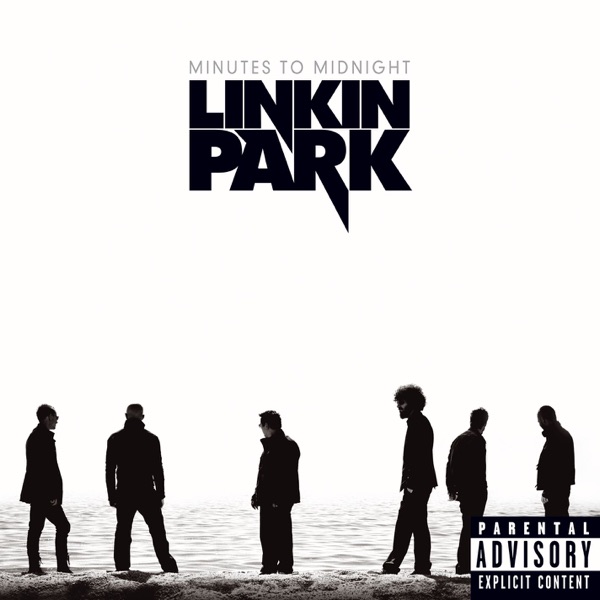
- 2007 Minutes to Midnight
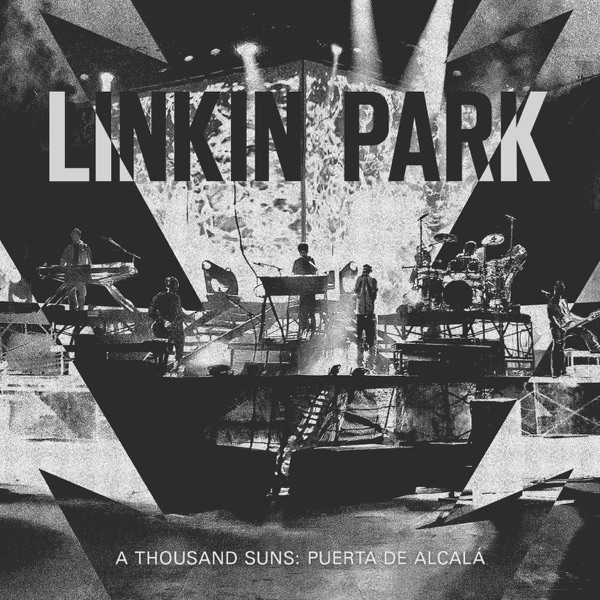
- 2010 A Thousand Suns
- 2010 Dreams on Shady Park
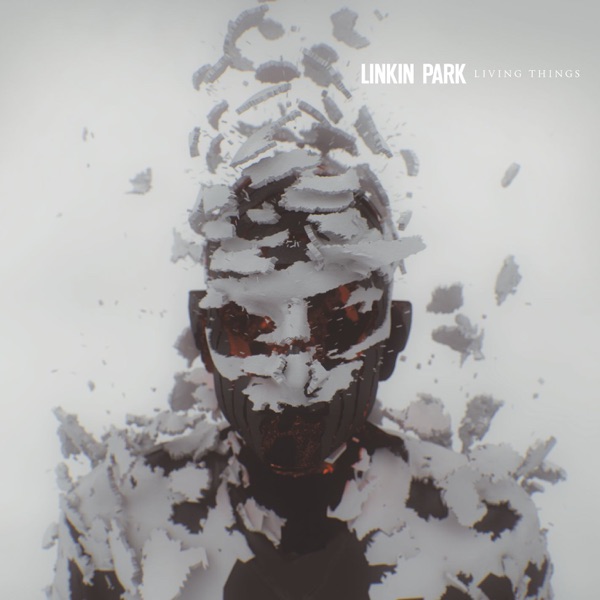
- 2012 Living Things
- 2014 The Hunting Party
- 2017 One More Light
- 2024 From Zero
Source: MusicBrainz
Deep Dive
Overview
Linkin Park is an American rock band formed in Agoura Hills, California, in 1996 that became one of the most commercially successful acts of the 2000s by fusing nu metal, hip-hop, and electronic music into a format tailored for post-grunge radio. The band’s 2000 debut Hybrid Theory established them as architects of a new mainstream rock sound—one that blended screamed and sung vocals, turntable scratches, distorted guitars, and drum-machine precision into a cohesive whole. Over two decades, Linkin Park moved from genre-defining newcomers to experimentalists willing to pursue electronic pop and introspective songwriting, all while maintaining a core identity rooted in Los Angeles’s blend of hard rock and West Coast hip-hop sensibilities.
Formation Story
Linkin Park began as a collaborative project between Mike Shinoda and Mark Wakefield in 1996, with both contributing vocals and production. The lineup solidified in 1997 when Brad Delson (lead guitar), Joe Hahn (turntables and programming), Dave Farrell (bass), and Rob Bourdon (drums) joined the core. This five-piece, completed by Chester Bennington’s arrival as lead vocalist in 1999, represented a convergence of influences: hard rock guitar work, hip-hop production aesthetics, and pop songwriting sensibility, all emerging from the Los Angeles alternative rock underground of the mid-1990s. Wakefield departed in 1998, leaving Shinoda to handle rhythm guitar and keyboard duties alongside his rap-influenced vocal delivery. The Agoura Hills base placed the band within reach of the region’s thriving rock and rap crossover scenes, and the combination of Bennington’s emotive singing and Shinoda’s rhythmic rap delivery became the band’s signature duality.
Breakthrough Moment
Hybrid Theory, released in 2000, became the album that introduced Linkin Park to a mainstream audience primed for a new alternative to the declining grunge legacy. The record fused aggressive guitar riffs with electronic beats, Bennington’s angst-driven vocal performances, and Shinoda’s rap interjections, creating something that felt contemporary without abandoning rock instrumentation. The album’s sound—dense, produced to pristine clarity, and built around hooks that felt both experimental and radio-friendly—resonated with MTV’s late-TRL audience and rock radio alike. This debut established the band’s commercial blueprint and proved that nu metal, when executed with craft and emotional authenticity, could dominate both rock and mainstream charts simultaneously.
Peak Era
Linkin Park’s commercial and creative peak extended from Hybrid Theory through the early-to-mid 2000s, with Meteora arriving in 2003 to consolidate their success and Minutes to Midnight in 2007 showing their willingness to evolve beyond the nu metal template. During this window, the band refined their sound across multiple albums, each expanding their sonic palette while maintaining the core identity that Hybrid Theory had established. By Minutes to Midnight, the band was gradually moving away from the rap-metal formula toward more layered production, orchestral elements, and thematic ambition. This era defined Linkin Park as not merely a commercial force but as artists capable of growth and experimentation within the rock and alternative frameworks.
Musical Style
Linkin Park’s fundamental approach married the guitar-driven heaviness of ’90s alternative rock with the textural possibilities of hip-hop production and electronic music. Chester Bennington delivered highly emotional, often tormented vocals—ranging from singing to screaming—that conveyed vulnerability and aggression in rapid succession. Mike Shinoda’s contributions included rhythm guitar, keyboards, and rap-spoken vocals that provided rhythmic counterweight and lyrical commentary. Joe Hahn’s turntable work and drum-machine programming added a distinctly electronic dimension rarely heard in rock bands of their scale. Brad Delson’s lead guitar work oscillated between melodic lines and heavy, downtuned riffs. The production, especially on Hybrid Theory, was notably clean and precise—no murk or analog warmth, but rather a digital sharpness that made each element audible and distinct. Over time, the band incorporated more live instrumentation, orchestration, and ambient production techniques, gradually moving away from the rap-metal template toward a more expansive alternative rock sound by the 2010s.
Major Albums
Hybrid Theory (2000)
The band’s debut and their definitive statement, Hybrid Theory synthesized nu metal, hip-hop, and alternative rock into a radio-ready package that redefined mainstream rock for the 2000s and established the template all subsequent albums would either refine or challenge.
Meteora (2003)
Following up Hybrid Theory with a record that deepened the formula without fundamentally altering it, Meteora demonstrated the band’s ability to write memorable songs and refine their production while maintaining the aggressive, electronic-hybrid approach their audience had embraced.
Minutes to Midnight (2007)
A significant stylistic shift that incorporated orchestral elements, more layered songwriting, and expanded sonic landscapes, Minutes to Midnight signaled the band’s intention to push beyond nu metal into more ambitious alternative rock territory.
A Thousand Suns (2010)
An experimental work that leaned heavily into electronic production, conceptual framing, and atmospheric interludes, representing the band’s most deliberate departure from their earlier guitar-centric sound and their boldest attempt at thematic cohesion.
The Hunting Party (2014)
A return toward guitar-driven rock after the electronic experiments of A Thousand Suns, The Hunting Party reintroduced heavier instrumentation and more traditional rock song structures while maintaining the production sophistication the band had developed.
One More Light (2017)
The band’s final album with Chester Bennington, One More Light embraced pop sensibilities, electronic textures, and more introspective songwriting, reflecting a mature songwriting approach and serving as the closing chapter of the band’s classic era.
Signature Songs
- “Crawling” — A standout from Hybrid Theory that exemplifies the band’s ability to blend heavy verses with a singable, emotionally direct chorus, becoming one of their most recognizable tracks.
- “In the End” — Perhaps their biggest mainstream hit, the song’s combination of Bennington’s vocal performance and Shinoda’s rap delivery, paired with its accessible hook, defined Linkin Park’s crossover appeal.
- “Numb” — A Meteora highlight showcasing the band’s softer side while maintaining the electronic and rap-rock elements core to their identity.
- “What I’ve Done” — From Minutes to Midnight, this track demonstrates the band’s evolution toward more layered production and thematic depth while retaining their signature intensity.
- “New Divide” — A Minutes to Midnight era track that showcases the band’s cinematic approach to production and their ability to craft emotionally resonant alternative rock without relying on rap-metal formulas.
Influence on Rock
Linkin Park fundamentally altered the landscape of mainstream rock in the 2000s by proving that a fusion of hip-hop, electronic music, and guitar-based rock could achieve massive commercial success without compromising either sonic ambition or emotional authenticity. Their success opened pathways for subsequent bands to experiment with genre blending, electronic production, and non-traditional vocal approaches within rock frameworks. The band’s willingness to evolve sonically—from nu metal to electronica to pop-influenced alternative rock—demonstrated that rock bands could chase artistic growth without losing their core audience, a model that influenced how rock acts approached long-term career development. Their influence rippled through the 2010s and 2020s, with countless alternative and rock acts drawing on their production sophistication, collaborative songwriter approach, and understanding of how to craft hooks across multiple vocal textures.
Legacy
Linkin Park’s impact on rock music remains substantial despite the turbulent period following Chester Bennington’s death in July 2017, which prompted the band to enter a seven-year hiatus. During that time, Rob Bourdon chose to depart from the band. The group’s first seven studio albums—from Hybrid Theory through One More Light—remain cultural touchstones of 2000s rock, with millions of streams across all platforms and continued relevance in popular culture. The band’s 2024 reformation, announced in September, introduced vocalist Emily Armstrong and drummer Colin Brittain alongside Mike Shinoda, Brad Delson, Joe Hahn, and Dave Farrell, signaling a new chapter while honoring the legacy of their classic era. The release of From Zero in 2024 marked their return to active recording and performance, demonstrating their continued relevance and the enduring connection between the band and their global fanbase.
Fun Facts
- The band’s record label, Machine Shop Recordings, was founded by the members themselves and became a vehicle for releasing their work and supporting other artists.
- Before settling on Linkin Park, the band spent considerable time developing their sound in the greater Los Angeles area, drawing from both the rock and hip-hop scenes that had flourished there.
- The band’s evolution from Hybrid Theory to A Thousand Suns represented one of rock’s more dramatic sonic shifts, with the latter album incorporating elements of electronic music and minimal guitar presence compared to their debut.
- Mark Wakefield, who co-founded the project with Mike Shinoda in 1996, departed in 1998, before the classic lineup was fully assembled, making him a crucial early architect of the band’s sound despite his brief tenure.
Discography & Previews
Click any album to expand its track list. Each track plays a 30-second preview streamed from Apple Music. Tap the link icon next to a track to open it in Apple Music for full playback.

- 1 Keys to the Kingdom ↗ 3:39
- 2 All for Nothing (feat. Page Hamilton) ↗ 3:34
- 3 Guilty All the Same (feat. Rakim) ↗ 5:55
- 4 The Summoning ↗ 1:00
- 5 War ↗ 2:11
- 6 Wastelands ↗ 3:16
- 7 Until It's Gone ↗ 3:53
- 8 Rebellion (feat. Daron Malakian) ↗ 3:44
- 9 Mark the Graves ↗ 5:05
- 10 Drawbar (feat. Tom Morello) ↗ 2:47
- 11 Final Masquerade ↗ 3:38
- 12 A Line In the Sand ↗ 6:35

