
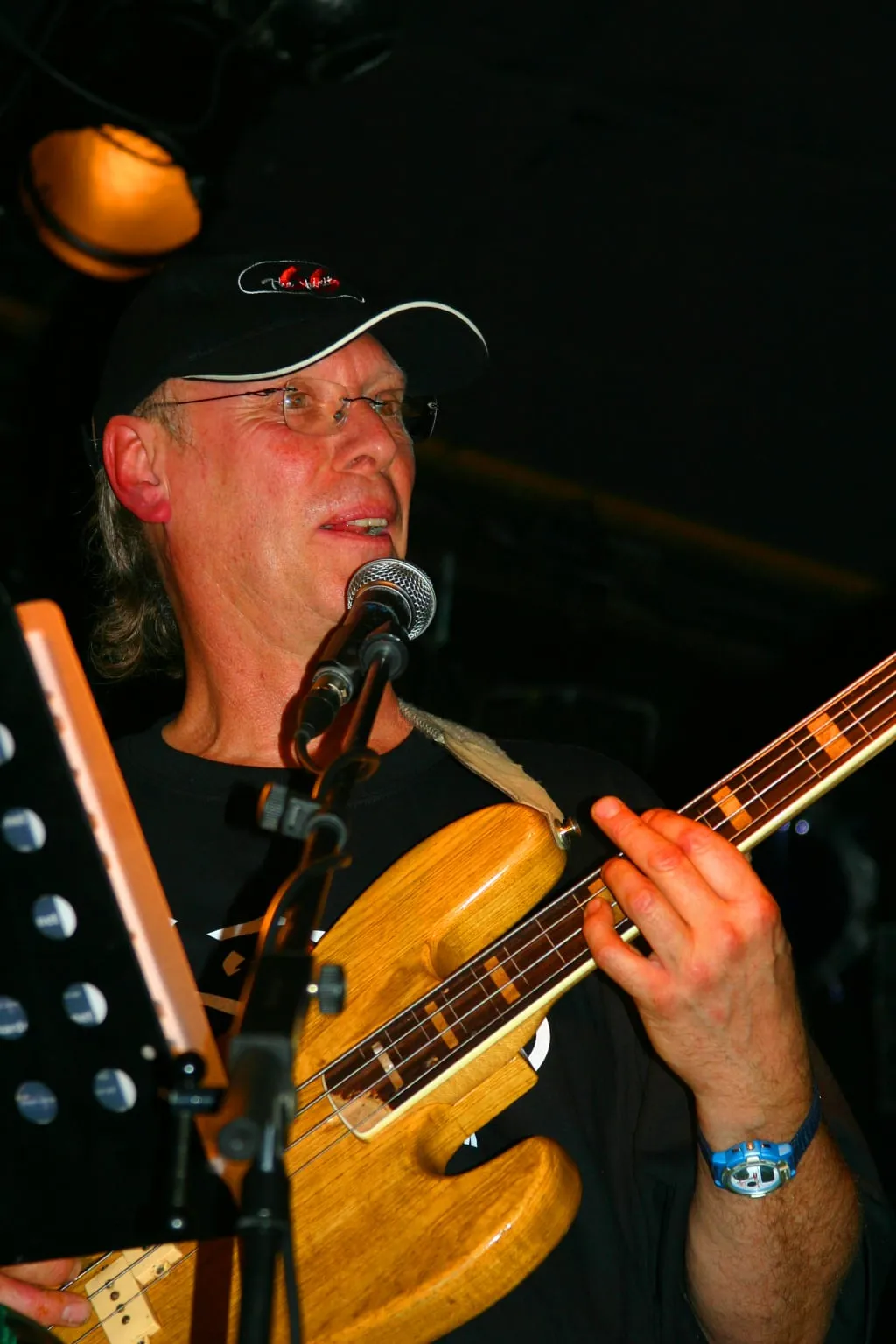
Photo by Jaak123 at Dutch Wikipedia , licensed under CC BY-SA 3.0 · Wikimedia Commons
Rank #284
Hatfield and the North
Canterbury supergroup whose two albums are British prog touchstones.
From Wikipedia
Hatfield and the North were an experimental Canterbury scene rock band that lasted from October 1972 to June 1975, with some reunions thereafter.
Members
- Dave Sinclair
- Dave Stewart
- Phil Miller
- Pip Pyle
- Richard Sinclair
- Steve Miller
Deep Dive
Overview
Hatfield and the North were an experimental rock band from Canterbury, England, that operated from October 1972 to June 1975. The group emerged from the Canterbury scene, a distinctive underground music community that blended progressive rock with avant-garde sensibilities and a playful disregard for commercial convention. Though short-lived, Hatfield and the North released two albums that became touchstones of British progressive rock and art rock—works defined by intricate instrumental interplay, compositional ambition, and a willingness to pursue whimsical and complex arrangements that resisted easy categorization.
Formation Story
Hatfield and the North coalesced in Canterbury in October 1972, drawing together several musicians already steeped in the city’s experimental rock culture. The band comprised Dave Sinclair, Steve Miller, Pip Pyle, Phil Miller, Richard Sinclair, and Dave Stewart. Each member brought substantial instrumental and compositional skill; the group functioned not as a vehicle for a single songwriter or frontman but as a collective ensemble, with responsibility for material distributed across the lineup. Their formation represented a convergence of musicians who had been orbiting the Canterbury underground and were now ready to document their approach to rock music on record.
Breakthrough Moment
Hatfield and the North’s debut self-titled album arrived in 1973 and immediately signaled the arrival of a fully formed artistic vision. The album showcased the group’s ability to construct extended, multi-part compositions that moved fluidly between sections, shifting tempos and textures without losing coherence. The instrumental prowess on display—particularly the interweaving of keyboards, guitar, and drums—caught the attention of listeners and critics attuned to progressive rock’s possibilities. The 1973 debut established the band as a serious creative force within the Canterbury scene and the broader British progressive rock underground, earning them recognition beyond their immediate geographical community.
Peak Era
The period from 1973 to 1975 constituted Hatfield and the North’s entire recording output as an active ensemble. Their second and final studio album, The Rotters’ Club, appeared in 1975 and demonstrated the group’s continued commitment to exploratory composition and group interplay. These two albums remain the primary document of the band’s achievement. The band dissolved in June 1975, ending their initial run before nostalgia or market pressure could calcify their approach. Later reunions occurred, but the 1972–1975 period stands as their core era of activity and their most concentrated creative statement.
Musical Style
Hatfield and the North developed a sound grounded in progressive rock but inflected with the playfulness, structural complexity, and genre-blending impulses of the broader Canterbury scene. Their arrangements typically foregrounded instrumental color and density: keyboards, often electric piano or organ, interacted with electric guitar and drums to create textures that could shift within a single song from delicate and almost chamber-like to dense and rhythmically intricate. The band’s approach to composition emphasized unexpected transitions, complex time signatures, and a willingness to let pieces develop through ensemble dialogue rather than verse-chorus recaps. There was a theatrical quality to their work, not in the bombastic sense of some progressive rock acts, but in the way formal surprise and instrumental personality created a sense of narrative or emotional arc. Vocals, when present, were understated relative to the instrumental architecture.
Major Albums
Hatfield and the North (1973)
The self-titled debut introduced the group’s compositional and ensemble approach, with extended instrumental passages and intricate interplay between keyboards, guitar, and drums establishing the signature sound that would define the band’s brief existence.
The Rotters’ Club (1975)
The final studio album maintained the band’s commitment to exploratory arrangement and instrumental sophistication while representing the apex of their recorded output before their initial dissolution.
Signature Songs
- “Fegmania” — An extended instrumental composition demonstrating the band’s ability to construct multi-section pieces that prioritize textural development and ensemble conversation over conventional song structure.
- “Shaving Peaches” — A showcase for the group’s lighter, more whimsical compositional impulses and their capacity for unexpected harmonic and rhythmic turns.
- “Loelia” — Representative of the band’s chamber-influenced approach, with delicate instrumental textures and intricate voice-leading among band members.
Influence on Rock
Though Hatfield and the North operated for only three years and released just two albums, their work became central to the historical narrative of the Canterbury scene and a reference point for subsequent generations of progressive and experimental rock musicians. The band’s approach—emphasizing ensemble interplay over star soloing, favoring formal complexity without losing coherence, and maintaining a playful irreverence toward genre boundaries—influenced musicians working in progressive rock, art rock, and the emerging avant-garde rock traditions of the late 1970s and beyond. Their example demonstrated that ambitious instrumental rock could coexist with humor, unpretentiousness, and a resistance to grandiosity, a lesson that echoed through post-punk and alternative rock communities that valued musicianship deployed in service of artistic surprise rather than display.
Legacy
Hatfield and the North’s two albums have maintained their status as touchstones of 1970s British progressive and art rock, appreciated by musicians, critics, and devoted listeners as examples of uncompromising ensemble creativity. The band’s brief, intense recording period and their refusal to extend their run artificially have paradoxically increased their mystique; their catalog remains compact and unbloated, each album receiving sustained attention from those seeking the intersection of technical sophistication and compositional originality. The members’ subsequent work, in various configurations and projects, extended their influence, but Hatfield and the North itself remains a singular achievement—a snapshot of a specific musical community and moment, preserved across two studio albums that continue to reward careful listening.
Fun Facts
- The band’s name, Hatfield and the North, was derived from a historical reference and reflected the group’s interest in wordplay and gentle eccentricity as part of their artistic identity.
- The Canterbury scene from which Hatfield and the North emerged would become one of the most culturally productive underground music communities in 1970s Britain, with numerous musicians contributing to interconnected projects and collaborations.
- After their initial dissolution in June 1975, the band members pursued separate and collaborative projects, but reunions would occur at various points, demonstrating the lasting bonds and creative compatibility formed during their original run.