
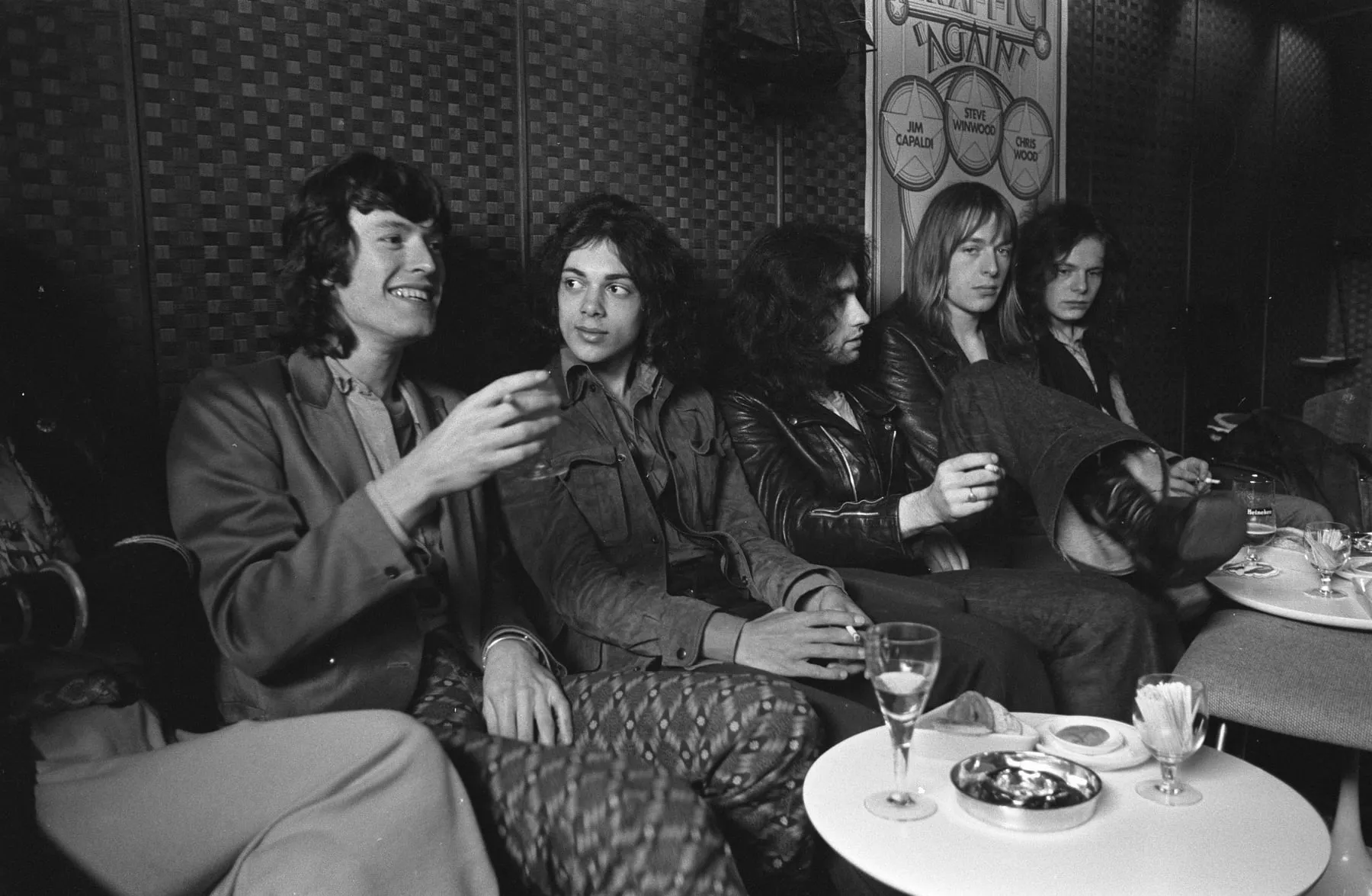
Photo by Rob Mieremet , licensed under CC0 · Wikimedia Commons
Rank #75
Free
British blues-rock outfit whose 'All Right Now' became a hard-rock standard.
From Wikipedia
Free were an English rock band formed in London in 1968 by Paul Rodgers (vocals), Paul Kossoff (guitar), Andy Fraser and Simon Kirke. They are best known for their hit songs "All Right Now" and "Wishing Well". Although renowned for their live performances and non-stop touring, their music did not sell well until their third studio album, Fire and Water (1970), which featured the hit "All Right Now". The song helped secure them a performance at the 1970 Isle of Wight Festival, where they played to an audience of 600,000 people. In the early 1970s they became one of the best-selling British blues rock groups; by the time they disbanded, they had sold more than 20 million records worldwide and had played in more than 700 arenas and festival concerts. "All Right Now" remains a staple of R&B and rock, and has entered ASCAP's "One Million" airplay singles club.
Studio Albums
- 1969 Tons of Sobs
- 1969 Free
- 1970 Fire and Water
- 1970 Highway
- 1972 Free at Last
- 1973 Heartbreaker
- 1991 Freeclimbing
- 1998 Talking of Heartbreaker
Source: MusicBrainz
Deep Dive
Overview
Free were an English rock band formed in London in 1968, emerging as one of the most vital blues-rock outfits of the early 1970s. Built on the foundation of Paul Rodgers’ commanding vocals, Paul Kossoff’s incendiary guitar work, Andy Fraser’s melodic bass lines, and Simon Kirke’s powerful drumming, the band channeled British blues tradition through a harder, more energetic lens. Their trajectory from touring underdogs to arena-filling phenomena was anchored by a single song—“All Right Now”—that would define not only their career but become a lasting touchstone in rock radio across four decades.
Formation Story
Free coalesced in London in 1968 around four musicians whose combined ages barely exceeded one hundred. Paul Rodgers, a vocalist with soulful range and blues-rooted phrasing, teamed with guitarist Paul Kossoff, whose tone blended the sustain of rock with the bite of Chicago electric blues. Bassist Andy Fraser and drummer Simon Kirke completed the quartet. The band’s name reflected their philosophy: a rejection of the studio polish and orchestral excess that characterized much late-1960s rock in favor of raw, immediate performances. From their formation, Free committed to relentless touring, building a reputation through live work rather than hit records.
Breakthrough Moment
The band’s first two albums—Tons of Sobs (1969) and Free (1969)—established them as accomplished blues interpreters but did not translate to commercial success. Their fortunes shifted dramatically with the release of Fire and Water in 1970, which contained “All Right Now,” a five-minute blues-rock composition that became an international hit. The song’s skeletal arrangement—Kossoff’s distorted riff, Rodgers’ conversational vocal delivery, a rhythm section locking into a groove that felt both effortless and propulsive—created something that seemed to exist outside fashion. The success of the album and single led to a watershed moment: a performance at the 1970 Isle of Wight Festival in front of approximately 600,000 people, a visibility that catapulted the band into the arena circuit.
Peak Era
The early 1970s saw Free transition from cult act to a best-selling British blues-rock group. Following Fire and Water, the band released Highway in 1970, consolidating their newfound momentum with a sophomore run that kept them touring continuously. By 1972’s Free at Last and 1973’s Heartbreaker, the band had become one of the era’s most prolific touring acts, performing in more than 700 arenas and festival concerts. Their music sold consistently throughout this period; by the time of their breakup, they had accumulated worldwide record sales exceeding 20 million units. The band’s live reputation was central to their appeal—their performances were marked by tight interplay, Kossoff’s expressive soloing, and Rodgers’ ability to command a stage with minimal movement, letting his voice and presence carry the weight.
Musical Style
Free operated within the blues-rock tradition but distinguished themselves through directness and restraint. Rather than layering multiple instruments or employing studio tricks, they favored tight, economical arrangements in which each part—vocals, guitar, bass, drums—occupied clearly defined space. Kossoff’s guitar tone was central: heavily overdriven but never muddy, capable of expressing both rhythmic punch and lyrical nuance within a single solo. Rodgers’ vocal approach drew from soul and blues singers but carried a rock edge; his phrasing was conversational, his range expansive without being ostentatious. Fraser’s bass work anchored songs without competing for attention, while Kirke’s drumming provided swing and momentum rather than mere timekeeping. The band’s three albums between 1969 and 1970 documented this style’s crystallization, with each successive release tighter and more confident than the last.
Major Albums
Tons of Sobs (1969)
Free’s debut showcased the band’s blues foundations and the four-piece’s initial chemistry, establishing Rodgers and Kossoff as a compelling vocal-guitar partnership and securing them early credibility within British blues circles.
Fire and Water (1970)
The album that transformed Free from respected club act to chart presence, powered by “All Right Now” and balancing the band’s blues orientation with more immediate, radio-friendly songwriting across its running time.
Highway (1970)
Released the same year as Fire and Water, this follow-up maintained momentum and deepened the band’s exploration of blues-rock idioms while reinforcing their live-honed sense of dynamics.
Free at Last (1972)
Capturing the band in full command of their craft, this album found Free refining their core sound and demonstrating the songwriting maturity that came with sustained touring and recording experience.
Heartbreaker (1973)
Free’s final studio album during their initial active period, Heartbreaker stood as a crystallization of their hard-blues-rock identity before internal pressures led to their breakup.
Signature Songs
- “All Right Now” — The five-minute blues-rock standard that defined the band’s legacy and became a staple of rock radio and cultural memory across generations.
- “Wishing Well” — A blues-based vehicle for Rodgers’ vocal expressiveness and Kossoff’s soulful soloing that showcased the band’s ability to build emotional intensity within a tight arrangement.
- “Fire and Water” — The title track of their breakthrough album, demonstrating the band’s capacity for building momentum through precise, economical instrumentation.
- “Walk Away” — A showcase for the band’s live energy and their talent for constructing songs that appeared simple on the surface but contained sophisticated rhythmic interplay.
Influence on Rock
Free’s impact on 1970s hard rock and subsequent blues-rock revivals proved substantial despite their relatively short active period. They demonstrated that blues-rock could achieve massive commercial success without abandoning its foundational stylistic commitments or resorting to novelty. “All Right Now” became a template for the blues-rock hit: a song that worked equally well on album-oriented radio, in arenas, and later in diverse contexts from film and television to sporting events. The band’s emphasis on live performance as the measure of authenticity influenced touring bands across subsequent decades, establishing the precedent that a credible rock band proved itself through relentless road work. Kossoff’s guitar tone and approach—blues-based but driven by rock intensity—influenced hard-rock and blues-rock players who emerged in the 1970s and beyond.
Legacy
Although Free disbanded in 1973, their most significant work has remained in continuous circulation. “All Right Now” achieved recognition as one of rock’s enduring standards, securing membership in ASCAP’s “One Million” airplay singles club—a distinction reflecting its sustained radio presence across five decades. The band’s catalog has been reissued multiple times in both physical and digital formats, ensuring access for successive generations of listeners. Posthumous albums and compilations, including Freeclimbing (1991) and Talking of Heartbreaker (1998), have preserved and recontextualized their recorded output. The band remains studied within blues-rock historiography as exemplars of the style’s commercial and artistic apex during the early 1970s, a period when British blues-rock groups achieved unprecedented sales and cultural influence. Their combination of blues authenticity and rock energy established a template that would be revisited repeatedly across the subsequent history of hard rock and blues-rock fusion.
Fun Facts
- The band’s name, Free, was chosen to reflect their musical and philosophical independence, rejecting the ornate naming conventions common to late-1960s rock acts.
- By the time of their initial breakup, Free had performed in more than 700 arenas and festival concerts across the globe, establishing themselves as one of the era’s most toured bands relative to their career length.
- “All Right Now” transcended rock contexts to become embedded in popular culture, featured in films, television programs, and sporting events, achieving a ubiquity that few songs from the era have matched.
- Paul Kossoff’s guitar tone on Fire and Water and subsequent albums, achieved through overdriven amplification and precise touch, became a reference point for blues-rock guitarists seeking to balance distortion with clarity.
Discography & Previews
Click any album to expand its track list. Each track plays a 30-second preview streamed from Apple Music. Tap the link icon next to a track to open it in Apple Music for full playback.


