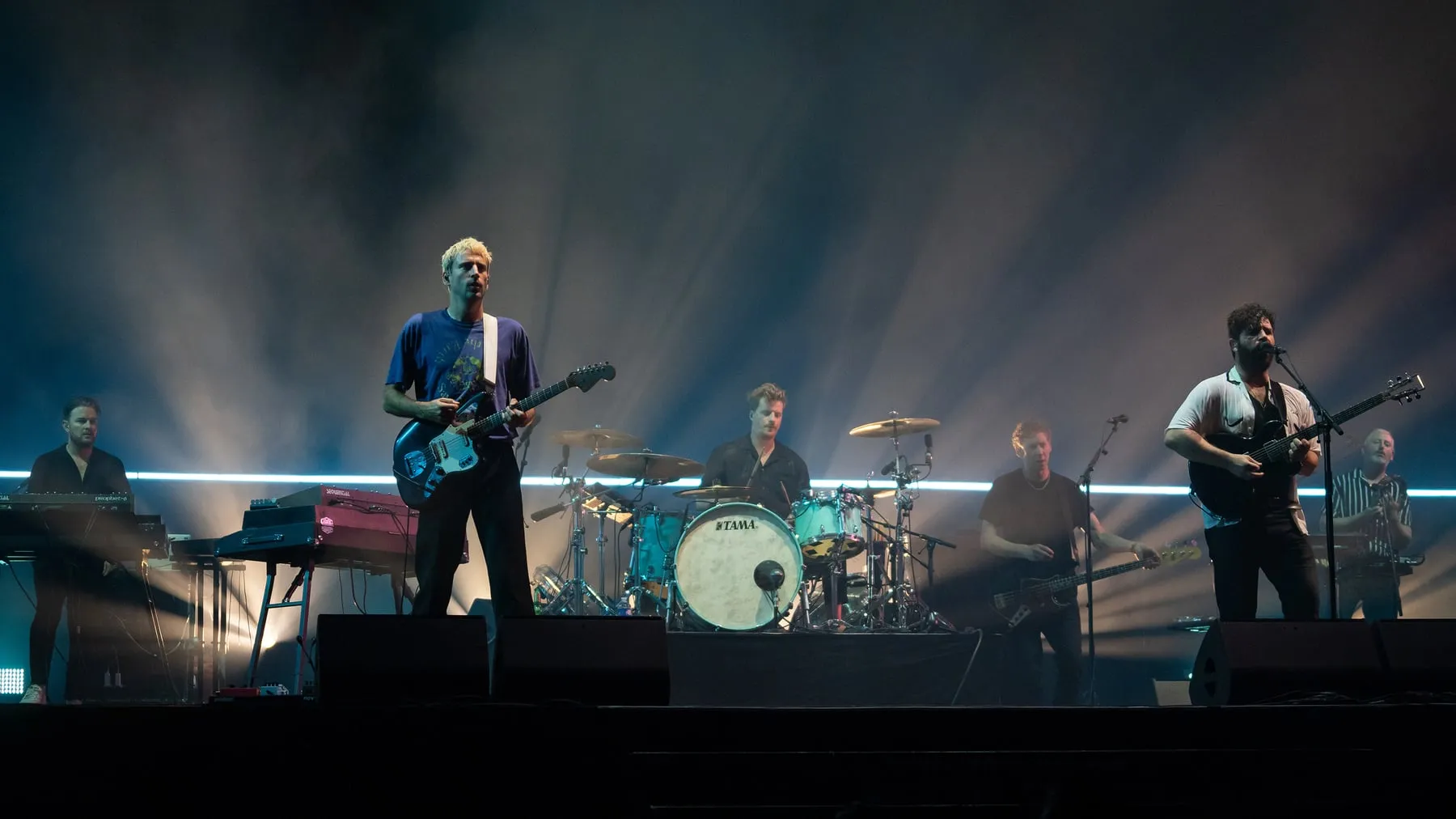
Photo by Selbymay , licensed under CC BY 4.0 · Wikimedia Commons
Rank #373
Foals
Oxford band whose math-rock interplay matured into stadium-rock anthems.
From Wikipedia
Foals are a British rock band formed in Oxford in 2005. The band's current line-up consists of Greek-born lead vocalist and guitarist Yannis Philippakis, drummer and percussionist Jack Bevan, guitarist and keyboardist Jimmy Smith, and bassist Walter Gervers.
Members
- Yannis Philippakis
Studio Albums
- 2008 Antidotes
- 2010 Total Life Forever
- 2012 Tapes
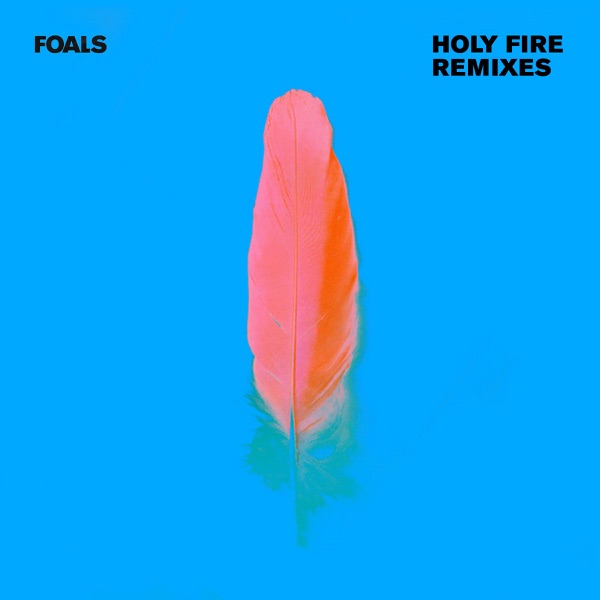
- 2013 Holy Fire
- 2015 What Went Down
- 2019 Everything Not Saved Will Be Lost, Part 2
- 2019 Everything Not Saved Will Be Lost, Part 1
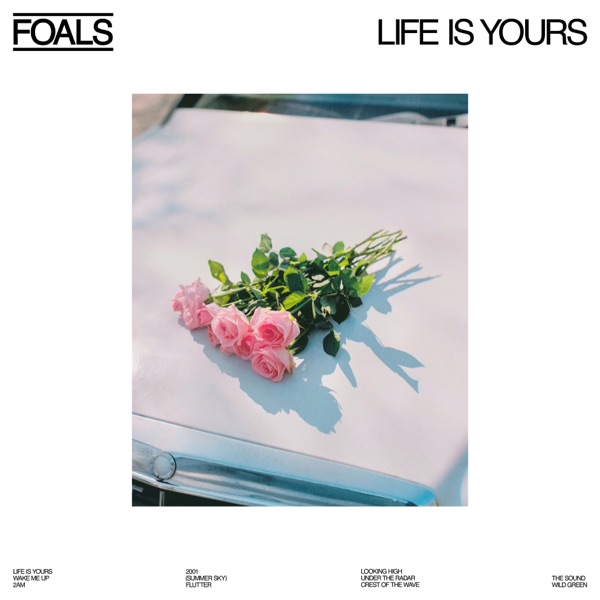
- 2022 Life Is Yours
Source: MusicBrainz
Deep Dive
Overview
Foals are a British rock band formed in Oxford in 2005 whose trajectory spans the arc from intricate, rhythmically fractured indie rock to arena-scaled alternative anthems. The band emerged during the tail end of the post-punk revival, but rather than simply echoing early-2000s art-rock templates, they constructed their identity around the angular, syncopated interplay that defines math rock—complex time signatures, precise instrumental counterpoint, and a studied approach to dynamics. Over the course of nearly two decades, Foals have demonstrated a capacity for genuine stylistic evolution, moving from the studied complexity of their early work toward the more directly accessible, percussion-driven stadium rock of their later records.
Formation Story
Foals formed in Oxford in 2005, with Yannis Philippakis as lead vocalist and guitarist. The band’s crystallization around Philippakis’s songwriting and the addition of drummer Jack Bevan proved foundational; Bevan’s polyrhythmic, intricate drumming became one of the band’s primary sonic signatures. Jimmy Smith joined on guitar and keyboards, and Walter Gervers eventually established himself on bass, completing the lineup that would define the band’s approach through their major-label era. Oxford’s geography and cultural position—a university city with a history of musical experimentation dating back decades—provided fertile ground for a band inclined toward intellectual precision and structural complexity.
Breakthrough Moment
Foals gained wider recognition following the release of Total Life Forever in 2010, their second album. That record marked a step forward in both production clarity and songwriting maturity, allowing the band’s intricate instrumental arrangements to breathe. The 2013 album Holy Fire represented another leap in scale and accessibility, signaling that Foals were willing to loosen their math-rock orthodoxy in service of more direct emotional and sonic impact. By the time of What Went Down in 2015, the band had moved decisively toward a heavier, more percussive aesthetic—one that preserved their technical foundation while embracing greater volume, repetition, and kinetic energy. That record’s commercial success suggested Foals had successfully expanded beyond the indie-rock underground into a broader rock audience.
Peak Era
The years between 2013 and 2019 constitute Foals’ period of greatest cultural presence and creative confidence. Holy Fire established them as serious contenders within the alternative-rock landscape, while What Went Down doubled down on a direction toward dance-rock energy and physical intensity. The band’s dual-release strategy in 2019—Everything Not Saved Will Be Lost, Part 1 and Part 2—suggested an ambition to think in larger conceptual frameworks, though the exact narrative or thematic connections between the two records remain implicit rather than explicitly stated. This five-year run saw Foals transition from credible alternative-rock act to a band with genuine claims on arena-rock relevance.
Musical Style
Foals’ sound is built fundamentally around the tension between mathematical precision and visceral impact. In their earlier work, particularly Antidotes (2008) and Tapes (2012), the band favored fractured rhythmic structures, with Bevan’s drumming operating as a kind of additional melodic or harmonic voice rather than serving pure timekeeping. Philippakis’s vocal delivery tends toward an urgent, sometimes anxious clarity, often pitched high in the mix and deployed with restraint—he sings to punctuate rather than to soar. The band’s instrumentation balances Smith’s textural guitar and keyboard work against Gervers’s foundational bass lines, creating arrangements that reward close listening even as they build toward moments of genuine force.
As Foals matured, they incorporated elements from dance music, post-punk, and direct rock percussion into their palette. Holy Fire and beyond see the band leaning harder into repetitive, hypnotic grooves and heavier snare hits—a move that made their intricate work feel more physically immediate and less academically detached. This evolution reflects a broader indie-rock turn of the 2010s, wherein bands initially shaped by art-rock and experimental impulses found ways to channel that sophistication into forms that engage mass audiences.
Major Albums
Antidotes (2008)
Foals’ debut established their foundational aesthetic: jagged, rhythmically complex indie rock built on Bevan’s fractured drumming and Philippakis’s restless vocal energy. The record felt simultaneously brittle and propulsive, showcasing a band comfortable with unconventional song structures.
Total Life Forever (2010)
The second album refined the band’s approach, bringing improved production and slightly more accessible melodies while retaining mathematical precision. It signaled Foals’ ability to develop ideas across a full album rather than settle into a single mode.
Holy Fire (2013)
A watershed moment where Foals began shedding purely academic concerns in favor of more direct emotional and sonic impact. The record moved toward dance-rock influences and heavier percussion while preserving the band’s technical sophistication.
What Went Down (2015)
The band’s most aggressive and percussive work, What Went Down embraced post-punk and dance-rock elements in full. Its commercial success confirmed that Foals had successfully enlarged their audience without abandoning their core sensibility.
Everything Not Saved Will Be Lost, Part 1 & Part 2 (2019)
A double-release strategy that suggested ambitions toward larger conceptual and sonic canvases. Both records continued the band’s move toward heavier, more rhythm-centric arrangements, with increased emphasis on physicality and groove.
Signature Songs
- Spanish Sahara (Early standout that showcased the band’s ability to balance intricacy with emotional weight)
- Inhaler (A defining moment of kinetic energy and direct melodic statement from What Went Down)
- Prelude (Demonstrates the band’s knack for textural, atmospheric introduction and building tension)
- Mountain at My Gates (A key track from Holy Fire that exemplified their move toward more accessible songwriting)
- What Went Down (Title track that encapsulates the album’s aggressive, percussive turn)
Influence on Rock
Foals arrived at a moment when math rock and post-punk revivalism occupied separate cultural spaces; the band’s primary contribution has been to demonstrate that intricate, intellectually demanding songwriting need not remain confined to cult audiences. In demonstrating how to preserve technical complexity while gradually moving toward greater accessibility, Foals influenced the broader trajectory of 2010s alternative rock—a decade in which bands increasingly felt emboldened to combine art-rock and indie-rock sophistication with dance-music energy and stadium-rock production.
Their evolution also speaks to the maturation of the indie-rock audience itself: Foals’ listeners aged with the band, and the band’s gradual stylistic moves reflected and perhaps shaped audience expectations that grown artists might expand their palette without necessarily abandoning the aesthetic premises of their early work.
Legacy
By 2022, with the release of Life Is Yours, Foals had established themselves as a durable international act capable of significant commercial reach while maintaining credibility within alternative-rock circles. Their catalog documents a genuine artistic arc—not a sudden transformation, but a deliberate, multi-album negotiation between mathematical precision and direct emotional engagement. The band’s survival and continued evolution through the 2010s and beyond speaks to both the durability of their fundamental songwriting and the broader success of the indie-rock model in sustaining careers across decades.
Foals’ career reflects a larger pattern among rock bands of their generation: the understanding that artistic growth might involve absorbing influences from electronic music, hip-hop production, and dance music without sacrificing the essence of guitar-based rock. Their presence on streaming platforms and in festival lineups worldwide indicates an audience that values sustained artistic development over a single definitive album.
Fun Facts
- The band’s name, Foals, derives from a word for young horses, chosen during the band’s formation without reference to any particular conceptual framework.
- Yannis Philippakis was born in Greece but moved to Oxford during his childhood, making him one of few prominent British rock frontmen of Greek heritage.
- The band’s dual-album release strategy in 2019 required them to think and write across an unusually large body of material simultaneously, pushing them toward new conceptual approaches.
- Foals’ presence across major festival lineups—from Glastonbury to Reading and Leeds—became increasingly prominent through the 2010s, marking their transition from underground to mainstream alternative-rock visibility.
Discography & Previews
Click any album to expand its track list. Each track plays a 30-second preview streamed from Apple Music. Tap the link icon next to a track to open it in Apple Music for full playback.
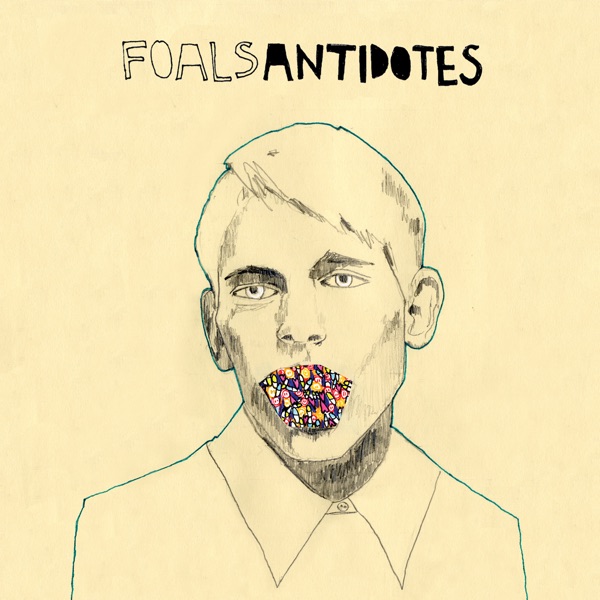
- 1 The French Open ↗ 3:45
- 2 Cassius ↗ 3:50
- 3 Red Socks Pugie ↗ 5:15
- 4 Olympic Airways ↗ 4:12
- 5 Electric Bloom ↗ 4:56
- 6 Balloons ↗ 3:00
- 7 Heavy Water ↗ 4:32
- 8 Two Steps, Twice ↗ 4:39
- 9 Big Big Love (Fig. 2) ↗ 5:48
- 10 Like Swimming ↗ 1:58
- 11 Tron ↗ 4:51
- 12 Hummer (Bonus Track) ↗ 2:54
- 13 Mathletics (Bonus Track) ↗ 3:08


- 1 Ted (Bibio Remix) ↗ 4:25
- 2 London Girl ↗ 4:01
- 3 Way Savvy (Gatto Fritto Remix) ↗ 9:14
- 4 Cheaters (John Talabot's Classic Vocal Refix) ↗ 7:02
- 5 Superflight Feat. Marie Daulne (Maurice Fulton Remix) ↗ 6:35
- 6 Effective Placebo Affect ↗ 6:50
- 7 Kilode (Carl Craig Remix) ↗ 8:26
- 8 Take Some Time Out ↗ 5:51
- 9 Every Day of My Life (Jimmy Edgar Remix) ↗ 7:17
- 10 Mushrooms (Justin Martin Remix) ↗ 8:19
- 11 Battle for Middle You (Maurice Donovan Dub) ↗ 6:55
- 12 Sun (Midland Edit) ↗ 6:48
- 13 Paradiso ↗ 7:04