
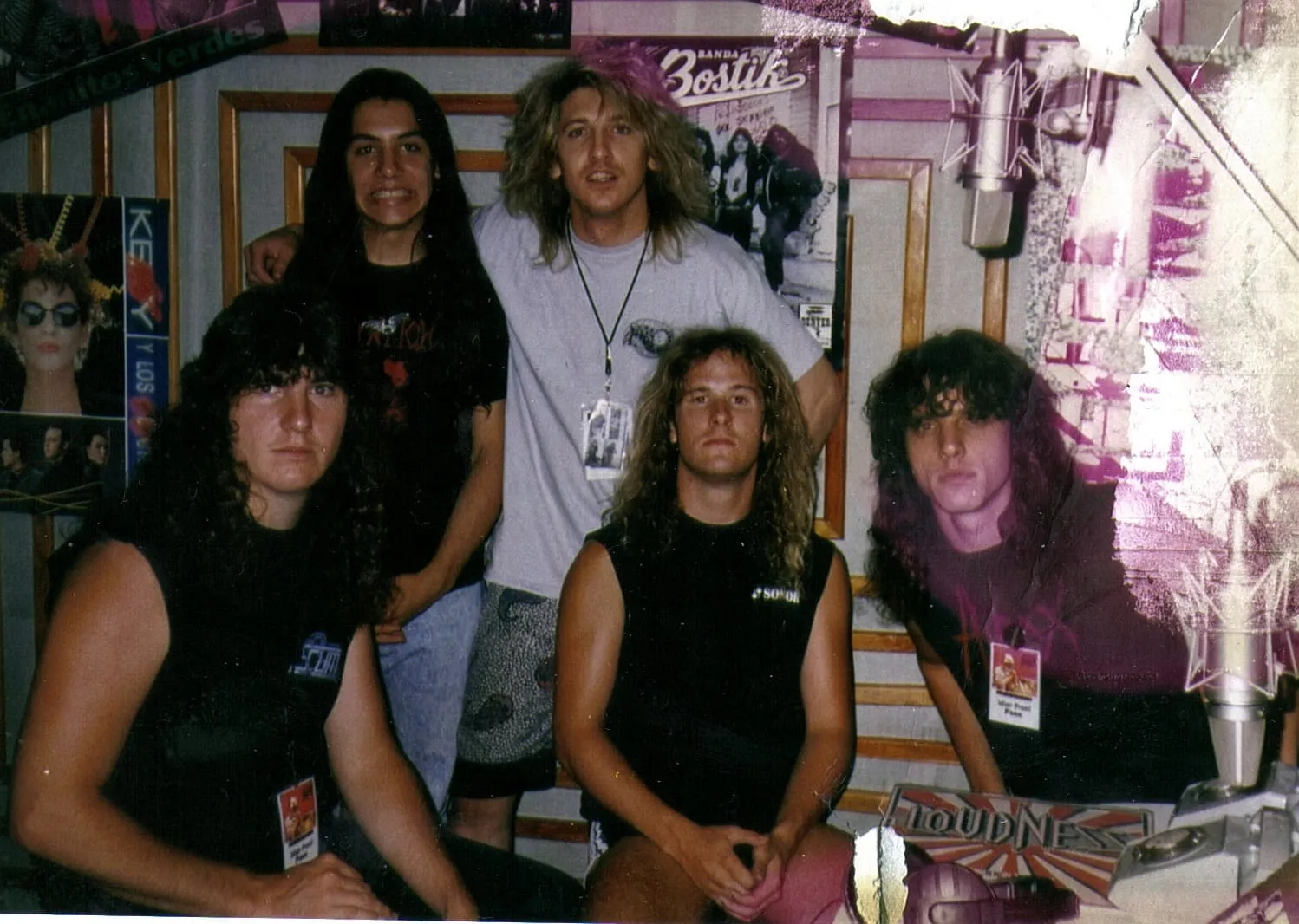
Photo by A Sniper , licensed under CC BY-SA 3.0 · Wikimedia Commons
Rank #250
Death
Chuck Schuldiner's Florida band who effectively invented death metal.
From Wikipedia
Death was an American death metal band formed in Altamonte Springs, Florida, in 1983 by guitarist Chuck Schuldiner, drummer/vocalist Kam Lee, and guitarist Rick Rozz. Formed out of what would become the Florida death metal scene, Death is considered a pioneering band in death metal. The band's 1987 debut album, Scream Bloody Gore, has been widely regarded as one of the first death metal records, alongside the first records from Possessed and Necrophagia.
Members
- Chuck Schuldiner
Deep Dive
Overview
Death was an American death metal band formed in Altamonte Springs, Florida, in 1983. Fronted by guitarist Chuck Schuldiner, the band emerged from the nascent Florida death metal scene and is widely credited with being a pioneering force in establishing death metal as a distinct subgenre of heavy metal. Their 1987 debut album, Scream Bloody Gore (released as Scum on MusicBrainz), stands alongside early records from Possessed and Necrophagia as one of the first true death metal records, marking a watershed moment in extreme metal’s evolution.
Formation Story
Death coalesced in the mid-1980s in the Orlando area when Chuck Schuldiner teamed with drummer and vocalist Kam Lee and guitarist Rick Rozz. The trio emerged from what would crystallize into the Florida death metal scene, a region that would produce some of extreme metal’s most influential acts. At the time, heavy metal was fragmenting into faster and more aggressive forms—thrash metal was ascendant in California, and bands worldwide were pushing the boundaries of distortion, tempo, and vocal brutality. Death’s formation coincided with this fermentation, positioning them at the forefront of a movement that had no name yet.
Breakthrough Moment
Death’s breakthrough arrived with the release of Scream Bloody Gore in 1987 (catalogued as Scum). The album was a statement of intent: visceral, technically proficient, and uncompromising. Its combination of down-tuned guitars, guttural vocals, and blast-beat drumming created a template that would define death metal for decades. Recorded on a modest budget through Combat Records, the album demonstrated that extreme metal could be both raw and structured, serving notice that a new subgenre had arrived. The album’s success—modest by mainstream standards but explosive within the underground metal community—established Death as leaders of an emerging movement and opened doors for countless bands who would follow their blueprint.
Peak Era
Death’s most creatively fertile and commercially successful period spanned the early-to-mid 1990s, coinciding with the release of albums including Harmony Corruption (1990), Utopia Banished (1992), and Fear, Emptiness, Despair (1994). During this window, the band refined their craft while death metal itself evolved from underground curiosity to an established subgenre with a global audience. Each successive album showcased both technical ambition and songwriting maturity, with Schuldiner pushing the band’s sound toward greater complexity and thematic depth. By the mid-1990s, Death had become not merely pioneers but the de facto leaders of death metal, their influence visible in hundreds of bands adopting and adapting their style.
Musical Style
Death’s sound combined the low-tuned guitars and distortion of heavy metal with the speed and aggression of thrash metal, then amplified both beyond conventional limits. Schuldiner’s approach to guitar work emphasized technical precision—complex riffing patterns, tempo changes, and occasional melodic passages that distinguished Death from bands content to simply play faster and louder. Vocally, Death employed guttural growls that became death metal’s signature, a technique that made lyrics functionally illegible to the casual listener but which contributed enormously to the genre’s distinctly forbidding aesthetic. Lyrically, the band favored themes of mortality, disease, and societal collapse, setting thematic precedents that would become genre standards. Over their career spanning from 1983 through the 2000s and 2010s, Death gradually incorporated more melodic and progressive elements, though the core DNA of extreme distortion and visceral presentation remained constant.
Major Albums
Scream Bloody Gore (1987)
Death’s debut, released as Scum on some catalogues, defined death metal’s foundational template: down-tuned guitars, blast beats, and guttural vocals combined with straightforward but devastating songcraft.
Harmony Corruption (1990)
A quantum leap in production quality and compositional sophistication, this album balanced technical complexity with accessibility and helped establish Death as death metal’s undisputed leaders.
Utopia Banished (1992)
Releasing during death metal’s commercial breakthrough period, this album showcased the band’s continued evolution while maintaining the intensity that defined their earlier work.
Fear, Emptiness, Despair (1994)
One of Death’s most concentrated efforts, demonstrating that the band could sustain both speed and melody without sacrificing heaviness or impact.
Signature Songs
- “Rotten Meat” — A straightforward display of the visceral intensity and technical precision that defined Death’s approach to songwriting.
- “Denial of the Grave” — Exemplifies the band’s ability to craft memorable riffs within the constraints of extreme metal’s aesthetic.
- “Evil Dead” — Among the most recognizable Death songs, showcasing Schuldiner’s gift for combining aggression with structural clarity.
Influence on Rock
Death’s influence on rock and metal cannot be overstated. By codifying death metal’s essential characteristics on Scream Bloody Gore and refining them across a series of increasingly sophisticated albums, Schuldiner and company created a template that would spawn thousands of imitators and define an entire subgenre’s evolution. Every death metal band that emerged in the 1990s and 2000s operated within the framework Death established—they either mimicked Death’s approach or self-consciously reacted against it. Beyond death metal proper, Death’s emphasis on technical proficiency while maintaining extreme distortion and dissonance influenced progressive metal, mathcore, and numerous other extreme subgenres. The band’s legacy extends beyond influence to outright canonization: death metal as a category would not exist in its current form without Death’s foundational work.
Legacy
Death remained active throughout the 1990s and 2000s, continuing to record and perform even as the broader metal landscape shifted. The band’s catalog, spanning from Scream Bloody Gore through later albums like Smear Campaign (2006) and Time Waits for No Slave (2009), provides a chronicle of death metal’s stylistic evolution over three decades. Death’s influence remains embedded in contemporary metal and beyond—countless bands cite the Florida pioneers as foundational inspiration, and streaming platforms continue to expose new listeners to their catalog. The band’s later work, continuing through Utilitarian (2012), Apex Predator – Easy Meat (2015), Throes of Joy in the Jaws of Defeatism (2020), and Savage Imperial Death March (2025), demonstrates a commitment to creative continuity even as membership and production contexts evolved over time.
Fun Facts
- Death was formed in the Orlando area, positioning them at the epicenter of what would become the Florida death metal scene, a region that produced numerous influential extreme metal bands.
- The band’s 1987 debut, initially titled Scum, is now recognized alongside Possessed’s self-titled and Necrophagia’s Season of the Dead as a foundational death metal record released within a narrow window, suggesting the subgenre crystallized almost simultaneously in multiple locations.
- Chuck Schuldiner maintained Death as an active project across four decades, from 1983 through 2025, making the band one of extreme metal’s most enduring institutions.