
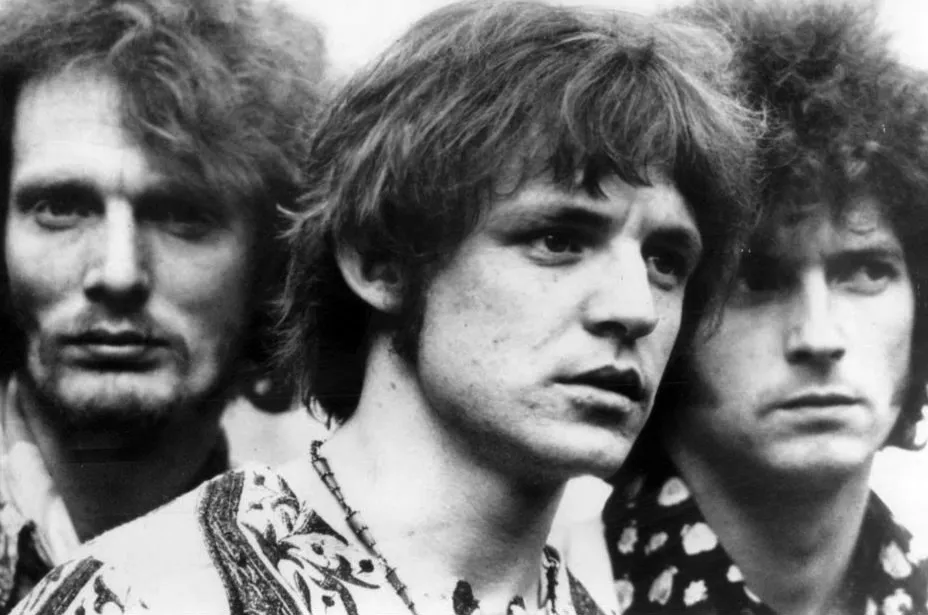
Photo by General Artists Corporation (management) /Atco Records (the band's record label at one time). , licensed under Public domain · Wikimedia Commons
Rank #73
Cream
Clapton-Bruce-Baker supergroup who defined the rock power trio.
From Wikipedia
Cream were a British rock supergroup formed in London in 1966. The group consisted of bassist Jack Bruce, guitarist Eric Clapton, and drummer Ginger Baker. Bruce was the primary songwriter and vocalist, although Clapton and Baker contributed to songs. Formed by members of previously successful bands, they are widely considered to be the first so-called supergroup in rock history. Cream were highly regarded for the instrumental proficiency of each of their members.
Members
- Eric Clapton
- Ginger Baker
- Jack Bruce
Studio Albums
- 1966 Fresh Cream
- 1967 Disraeli Gears
- 1968 Wheels of Fire
- 1968 Wheels of Fire: In the Studio
- 1969 Goodbye
- 1999 Blues Condition
- — Fresh as Cream
Source: MusicBrainz
Deep Dive
Overview
Cream were a British rock supergroup formed in London in 1966, consisting of bassist and vocalist Jack Bruce, guitarist Eric Clapton, and drummer Ginger Baker. The band emerged as the first widely recognized supergroup in rock history, bringing together three musicians who had each earned prominence in previous ensembles. Operating across blues rock and psychedelic rock idioms, Cream established the template for the power trio—a format in which three instrumentalists of exceptional technical skill could sustain extended compositions and fill concert venues without additional musicians.
Formation Story
Cream coalesced in London in 1966 when three seasoned British musicians decided to unite outside their respective groups. Jack Bruce, who had played in Manfred Mann and the Graham Bond Organisation, brought technical mastery of the bass and primary songwriting duties. Eric Clapton, fresh from his tenure with the Yardbirds, contributed guitar virtuosity and an intuitive grasp of blues language. Ginger Baker, the powerful and precise drummer from the Graham Bond Organisation, completed the lineup. Each member arrived with a reputation for instrumental proficiency, and the chemistry between the three proved immediate and potent.
Breakthrough Moment
Cream’s debut album Fresh Cream, released in 1966, introduced their volatile blend of blues fundamentals and experimental rock arrangements to a receptive audience. The album featured original compositions from Bruce alongside covers that showcased the band’s interpretive depth. The following year, Disraeli Gears (1967) solidified their commercial breakthrough, reaching a far wider audience and establishing Cream as leaders of the emerging blues-rock movement. The album’s more polished production and confident songwriting by Bruce, combined with Clapton’s restless guitar work and Baker’s forceful drumming, created a signature sound that other power trios would attempt to replicate for years to come.
Peak Era
Cream’s most creatively vital and commercially successful period spanned their first two years of operation, from 1966 through 1967 and into 1968. Wheels of Fire, released in 1968, demonstrated the full maturity of their approach, featuring extended instrumental explorations that showcased each member’s technical command. The band’s reputation for live performance intensified during this phase, with their concerts becoming legendary for the extended improvisations that would define rock jam-band culture. Their rapid ascent from formation to international prominence in less than two years established them as a defining act of the mid-1960s psychedelic and blues-rock moment.
Musical Style
Cream’s sound emerged from a fusion of American blues tradition with the psychedelic rock innovations emerging from London’s 1960s scene. Jack Bruce’s bass work was unusually melodic and prominent, often competing with Clapton’s guitar rather than simply anchoring the rhythm section, a departure from conventional rock bass practice. Eric Clapton’s guitar playing combined blues vocabulary—string bending, call-and-response phrasing, and pentatonic soloing—with a rock-amplified approach that made the instrument a lead voice capable of sustaining entire passages without accompaniment. Ginger Baker’s drumming was technically sophisticated, moving beyond the steady backbeat to incorporate complex fills and dynamic variation that drove the band’s exploratory direction. The interplay between these three elements created a textural density that belied the absence of keyboards or rhythm guitar, allowing Cream to achieve a sound as thick and multifaceted as many larger ensembles.
Major Albums
Fresh Cream (1966)
Cream’s debut established the blueprint for their blues-rock approach, combining Bruce’s original compositions with cover interpretations that allowed each member to demonstrate technical range and interpretive sensitivity.
Disraeli Gears (1967)
The band’s most commercially successful album, marked by polished production and confident songwriting that captured the psychedelic moment while maintaining blues integrity, positioning Cream as central figures in late-1960s rock.
Wheels of Fire (1968)
Released alongside a companion studio album, Wheels of Fire showcased extended instrumental passages and mature compositional craft, representing the peak of Cream’s creative ambition before their 1968 breakup.
Goodbye (1969)
Released after the band’s dissolution, Goodbye compiled previously unreleased material and farewell recordings, serving as a final statement of their brief but consequential existence.
Signature Songs
- “Sunshine of Your Love” — a blues-rock standard that demonstrated Clapton’s soaring melodic guitar against Bruce’s propulsive bass.
- “White Room” — a compositionally intricate track showcasing the band’s ability to balance structure with improvisational freedom.
- “Crossroads” — a reinterpretation of the Robert Johnson blues classic that became synonymous with Clapton’s blues-guitar authority.
- “I Feel Free” — an energetic early composition that captured the band’s exuberance and technical precision in a more compact form.
Influence on Rock
Cream’s brief existence had consequences far exceeding their three-year lifespan. They codified the power trio as a viable rock format, proving that three musicians of sufficient technical skill and creative imagination could sustain a major recording and touring career. Their emphasis on extended instrumental passages and blues-based improvisation became foundational to progressive rock, heavy metal, and jam-band traditions that followed. Eric Clapton’s guitar approach—the integration of blues language with rock amplification and structural innovation—influenced a generation of rock guitarists. Jack Bruce’s melodic bass work expanded conventional expectations of what a bass player could contribute beyond timekeeping. Their commercial success validated the supergroup model, wherein established musicians from separate groups combined to create new projects, a pattern that would repeat throughout rock’s subsequent decades.
Legacy
Cream dissolved in 1968, a dissolution that seemed to enhance rather than diminish their historical standing. Their brief catalog—four studio albums across two years—remains continuously in print and streams, a testament to the durability of their songwriting and arrangement choices. Subsequent reissues, compilations, and archival releases have kept the band’s catalog accessible to successive generations of listeners. Their influence permeates rock history: the power trio format spawned numerous imitators and variations; blues-rock became a permanent strain in rock music; and the template they established for technical virtuosity as a legitimate artistic value continues to shape how rock musicians are regarded. The band’s legacy is inseparable from the individual legacies of its members, particularly Eric Clapton, whose subsequent career maintained an extended spotlight on Cream’s innovations.
Fun Facts
- Cream were formed in 1966 by members of previously successful bands, making them the first widely recognized supergroup in rock history.
- Jack Bruce served as the band’s primary songwriter and vocalist, a division of labor that challenged conventional rock-band hierarchies where the lead guitarist typically held primary creative control.
- The band’s live performances became legendary for extended improvisations, establishing a template for rock jam-band culture that persists in contemporary music.
- Despite their monumental influence on rock’s subsequent development, Cream remained active as a recording and touring entity for barely two years before dissolving in 1968.
Discography & Previews
Click any album to expand its track list. Each track plays a 30-second preview streamed from Apple Music. Tap the link icon next to a track to open it in Apple Music for full playback.


- 1 White Room ↗ 5:03
- 2 Sitting On Top of the World ↗ 5:01
- 3 Passing the Time ↗ 4:37
- 4 As You Said ↗ 4:25
- 5 Pressed Rat and Warthog ↗ 3:18
- 6 Politician ↗ 4:17
- 7 Those Were the Days ↗ 2:57
- 8 Born Under a Bad Sign ↗ 3:14
- 9 Deserted Cities of the Heart ↗ 3:41
- 10 Anyone for Tennis ↗ 2:42
- 11 Crossroads (Live) ↗ 4:20
- 12 Spoonful (Live) ↗ 16:51
- 13 Traintime (Live) ↗ 7:04
- 14 Toad (Live) ↗ 16:16
