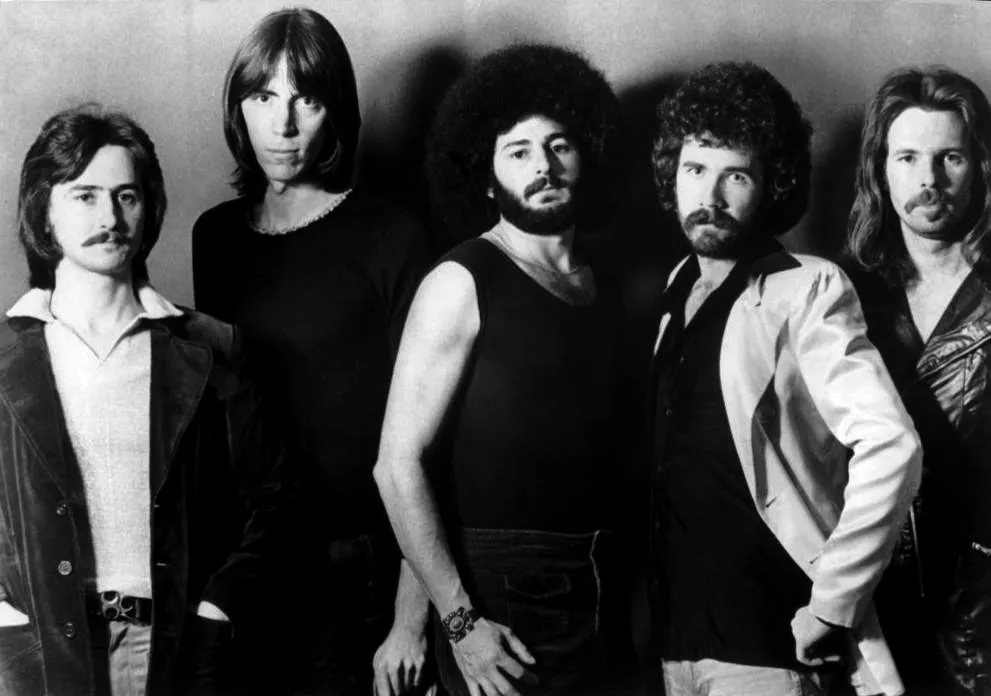
Photo by Premier Talent Associates (management company) , licensed under Public domain · Wikimedia Commons
Rank #85
Boston
Layered guitar arena rock whose debut became one of rock's biggest sellers.
From Wikipedia
Boston is an American rock band formed in 1975 in Boston, Massachusetts, by chief songwriter and composer Tom Scholz. The band's core members included multi-instrumentalist Scholz and lead vocalist Brad Delp, who remained the only constant members from 1975 to 1990, and from 1994 until Delp's suicide in 2007. Other musicians and members of the band varied largely across the group's lineup history.
Members
- Brad Delp
Studio Albums
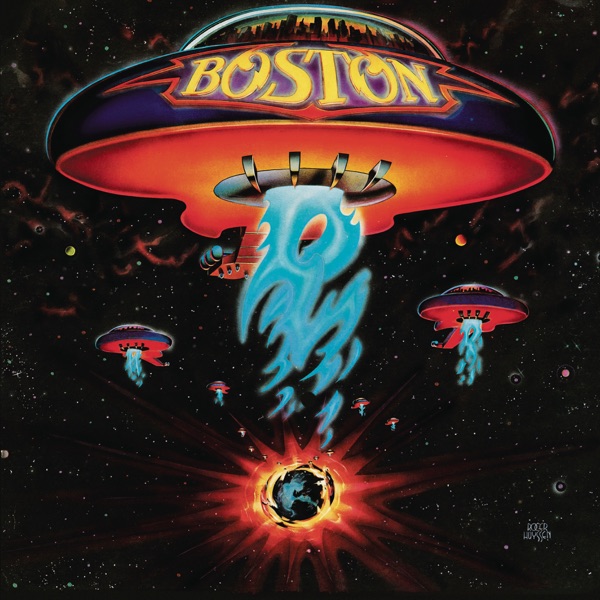
- 1976 Boston
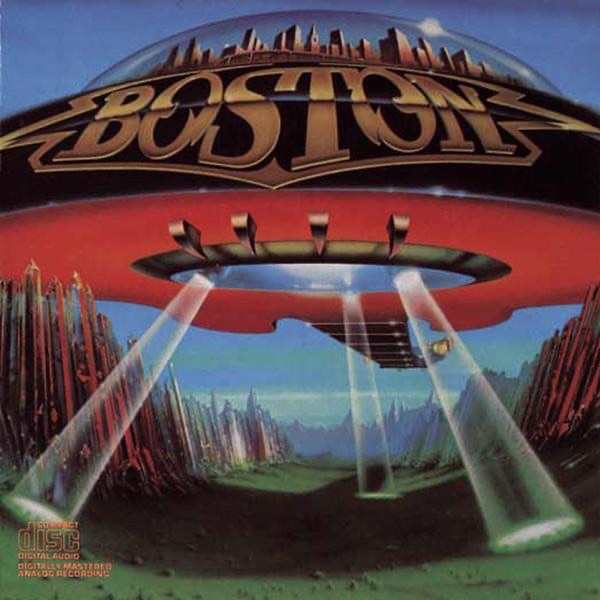
- 1978 Don’t Look Back
- 1986 Third Stage
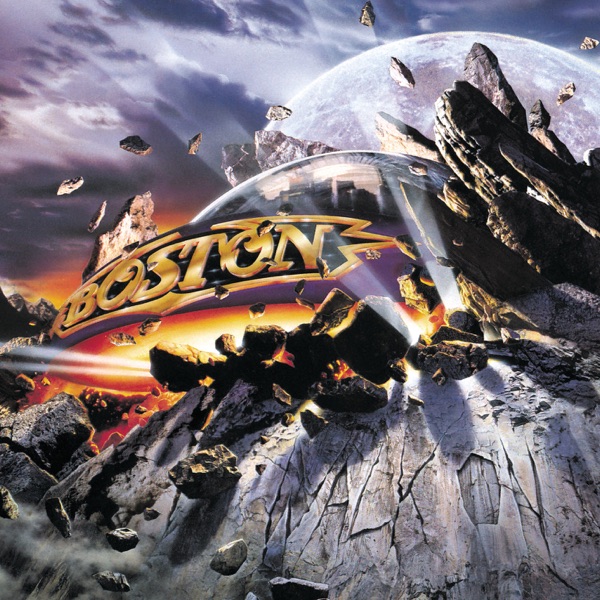
- 1994 Walk On
- 2002 Corporate America
- 2013 Life, Love & Hope
- — WICHITA 1979
- — Wichita 1979 DISC 2
Source: MusicBrainz
Deep Dive
Overview
Boston is an American rock band formed in 1975 in Boston, Massachusetts, by chief songwriter and composer Tom Scholz. The group emerged as one of the defining acts of 1970s arena rock, anchored by densely layered guitar arrangements and multi-tracked production that set them apart from contemporaries. With lead vocalist Brad Delp’s soaring voice fronting Scholz’s intricate songwriting, Boston achieved one of rock music’s fastest and largest commercial breakouts, their 1976 debut album becoming one of the era’s best-selling rock records.
Formation Story
Tom Scholz formed Boston in 1975 while based in the band’s namesake city. Scholz, a multi-instrumentalist who would serve as the band’s core creative force, built the group around the singular vocal talent of Brad Delp. The two established themselves as the band’s only constant members through its initial and most commercially vital decade. This pairing—Scholz’s meticulous compositional and production work paired with Delp’s soaring, emotional delivery—became the foundation that would drive the band’s early success. The remaining members of the lineup shifted across the group’s history, but the Scholz-Delp axis remained the defining constant throughout the 1970s and 1980s.
Breakthrough Moment
Boston’s breakthrough arrived with explosive immediacy. Their 1976 debut album, simply titled Boston, became a phenomenon, establishing the band as major commercial players virtually overnight. The record’s combination of radio-friendly songwriting and sophisticated production—built on layers of multi-tracked guitars and keyboards—captured the arena rock audience at a moment when such spectacle-scaled hard rock held broad cultural currency. The album’s commercial success far outpaced typical industry expectations, propelling Boston from regional novelty to global presence. This debut set a standard for commercial hard rock production that the band would labor to match or exceed throughout their subsequent career.
Peak Era
The period spanning 1976 through 1986 marked Boston’s most artistically and commercially significant stretch. Following the massive success of Boston, the band released Don’t Look Back in 1978, consolidating their position as arena rock staples. A significant gap followed—eight years elapsed before Third Stage arrived in 1986, a lengthy hiatus that reflected both the band’s relative commercial plateau and Scholz’s perfectionist approach to composition and recording. By the time of Third Stage’s release, Boston remained a working concert attraction and legacy act within classic rock radio, though they never recaptured the cultural dominance of their mid-1970s emergence. Their return to recording in 1994 with Walk On signaled an ongoing commitment to the studio, even as their commercial reach had narrowed.
Musical Style
Boston’s sound was defined by meticulously crafted, multi-layered arrangements centered on Scholz’s guitar work and compositional complexity. The band operated in hard rock territory, yet their approach differed markedly from blues-based rock contemporaries; where much hard rock of the era drew from Led Zeppelin’s raw power, Boston emphasized studio production, harmonic density, and pop sensibility. Scholz’s use of layered and stacked guitars created a wall-of-sound effect that dominated the production aesthetic of early arena rock. Delp’s voice, soaring and precise, operated almost as an additional instrument within these arrangements, delivering emotionally direct vocal lines that provided counterweight to the instrumental complexity. This combination—technical sophistication married to pop accessibility—made Boston’s music appealing across FM radio formats while maintaining credibility within harder rock circles. The band’s style influenced subsequent arena rock acts who sought to balance grandiosity with songwriting clarity.
Major Albums
Boston (1976)
The debut established Boston’s signature sound and became one of rock’s best-selling albums. Its layered production, multi-tracked guitars, and immediate melodic hooks created the template the band would pursue thereafter.
Don’t Look Back (1978)
A rapid follow-up that maintained the debut’s commercial momentum and production approach, solidifying Boston’s status as arena rock mainstays during the height of the format’s popularity.
Third Stage (1986)
Returning after eight years away, this album demonstrated the band’s continued viability on classic rock radio and in concert venues, though it arrived in a musical landscape significantly altered from the band’s initial breakthrough.
Walk On (1994)
A return to regular recording activity after a hiatus, establishing a pattern of Boston re-entering the studio at irregular intervals while maintaining a touring presence.
Signature Songs
- “More Than a Feeling” — Among the band’s most recognizable compositions, showcasing Scholz’s guitar arrangement aesthetic and Delp’s vocal presence.
- “Peace of Mind” — A defining track that exemplified the band’s ability to merge intricate production with accessible pop-rock sensibility.
- “Foreplay/Long Time” — Demonstrated the band’s facility with extended instrumental passages and their progressive rock influences.
- “Don’t Look Back” — The title track of their 1978 album, reinforcing their dominance of FM rock radio playlists.
Influence on Rock
Boston’s commercial breakthrough in 1976 legitimized a particular strain of arena rock production—technically sophisticated, heavily studio-dependent, and pop-melodic rather than blues-rooted. The band’s success demonstrated that hard rock could achieve mainstream cultural penetration through careful production craft and songwriting accessibility. Their influence extended through subsequent waves of arena rock and hard rock acts who prioritized studio sheen and layered arrangements. Additionally, Scholz’s perfectionist approach to composition and recording—reflected in the lengthy gap between albums—established a precedent within rock practice for prioritizing studio craft over commercial urgency. Boston proved that a regional band from the American Northeast could, through the right combination of musical strengths and production sophistication, achieve international scope and sustained commercial viability.
Legacy
Boston remains a fixture of classic rock radio and touring circuits, with their 1976 debut standing as a landmark commercial achievement within hard rock and arena rock history. The band’s continued activity through the 2010s—evidenced by albums such as Corporate America (2002) and Life, Love & Hope (2013)—maintained their presence within active music culture rather than relegating them to nostalgia-only status. The loss of Brad Delp in 2007 marked a significant transition, yet Boston’s core output and legacy continue to anchor discussions of 1970s rock production and commercial hard rock strategy. For subsequent generations encountering the music through streaming platforms and classic rock formats, Boston remains synonymous with a particular production philosophy and arena rock aesthetic that defined the latter half of the 1970s.
Fun Facts
- Tom Scholz maintained meticulous control over Boston’s sound, recording much of the debut album in his home studio before the band’s commercial breakthrough, an unusual approach for the era.
- The eight-year gap between Don’t Look Back (1978) and Third Stage (1986) reflected Scholz’s unwillingness to release material until it met his exacting production standards.
- Brad Delp’s vocal performances on the early albums were multi-tracked extensively, creating the dense vocal harmonies that became a Boston trademark.
Discography & Previews
Click any album to expand its track list. Each track plays a 30-second preview streamed from Apple Music. Tap the link icon next to a track to open it in Apple Music for full playback.

- 1 Amanda ↗ 4:17
- 2 We're Ready ↗ 3:59
- 3 The Launch a) Countdown B) Ignition C) Third Stage Separation ↗ 2:56
- 4 Cool the Engines ↗ 4:23
- 5 My Destination ↗ 2:13
- 6 A New World ↗ 0:36
- 7 To Be a Man ↗ 3:30
- 8 I Think I Like It ↗ 4:07
- 9 Can'tcha Say (You Believe In Me) / Still In Love ↗ 5:13
- 10 Hollyann ↗ 5:12