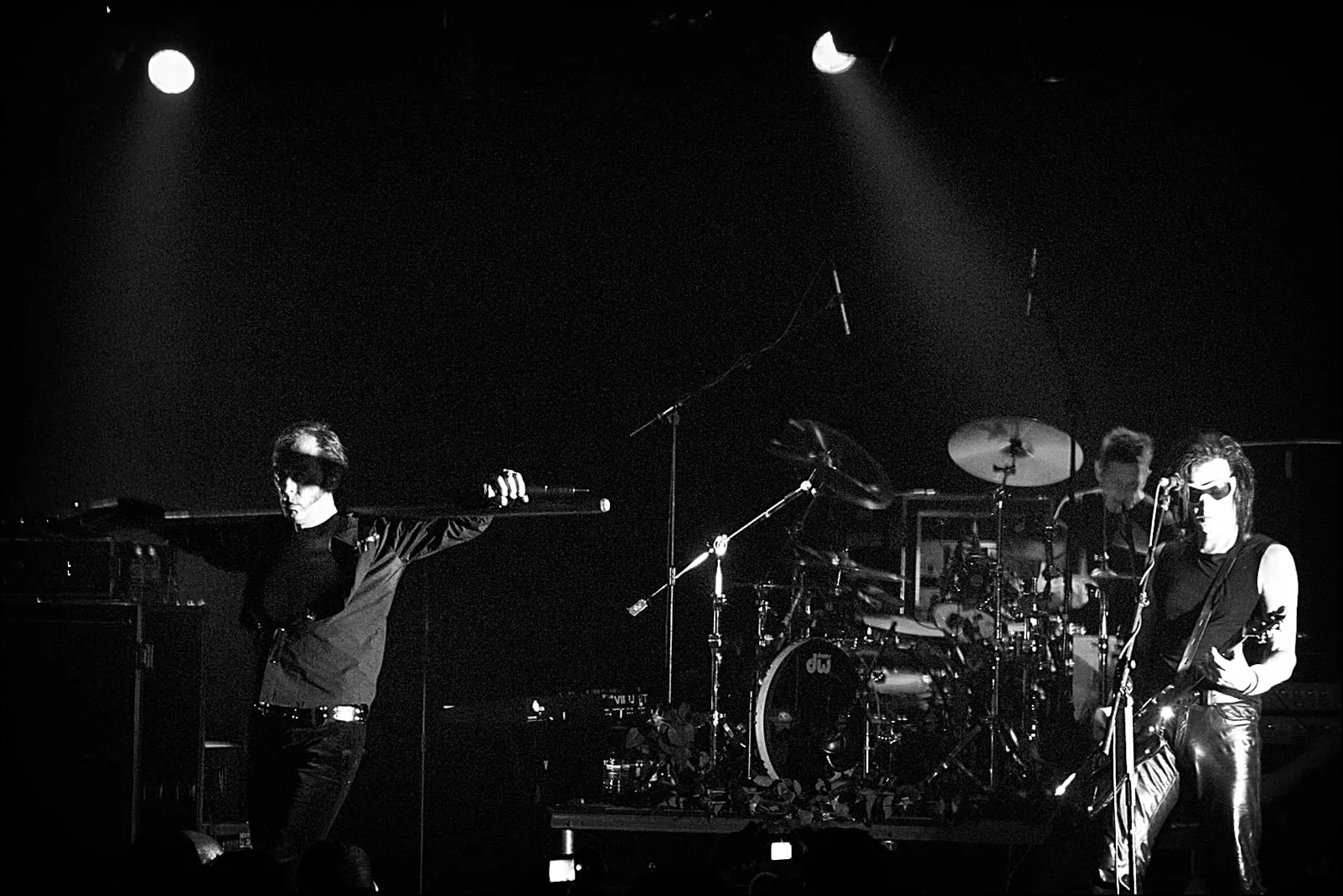
Photo by Pedro Figueidero , licensed under CC BY-SA 2.0 · Wikimedia Commons
Rank #109
Bauhaus
Northampton band whose 'Bela Lugosi's Dead' essentially launched goth rock.
From Wikipedia
Bauhaus were an English rock band formed in Northampton in 1978. Known for their dark image and gloomy sound, Bauhaus are one of the pioneers of gothic rock, although they mixed many genres, including dub, glam rock, psychedelia, and funk. The group consisted of Daniel Ash, Peter Murphy, Kevin Haskins (drums) and David J (bass).
Members
- Daniel Ash
- David J
- Kevin Haskins
- Peter Murphy
Studio Albums
- 1980 In the Flat Field
- 1981 Mask
- 1982 The Sky’s Gone Out
- 1983 Burning From the Inside
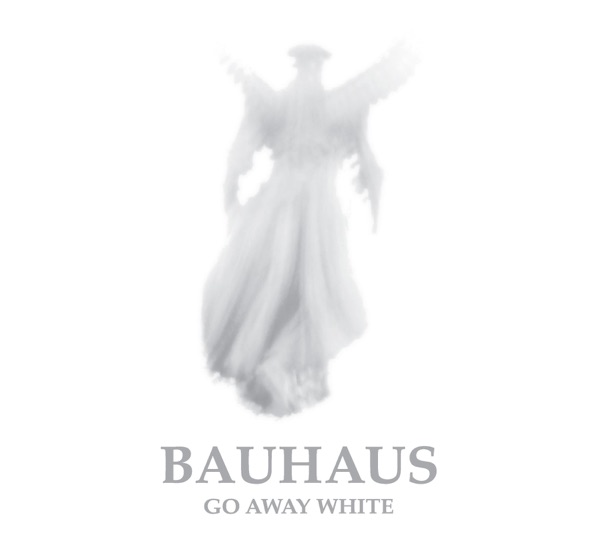
- 2008 Go Away White
Source: MusicBrainz
Deep Dive
Overview
Bauhaus were an English rock band formed in Northampton in 1978 who became one of the primary architects of gothic rock. Though rooted in post-punk, they drew from dub, glam rock, psychedelia, and funk to forge a dark, theatrical sound that would define the aesthetic and musical DNA of an entire movement. Their most famous work—the nine-minute track “Bela Lugosi’s Dead”—essentially launched goth rock as a recognized genre and cultural phenomenon, establishing a visual and sonic template that countless bands would follow.
Formation Story
Bauhaus crystallized in Northampton in 1978 from the convergence of four musicians: Peter Murphy (vocals), David J (bass), Daniel Ash (guitar), and Kevin Haskins (drums). The band emerged from the post-punk ferment of late-1970s Britain, when punk’s energy was being systematically dismantled and reconstructed into more atmospheric, art-school-influenced forms. Northampton, a Midlands town with a modest rock pedigree, proved an unlikely incubator for one of the decade’s most visually and sonically distinctive acts. From their earliest days, Bauhaus cultivated an image as austere and uncompromising as their sound—spare, monochromatic, and deliberately morbid.
Breakthrough Moment
Bauhaus signed to Small Wonder Records and released their debut single “Bela Lugosi’s Dead” in 1979, though it gained wider circulation after they moved to 4AD. The nine-minute track became their signature work: a hypnotic, dub-inflected piece built on minimal elements—Murphy’s deadpan baritone, Ash’s angular guitar lines, and a rhythm section that favored space and echo over conventional groove. “Bela Lugosi’s Dead” crystallized something that punk had only hinted at: a deliberate, aestheticized fascination with death, decay, and the theatrical. The song’s success established Bauhaus not merely as another post-punk outfit but as the house band for a newly emergent visual and cultural movement. Radio play, club prestige, and word-of-mouth turned the track into a touchstone that defined what gothic rock could be.
Peak Era
The period from 1980 to 1983 represented Bauhaus’s most creatively prolific and commercially successful window. Their debut album In the Flat Field (1980) introduced a fully formed aesthetic: claustrophobic production, Murphy’s restrained vocal delivery, and Ash’s economical but devastating guitar work. Mask (1981) and The Sky’s Gone Out (1982) consolidated their vision, while Burning From the Inside (1983) saw them exploring darker, more psychedelic textures. Across these four records, they established themselves as one of the most consistent and uncompromising acts of the era. Unlike many of their post-punk peers, Bauhaus never softened their approach for commercial gain; if anything, their later work grew more abstract and less radio-friendly. By 1983, they had become the architects of goth rock and a major influence on the emerging darkwave and new wave movements in both Britain and Europe.
Musical Style
Bauhaus distilled post-punk austerity into a distinctly visual and atmospheric sound. Peter Murphy’s baritone—rarely straining, often half-spoken—set them apart from the histrionics of contemporaries; he treated the voice as an instrument of restraint rather than display. Daniel Ash’s guitar work eschewed power chords and feedback in favor of jagged, economical lines that created tension through absence as much as presence. The rhythm section of David J and Kevin Haskins favored space and echo, drawing as much from dub reggae’s spatial sensibility as from punk’s rhythmic drive. Their arrangements were often minimal—three or four elements orbiting a central void—and production choices (heavy reverb, vinyl crackle, tape saturation) reinforced a sense of decay and distance. Though they moved away from their punk roots, Bauhaus never lost punk’s structural economy; they built entire songs from the fewest possible elements, a discipline that set them apart from more ornate post-punk acts and prefigured the restraint of later industrial and darkwave music.
Major Albums
In the Flat Field (1980)
Their debut announced a fully formed aesthetic: spare, claustrophobic, and visually coherent. The record established Bauhaus as something more than a post-punk revivalist act—a band with a complete worldview.
Mask (1981)
The follow-up deepened their exploration of dub-inflected textures and psychedelic atmospherics while maintaining the minimalist approach that defined their identity.
The Sky’s Gone Out (1982)
Their third album consolidated their reputation as the leading edge of gothic rock, blending post-punk rigor with increasingly abstract arrangements and darker thematic preoccupations.
Burning From the Inside (1983)
Their final album of the initial era saw Bauhaus pushing toward greater experimental abstraction, with more pronounced psychedelic and industrial elements creeping into the mix.
Signature Songs
- “Bela Lugosi’s Dead” — The nine-minute track that defined goth rock and remains their most enduring work.
- “Dark Entries” — A tightly wound post-punk number showcasing Murphy’s vocal restraint and Ash’s angular guitar work.
- “Kick in the Eye” — A propulsive, funk-influenced piece that demonstrated their genre-blending approach.
- “Passion of Lovers” — A sparse, intimate piece built around minimal guitar and Murphy’s measured delivery.
Influence on Rock
Bauhaus did not invent gothic rock—influences from Ziggy-era Bowie, Joy Division, and glam’s theatrical impulses were already present in the air. But they codified it, provided it with a visual identity, and proved it could sustain an entire artistic output. Their success validated the notion that rock music could be austere, morbid, and intellectually rigorous while remaining compelling. Every goth rock, darkwave, and industrial band that followed—from Depeche Mode’s darker period to the 1990s industrial revival—bears the imprint of Bauhaus’s restraint and their refusal to compromise their aesthetic for broader appeal. They influenced not only musicians but the entire visual and thematic vocabulary of alternative rock: the black clothing, the pale makeup, the fascination with Victorian Gothic imagery and horror film aesthetics all trace through Bauhaus’s early work.
Legacy
Bauhaus split in 1983 at the height of their creative powers, a decision that cemented their mythic status. They reunited for tours and recordings intermittently over the following decades, culminating in the studio album Go Away White (2008). Their catalog remains canonical in gothic rock discourse, and “Bela Lugosi’s Dead” has never fallen from rotation among goth, alternative, and post-punk enthusiasts. The band’s influence persists across streaming platforms and in the ongoing revival of post-punk and new wave sensibilities in contemporary rock. Their Northampton origins and steadfast refusal to soften their artistic vision have made them emblematic of a particular strain of British artistic seriousness—the idea that rock music could be intellectually demanding and visually unified without requiring either commercial compromise or excessive showmanship.
Fun Facts
- Peter Murphy later pursued a solo career while Bauhaus remained active intermittently, establishing a pattern of parallel creative work that persisted through subsequent reunions.
- Bauhaus recorded their early work under the independent label Small Wonder Records before signing to 4AD, a label that became synonymous with post-punk and alternative music throughout the 1980s.
- The band’s minimal aesthetic extended to their album artwork and stage presentation, creating a unified visual identity that made them instantly recognizable and widely imitated.
Discography & Previews
Click any album to expand its track list. Each track plays a 30-second preview streamed from Apple Music. Tap the link icon next to a track to open it in Apple Music for full playback.

- 1 Dark Entries ↗ 3:52
- 2 Double Dare ↗ 4:55
- 3 In the Flat Field ↗ 5:00
- 4 A God in an Alcove ↗ 4:08
- 5 Dive ↗ 2:13
- 6 The Spy in the Cab ↗ 4:32
- 7 Small Talk Stinks ↗ 3:35
- 8 St. Vitus Dance ↗ 3:31
- 9 Stigmata Martyr ↗ 3:42
- 10 Nerves ↗ 7:07
- 11 Telegram Sam ↗ 2:11
- 12 Rosegarden Funeral of Sores ↗ 5:34
- 13 Terror Couple Kill Colonel ↗ 4:26
- 14 Scopes ↗ 1:35
- 15 Untitled ↗ 1:27
- 16 God in an Alcove (Flexidisc Version) [AD 3] ↗ 4:10
- 17 Crowds ↗ 3:15
- 18 Terror Couple Kill Colonel (Version) ↗ 4:32

- 1 Hair of the Dog (feat. Meshell Ndegeocello) ↗ 2:44
- 2 The Passion of Lovers ↗ 3:51
- 3 Of Lilies and Remains ↗ 3:18
- 4 Dancing ↗ 2:30
- 5 Hollow Hills ↗ 4:48
- 6 Kick In the Eye 2 ↗ 3:40
- 7 In Fear of Fear ↗ 2:58
- 8 Muscle In Plastic ↗ 2:51
- 9 The Man with the X-Ray Eyes ↗ 3:05
- 10 Mask ↗ 4:35
- 11 In Fear of Dub ↗ 2:55
- 12 Earwax ↗ 3:15
- 13 Harry ↗ 2:47
- 14 1. David Jay 2. Peter Murphy 3. Kevin Haskins 4. Daniel Ash ↗ 6:37
- 15 Satori ↗ 4:35

- 1 Third Uncle ↗ 5:19
- 2 Silent Hedges ↗ 3:12
- 3 In the Night ↗ 3:07
- 4 Swing the Heartache ↗ 5:54
- 5 Spirit ↗ 5:34
- 6 The Three Shadows Part 1 ↗ 4:24
- 7 The Three Shadows Part 2 ↗ 3:10
- 8 The Three Shadows Part 3 ↗ 1:37
- 9 All We Ever Wanted Was Everything ↗ 3:52
- 10 Exquisite Corpse ↗ 5:39
- 11 Ziggy Stardust ↗ 3:13
- 12 Party of the First Part ↗ 5:27
- 13 Spirit (Single Version) ↗ 3:46
- 14 Watch That Grandad Go ↗ 5:40

- 1 She's in Parties ↗ 5:46
- 2 Antonin Artaud ↗ 4:09
- 3 Wasp ↗ 0:21
- 4 King Volcano ↗ 3:32
- 5 Who Killed Mr. Moonlight ↗ 5:01
- 6 Slice of Life ↗ 3:44
- 7 Honeymoon Croon ↗ 2:55
- 8 Kingdom's Coming ↗ 2:27
- 9 Burning from the Inside ↗ 9:21
- 10 Hope ↗ 3:17
- 11 Lagartija Nick ↗ 3:05
- 12 Here's the Dub ↗ 3:19
- 13 Departure ↗ 4:50
- 14 The Sanity Assassin ↗ 4:05