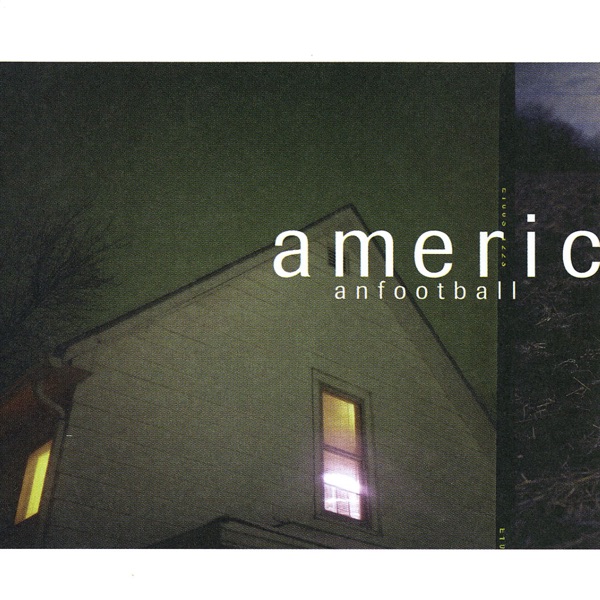

Photo by Andy Witchger , licensed under CC BY 2.0 · Wikimedia Commons
Rank #492
American Football
Urbana emo-twinkle pioneers whose lone 90s LP became a cult classic.
From Wikipedia
American Football is an American midwest emo band from Urbana, Illinois, originally active from 1997 to 2000. They reformed in 2014.
Members
- Mike Kinsella
- Nate Kinsella
- Steven Joseph Lamos
Studio Albums
- 1999 American Football
- 2016 American Football
- 2019 American Football
- 2026 American Football
- — All of Us
- — American Football (LP4)
Source: MusicBrainz
Deep Dive
Overview
American Football is a midwest emo band from Urbana, Illinois, whose cultural and musical significance far exceeds their modest output and limited commercial reach. Formed in 1997, the group released a single self-titled album in 1999 before dissolving in 2000, only to reunite fourteen years later in 2014. Their sole 1990s LP became a touchstone for a generation of indie and emo listeners, establishing the band as pioneers of a distinctly regional sound—one blending post-rock’s instrumental restraint and math rock’s fractured time signatures with emo’s emotional accessibility and the raw energy of punk rock. Though their discography remains sparse, American Football’s influence on underground rock and their role in crystallizing the midwest emo aesthetic ensures their place in rock history.
Formation Story
American Football emerged from Urbana in 1997, a small university town in central Illinois not typically associated with rock music innovation. The band’s core lineup consisted of Mike Kinsella, Nate Kinsella, and Steven Joseph Lamos. Their formation occurred at the tail end of the 1990s punk and indie rock boom, a moment when regional scenes across America were developing distinct sonic identities in reaction to both mainstream alternative rock and the growing underground DIY ethos. The trio crafted music that reflected their Midwestern identity—restrained, intricate, and rooted in a post-punk sensibility rather than the aggressive bravado of coastal emo scenes.
Breakthrough Moment
American Football’s only release before their initial dissolution was their self-titled debut, issued in 1999. The album arrived quietly, released through Polyvinyl Records, a small independent label based in Champaign, Illinois, very close to the band’s home. Despite its limited distribution and the absence of radio play or mainstream press coverage at the time, the 1999 album gradually accumulated devoted listeners through word-of-mouth, college radio, and early internet music communities. The record’s intricate arrangements, unconventional song structures, and emotional restraint marked it as fundamentally different from the polished emo then gaining mainstream traction elsewhere. What might have been forgotten as a minor regional release instead became a quiet classic, rediscovered and celebrated by successive waves of indie and emo enthusiasts seeking alternatives to the commercially saturated post-grunge landscape.
Peak Era
The band’s initial active period lasted only three years, from 1997 to 2000, making them a brief presence in the music world of that moment. However, their reformation in 2014 initiated a second and ongoing creative period that has proven equally significant to their legacy. Following their 2014 reunion, American Football released a self-titled second album in 2016, also titled American Football, which signaled their sustained relevance and provided fans with new material nearly two decades after the band’s original disbandment. A third self-titled album followed in 2019, again maintaining the band’s naming convention while demonstrating their continued compositional vitality. This later phase of activity—from 2014 onward—has allowed the band to reach audiences who discovered the 1999 album through retrospective listening and streaming platforms, effectively introducing American Football to listeners who had not experienced their original era.
Musical Style
American Football’s sound synthesizes post-rock’s emphasis on textural build and restraint, math rock’s complex rhythmic frameworks, and emo’s emotional core into a unified approach. The band employs precise, interlocking guitar lines that avoid traditional rock chord progressions in favor of suspended and augmented voicings, often played in odd meter or syncopated patterns. Vocally, Mike Kinsella’s delivery is understated and introspective, lacking the histrionics of many emo contemporaries; the voice sits within the mix as one instrument among equals rather than dominating the soundscape. The rhythm section—driven by the interplay between the Kinsella brothers—emphasizes dynamic shifts and nuanced dynamics over straightforward power. What distinguishes American Football from the broader midwest emo lineage is their resistance to catharsis; songs tend toward ambiguity and structural surprise rather than toward the building-then-release dynamics of conventional rock songwriting. This approach places them adjacent to post-rock acts like Slint or Tortoise while remaining rooted in punk rock’s DIY ethos and emo’s emphasis on vulnerability.
Major Albums
American Football (1999)
The band’s debut established the template for midwest emo: intricate instrumental interplay, unconventional song structures, and emotional restraint combined with unmistakable vulnerability. Its slow initial obscurity followed by decades-long cult reverence is rare in rock history.
American Football (2016)
Sixteen years after their original dissolution, the band’s return album demonstrated that their songwriting approach remained vital and uncompromised. The album reconnected the group with longtime listeners while introducing their sound to younger audiences encountering the 1999 album through streaming.
American Football (2019)
Their third self-titled work further solidified the band’s position as a still-active creative force, proving the 2016 reunion was not a one-time nostalgia play but a genuine resumption of artistic activity.
Signature Songs
- “Never Meant” — The closest thing American Football has to a signature track, a song whose emotional restraint and instrumental precision came to define midwest emo.
- “Honestly? Truthfully?” — A key track from the 1999 album showcasing the band’s ability to sustain tension through unconventional arrangements.
- “I’ve Got a Dark Alley and a Bad Idea That Says You Should Shut Your Mouth (Summer Song)” — The album’s title-track closing statement, melding ambition with the band’s minimalist aesthetic.
- “Silhouettes” — A standout from the later albums, demonstrating the band’s continued ability to craft emotionally direct songs through oblique musical means.
Influence on Rock
American Football’s influence on underground rock, emo, and indie music has grown steadily since their 2014 reunion, as streaming services and digital archiving have made their 1999 album permanently accessible rather than a difficult-to-find artifact. The band helped establish a distinctly Midwestern emo aesthetic—less focused on aggressive dynamics than coasts-based scenes, more interested in instrumental sophistication and compositional restraint. Their approach influenced countless bands who sought to marry math rock’s technical rigor with emo’s emotional transparency, and the widespread adoption of their name (American Football, along with other midwest emo acts) as a genre descriptor speaks to their taxonomic centrality. The band’s long dormancy followed by uncompromising reunion also established a model for other disbanded acts: that cult status and delayed return could sustain artistic credibility even when immediate commercial success had never materialized.
Legacy
American Football’s legacy rests on the enduring cultural resonance of their 1999 debut, an album whose critical and fan appreciation has actually increased with time rather than fading. The record functions as both a historical document of 1990s midwest indie rock and a touchstone for contemporary emo and math rock musicians. Their reformation in 2014 and subsequent album releases have ensured they remain an active presence rather than a frozen historical artifact, and their continued work with Polyvinyl Records has maintained their independence from major-label pressures. The band’s output remains modest—a single 1990s album and three self-titled albums since 2016, plus additional releases still in development—yet this restraint has paradoxically enhanced their standing. They represent an alternative model to both the prolific album-cycle treadmill and the permanent reunion-tour circuit; instead, American Football has pursued periodic, intentional creative statements that suggest artistic rather than commercial motivation.
Fun Facts
- Mike Kinsella and Nate Kinsella are brothers, making American Football a family project whose interpersonal dynamics remain largely undiscussed in the band’s public communications.
- The band maintained their consistent self-titled naming convention across all studio albums—their 1999 debut, 2016 return, and 2019 follow-up are each simply titled American Football, a choice that emphasizes continuity over evolution.
- Polyvinyl Records, the label that released their 1999 debut, is based in Champaign, Illinois, less than fifteen miles from Urbana, making American Football part of a tightly knit regional indie label ecosystem.
- The band’s 2014 reformation occurred in the context of broader 1990s indie rock revivals through streaming, suggesting their catalog found new audiences through platforms like Spotify and Bandcamp rather than through traditional rock radio or retail distribution.
Discography & Previews
Click any album to expand its track list. Each track plays a 30-second preview streamed from Apple Music. Tap the link icon next to a track to open it in Apple Music for full playback.